FastenersFromTurkey — Bursa, Turkey · sales@fastenersfromturkey.com Part of the MetalFromTurkey group · Bursa-based industrial fastener supplier and exporter serving international buyers
Fasteners From Turkey · Specification-Led RFQ Supply

Wheel Bolts and Studs from Turkey for OEM Specifications

FastenersFromTurkey supplies wheel bolts and studs from Turkey for OEM-reference and drawing-led requirements. The approved drawing or OEM specification governs the order; any substitution or change requires documented customer engineering approval. Seat, thread, shank or knurl, material, coating, validation, PPAP scope and volume are confirmed from the RFQ.

  • Specification-led review
  • Confidential drawing handling
  • Export-document coordination
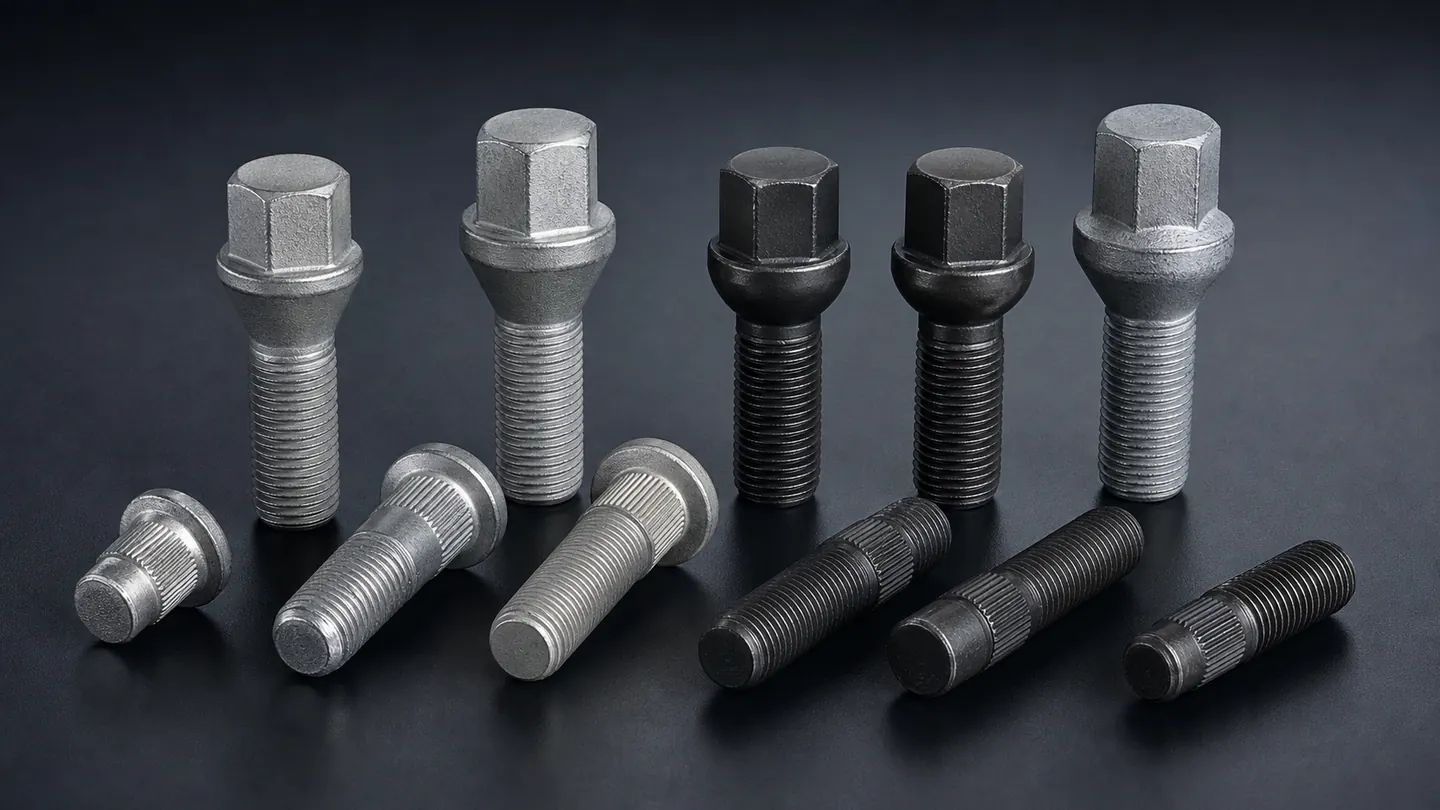
Wheel bolts and wheel studs in multiple head, seat and shank configurations

Wheel bolts and wheel studs supplied from Turkey for OEM and export RFQs

RFQ Qualification

Wheel bolt and stud order qualification summary

Confirm these order-specific inputs before quotation.

Fasteners From Turkey Confirmed per RFQ
Wheel bolt and stud RFQ qualification fields
Field Order input Confirmation
Product scope Wheel bolt or stud for the stated wheel system and approved interface Type and application confirmed per RFQ
Standard/drawing Controlled customer or OEM drawing; customer engineering approval governs any substitution Drawing and revision confirmed per RFQ
Dimensions/thread Seat, thread, shank, knurl, engagement and drawing tolerances Dimensional inputs confirmed per RFQ
Material/mechanical Drawing-specified material and mechanical or validation requirements No substitution without documented customer engineering approval
Finish/coating Coating, corrosion and friction requirements tied to the approved wheel system Finish scope confirmed per RFQ
Documentation Required inspection, traceability, certificate and PPAP scope Availability and deliverables confirmed per order
Commercial Quantity or annual volume, MOQ drivers, tooling, packing, Incoterm and destination Commercial basis confirmed in the quotation
Supplier role FastenersFromTurkey supplies wheel bolts and studs from Turkey. Order-specific supply scope confirmed from the RFQ

Safety-critical requirements remain governed by the approved drawing and customer engineering approval.

Drawing-led Controlled drawing and revision govern the RFQ
Safety-critical Substitutions require documented engineering approval
DIN / ISO Governing reference confirmed per wheel system
PPAP-ready Document plan matched to the approved order scope
Product scope

Wheel bolt, lug bolt or wheel stud?

Market terminology varies. A buyer may use wheel bolt, lug bolt or even tire bolt for a fastener that passes through the wheel and threads into the hub. A wheel stud normally stays installed in the hub and receives a separate nut. The phrase lug nut stud is also used inconsistently, so the controlled drawing and the complete mating interface must govern the RFQ.

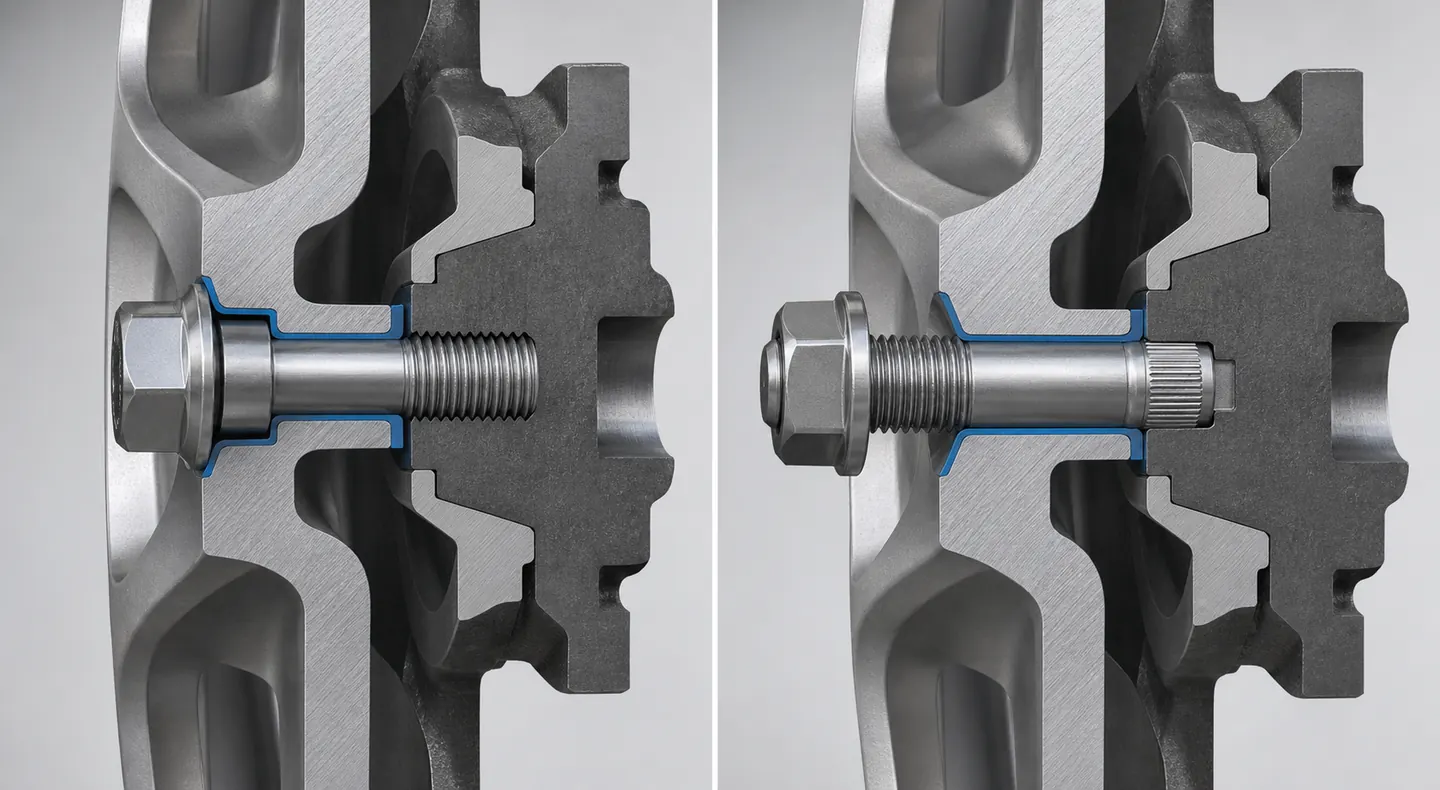
Wheel bolt and press-in wheel stud interface comparison at the wheel hub

Wheel bolts and wheel studs

A wheel bolt combines the external drive, wheel-contact seat, shank and threaded engagement in one component. A press-in wheel stud adds a hub-retention interface that a wheel bolt does not have: knurl diameter, knurl profile, shoulder position, hub-hole condition and installed protrusion must be reviewed together.

Request Quote
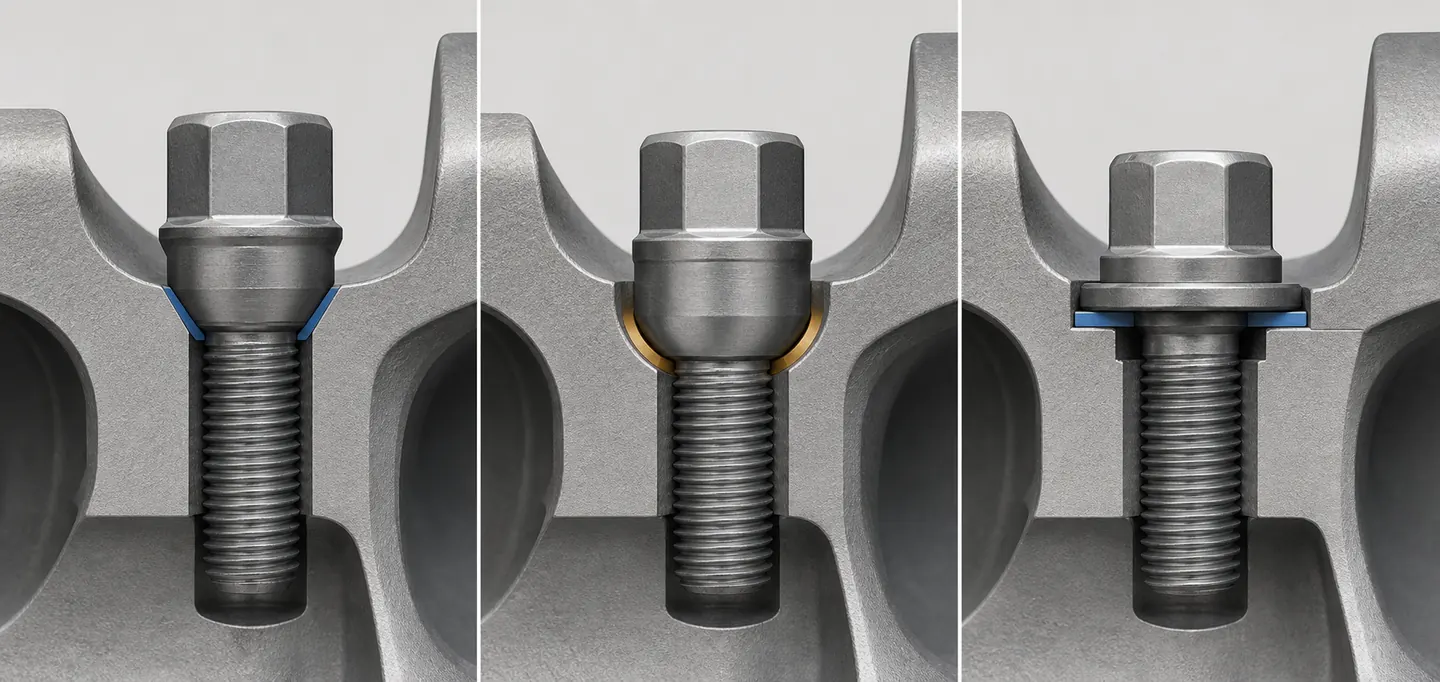
Wheel bolt seat geometry comparison showing conical, spherical and flat contact profiles

Seat geometry options

Wheel-bolt seat geometry is a functional interface, not a styling choice. Tapered wheel bolts, spherical or radius-seat bolts, and flat or captive-washer arrangements must be treated as distinct configurations, because a mismatch can concentrate contact, damage the wheel seat, change the clamp path or allow loosening.

Compare seat geometry options
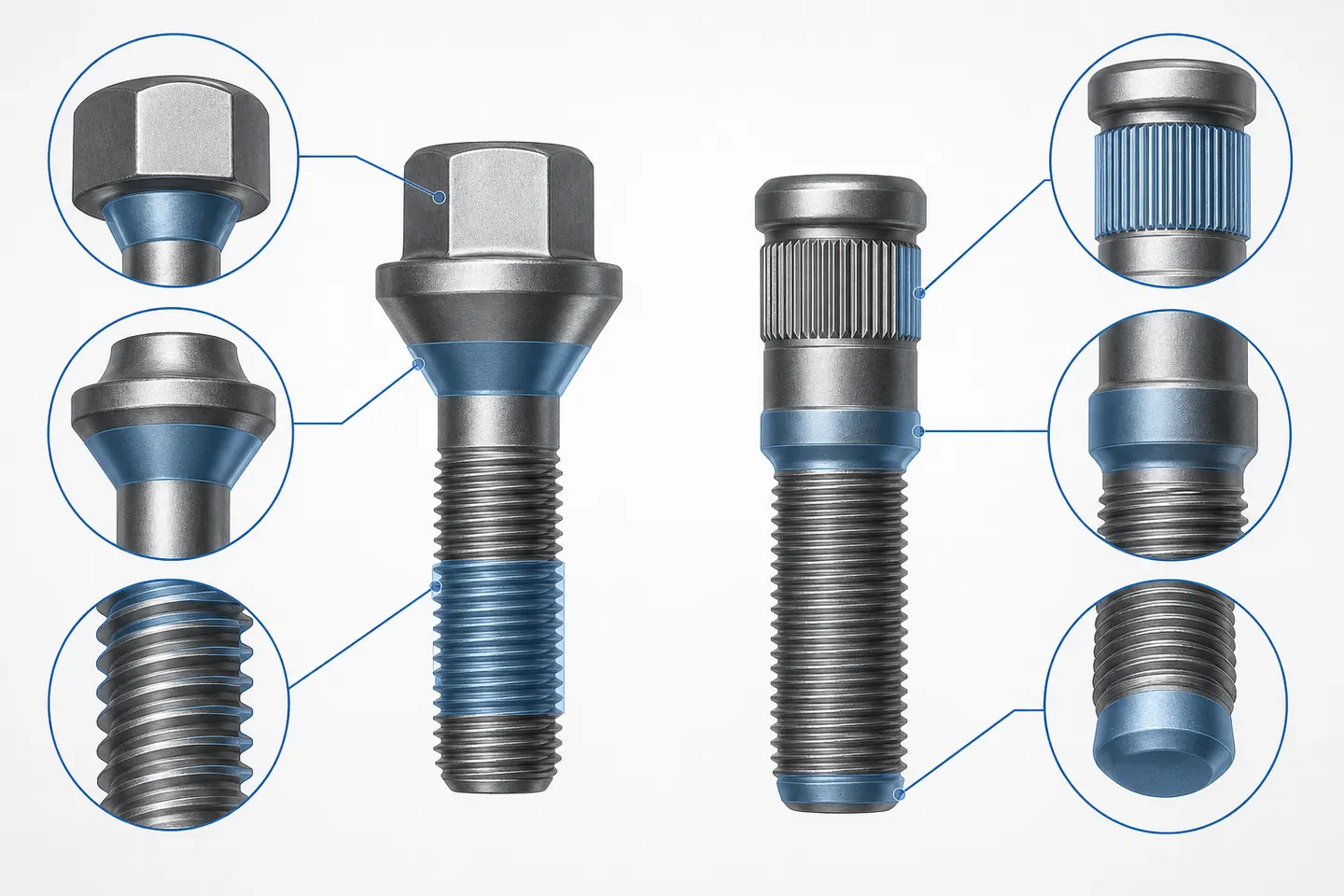
Wheel fastener RFQ diagram highlighting head, seat, thread, shoulder and knurl inputs

Thread, shoulder and knurl inputs

Usable engagement is measured within the actual mating joint, not from overall fastener length. Confirm the engaged length, hub or nut material, thread direction, runout, coating allowance and any unthreaded lead, plus the knurl and hub-hole retention interface for press-in studs.

Review RFQ dimension inputs
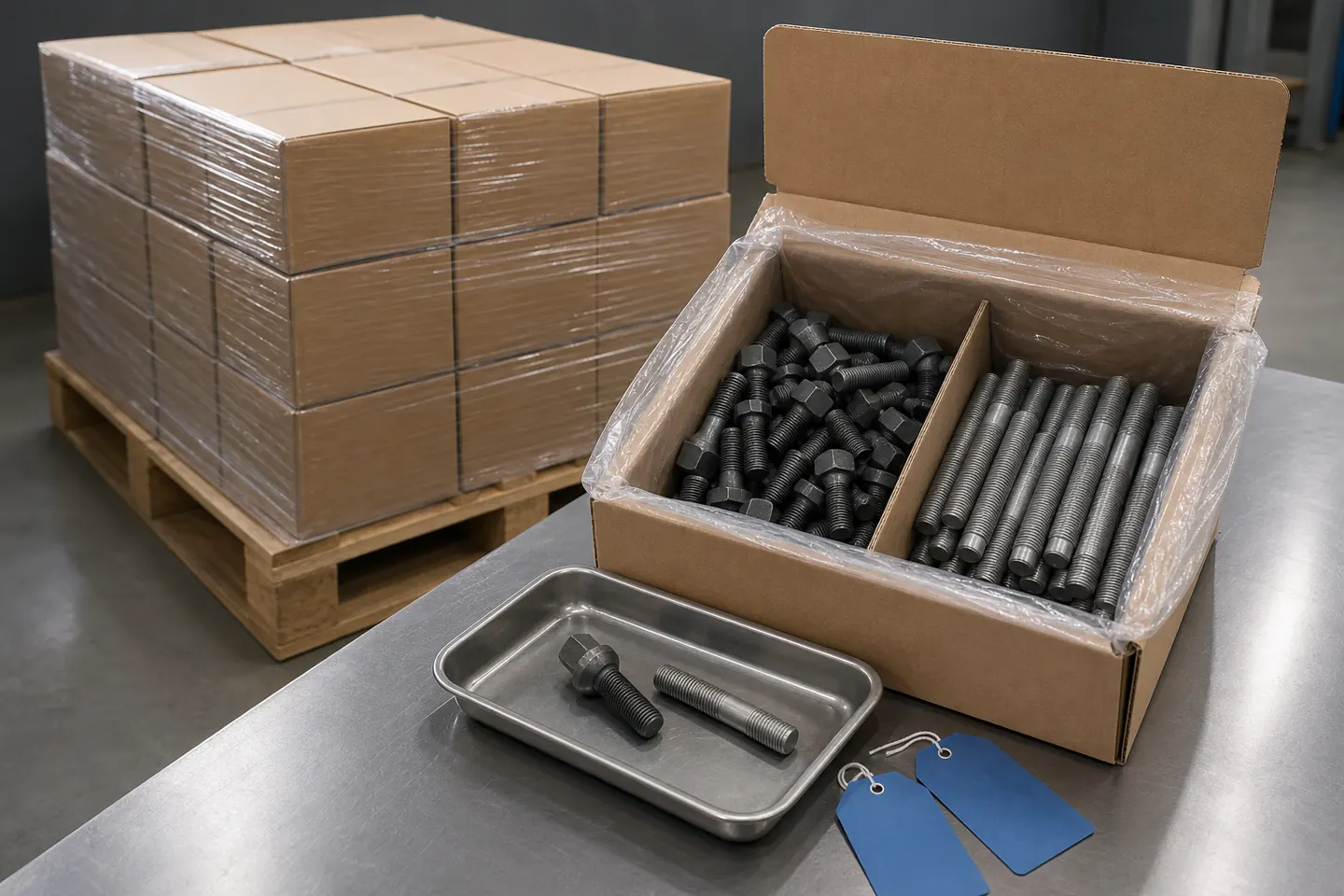
Wheel bolts and studs in representative export packaging with blank traceability tags

Packaging, traceability and export

Packaging is reviewed against part geometry, thread protection, lot separation, labeling and destination handling. Export support can cover the agreed packing list, commercial documents and shipment coordination. Incoterm, routing and delivery timing remain quotation-specific.

Request Quote

Send your wheel-fastener drawing for review

Configuration routes

How each wheel-fastener configuration interfaces

The correct fastener is determined by the complete wheel-to-hub interface: seat or knurl geometry, thread, shank and engagement, material and mechanical requirements, coating and friction condition, validation documents and customer approval.

ConfigurationHow it interfacesCritical RFQ inputs
Wheel bolt / lug boltPasses through the wheel and threads into the hub or mating componentHead and drive, seat, shank, thread, usable length, coating and drawing
Press-in wheel studA knurled or serrated section is retained in the hub; a nut secures the wheelKnurl diameter and profile, shoulder, hub hole, protrusion, thread and mating nut
Threaded wheel studOne end threads into the hub or component; the other receives a wheel nutBoth thread ends, engagement, locking method, protrusion and installation process
Locking wheel fastenerUses a controlled security drive or matched key arrangementDrive pattern, wheel interface, key-control requirement and packaging
RFQ inputs

Head, shank, shoulder, knurl and thread inputs

Wheel-fastener RFQs may begin with a published product standard, an OEM or distributor reference, or a controlled customer drawing. The reference identifies the route; it does not replace a complete specification. Any public size, material or coating range must also be confirmed against the selected supplier's current capability before quotation.

Specification areaDefine in the RFQWhy it matters
Head and driveExternal or internal drive, head envelope and installation accessControls tool interface and clearance
SeatConical angle, spherical radius, flat or drawing-defined arrangementControls wheel contact and load transfer
Shank and shoulderDiameters, lengths, transitions and bearing locationsControls location, clearance and stress concentration
KnurlDiameter, profile, length and relation to the hub holeControls retention of press-in studs
ThreadSystem, diameter, pitch, tolerance, direction and usable engagementControls mating compatibility and clamp path
Marking and packagingRequired marks, lot identity and thread protectionSupports traceability and delivery condition
Seat geometry

Conical, spherical and drawing-defined seats

The seat transfers clamp load into the wheel and helps locate the fastener relative to the wheel opening. A mismatch can concentrate contact, damage the wheel seat, change the clamp path or allow loosening.

Why seat geometry cannot be substituted by thread size alone

Two fasteners can share a thread such as M12×1.5 or M14×1.5 and still be incompatible. Seat angle or radius, contact diameter, head clearance, shank length, usable engagement and friction condition can differ. Thread diameter and pitch are only one part of the joint and must never be used as the sole basis for a safety-critical substitution.

Wheel material, seat profile and engagement checks

Wheel bolts for alloy wheels are sometimes requested as a separate market category, but wheel material does not create one universal seat rule. The approved wheel-seat profile, hub thread, fastener seat and assembly specification must be checked as a system. Where a flat bearing face or washer arrangement is drawing-defined, the bearing component, rotation behavior and contact surface also belong in the RFQ.

Wheel nuts and complete interface requirements

Where a stud is used, the mating wheel nut is part of the functional system. Nut seat, thread, property requirements, coating and lubrication must be compatible with the stud and wheel. Supplying one component without confirming the rest of the joint can produce incorrect seating, engagement or preload even when the nominal thread appears to match.

Thread and engagement

Thread, engagement and wheel interface

Metric fine-thread wheel bolts are common search and purchasing language, but the quotation still requires the full designation. Examples such as M12×1.5 and M14×1.5 illustrate diameter and pitch only; they are not an offered-range statement or a fitment recommendation. Inch threads may also be drawing-defined for particular markets and must remain within their own thread system.

Metric fine threads and drawing-defined inch threads

State metric or inch series, nominal diameter, pitch or threads per inch, external-thread tolerance and any customer-specific gauge requirement. Do not mix metric and unified inch systems based on visual similarity. The drawing should also identify whether rolled-thread geometry, unthreaded shank or other transition details are functionally controlled.

Thread engagement, handedness and mating-part compatibility

Usable engagement is measured within the actual mating joint, not from overall fastener length. Confirm the engaged length, hub or nut material, thread direction, runout, coating allowance and any unthreaded lead. Where left-hand threads or paired axle conventions apply, define them explicitly and separate the packaging and part identification.

Stud knurl, shoulder and hub-hole requirements

For a press-in wheel stud, the knurl and hub hole create the retention interface. The RFQ should include the hub-hole diameter and condition, knurl major and root geometry, shoulder position, installation direction and permitted installation force or validation method. For threaded studs, define the installation end, wheel-nut end, locking method and required protrusion. These fields prevent a nominally similar stud from being treated as interchangeable.

Passenger, commercial and heavy-vehicle configurations

Passenger, light-commercial, truck, trailer, bus, agricultural and off-highway applications may use different wheel-centering systems, fastener arrangements and approval plans. Application name alone is not enough to select the part. State the vehicle or equipment category, axle or wheel-system context and governing drawing without publishing confidential OEM information.

Standards scope

Standards, OEM drawings and mechanical requirements

Standards help define repeatable product or test requirements, but each reference has a boundary. The current purchased standard, customer specification and approved drawing should be reviewed together. A familiar standard number must not be used to create a generic equivalence where wheel-centering system, geometry or acceptance criteria differ.

ReferenceAppropriate RFQ useScope boundary
DIN 74361-2:2008-06Fastening devices for bolt-centred disc wheels on motor vehicles and trailersApply only where the offered part and wheel-centering system match the standard
DIN 74361-3:2023-07Dimensions and fastening devices for hub-centred disc wheels on motor vehicles and trailersVerify the exact wheel system and current purchased document before applying dimensions
ISO 898-1:2013Mechanical and physical properties for qualifying carbon/alloy-steel bolts, screws and studs with applicable ISO metric threadsDoes not specify fatigue resistance or torque/clamp-force performance
ISO 16047:2005Conditions for torque/clamp-force testing when requiredTest setup and acceptance criteria remain order-defined
Customer/OEM drawingPrimary acceptance source for application-specific partsDo not replace with a generic market cross-reference
Standards interpretation

Each standard reference has a boundary

The part number alone is insufficient: centering method, wheel arrangement and purchased edition must match the application.

When DIN 74361 may apply

DIN 74361-2 may be relevant to bolt-centred disc-wheel fastening devices, while DIN 74361-3 addresses hub-centred disc-wheel dimensions and fastening devices. The part number alone is insufficient: centering method, wheel arrangement and purchased edition must match the application.

ISO mechanical-property scope and limits

ISO 898-1 defines mechanical and physical properties for qualifying carbon- and alloy-steel fasteners within its thread and geometry scope. It does not by itself establish wheel-fastener fatigue life, corrosion resistance, shear behavior or torque/clamp-force performance. Geometry can also affect which tests are applicable.

Why fatigue and torque performance require separate validation

Wheel fasteners experience repeated loading and assembly cycles. Fatigue acceptance, torque-tension behavior and coefficient of friction therefore require the customer specification, an agreed test method and defined acceptance criteria. ISO 16047 can support torque/clamp-force testing when applicable, but it does not create a universal installation torque.

Standard, OEM-reference and drawing-led parts

A standard reference is useful when the complete wheel system falls within that standard's scope. OEM references can support identification and legacy cross-checking. Custom wheel bolts and studs are reviewed from the drawing and revision, because application-specific geometry, material, validation and approval criteria often extend beyond a catalogue description.

Materials and strength

Materials, strength and heat-treatment requirements

Material grade, mechanical class and heat treatment must follow the approved drawing or purchase specification. Typical industry materials or classes should not be converted into a public availability promise. Supplier capability, geometry, manufacturing route and required validation determine feasibility for each RFQ.

Material and property class must follow the approved specification

Define the material designation, property class or mechanical values, hardness range and any surface/core requirements. Required evidence may include material identity, heat-treatment records, hardness, tensile or proof-load results and lot traceability. If the geometry sits outside a standard test configuration, the drawing or customer plan should define the appropriate specimen and acceptance route.

Safety-critical substitutions require engineering approval

A substitution is not approved merely because thread and nominal strength appear similar. Seat, shank, transitions, fatigue behavior, coating, friction and the complete joint may change the outcome. Customer or OEM engineering approval is required before any material, class, geometry, process or coating substitution is accepted.

Zinc flake, electroplating, phosphate and order-specific finishes

ISO 10683 covers non-electrolytically applied zinc-flake coating systems for steel fasteners. These systems are especially used for high-strength fasteners at or above 1,000 MPa to avoid internal hydrogen-embrittlement risk, but that does not make every zinc-flake fastener automatically application-approved. ISO 4042 covers electroplated fastener coating systems and includes requirements and recommendations for minimizing hydrogen-embrittlement risk. Phosphate/oil and other finishes remain drawing- and route-dependent.

Coating inputs

Corrosion target, coefficient of friction and assembly validation

The finish is part of the assembly specification. Define the coating system, thickness where controlled, corrosion target and test method, topcoat or lubricant, color if relevant, coefficient-of-friction requirement and dimensional allowance after coating. A color description or generic zinc request is not enough to predict corrosion or tightening behavior.

Coating inputDefine before approvalEvidence route
Coating system and layer buildBase coating, conversion layer, sealant, topcoat and lubricant as applicableApproved coating specification and applicator process
Corrosion performanceTest method, duration and acceptance conditionOrder-specific test report where required
Friction conditionCoefficient range, lubrication and test methodTorque-tension or friction report tied to the actual coating system
Hydrogen-embrittlement controlMaterial hardness/strength, cleaning/plating route and required controlsProcess record and specified verification plan
Thread fitPre-coating allowance, post-coating gauging and mating componentDimensional and thread inspection
Validation

Fatigue, torque interface and validation

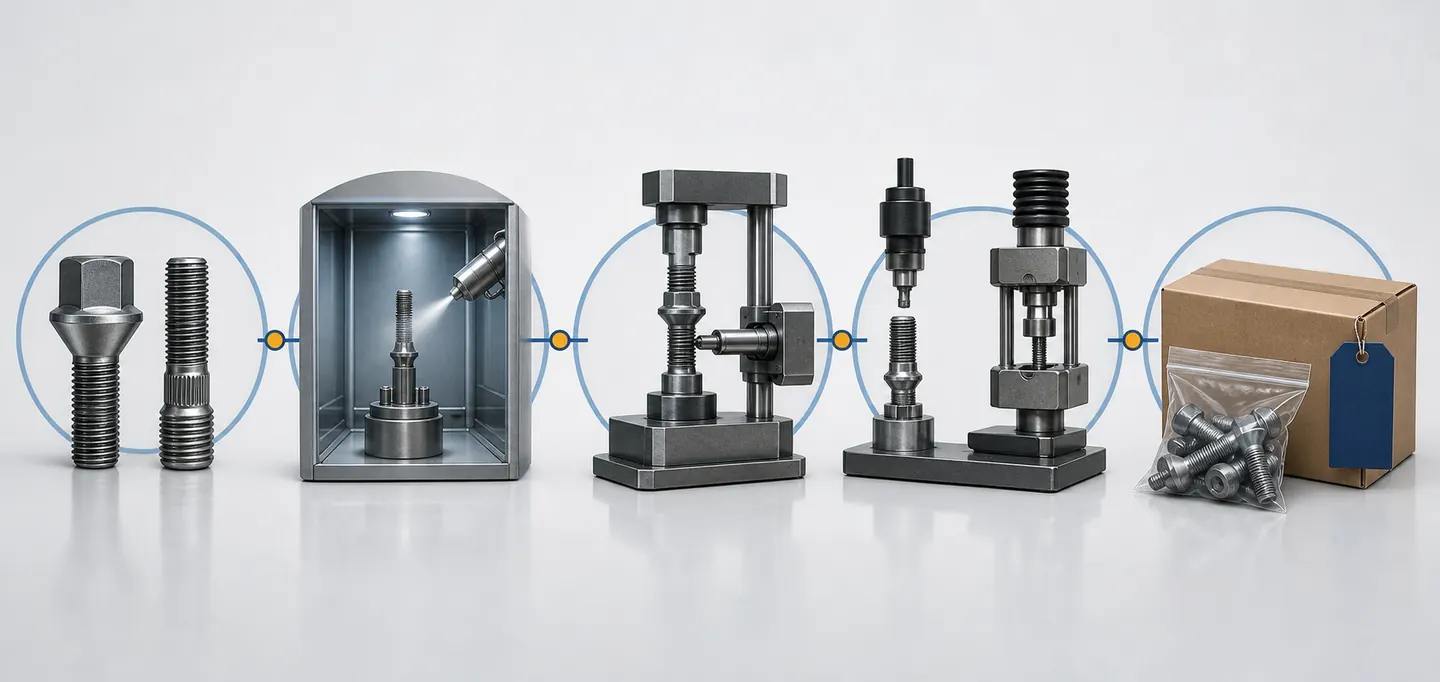
Wheel-bolt fatigue testing, dimensional inspection and assembly evidence should be defined by the product risk and customer specification. FastenersFromTurkey confirms the required document plan for the specific order scope; no test, PPAP level or certificate is treated as universally included.

Fatigue, tensile, hardness and dimensional checks

Start with drawing-revision control, material identity, dimensions, thread inspection and mechanical requirements. Where fatigue testing is specified, identify the loading method, sample condition, cycle requirement and acceptance source. Tensile, proof-load, hardness, decarburization or other checks should be named precisely rather than grouped under a generic “tested” claim.

Torque-tension and friction-coefficient evidence

Torque-tension evidence must be tied to the actual fastener, coating, lubricant, mating thread and bearing surface. Approximately similar finishes can produce different friction conditions. The resulting test supports the agreed assembly plan; it does not replace the vehicle or OEM tightening specification.

PPAP and customer-specific validation

The quality plan may include samples, dimensional reports, material and mechanical evidence, coating records, process controls, traceability, PPAP or another customer format. The applicable PPAP level, submission content, sample quantity and change-control route are confirmed only after supplier capability and customer requirements are reviewed.

Coating approval belongs to the complete joint

Coating approval belongs to the complete joint and assembly method. A process that meets a coating specification may still require application-specific friction, fatigue and installation validation.

Applications

Applications and buyer selection criteria

Wheel bolts and studs may be specified for automotive and light-commercial vehicles, trucks, trailers, buses, agricultural equipment and off-highway machinery. The correct route depends on the wheel-centering system, joint design, validation level, annual volume and approval process rather than the market label alone.

Automotive and light-commercial applications

State whether the requirement supports OEM production, a controlled aftermarket program, a distributor range or another defined application. Provide the drawing revision and any customer-specific quality format. Do not rely on a vehicle model name without permission and supporting fitment evidence.

Truck, trailer, bus, agricultural and off-highway applications

Heavy-vehicle wheel fasteners can involve different centering, geometry, joint loads and documentation expectations. Trailer wheel bolts, trailer lug studs and tractor wheel bolts should be identified by the actual wheel and hub system, not grouped under a universal heavy-duty range.

OEM, aftermarket and distributor requirements

OEM and Tier programs may require controlled samples, PPAP, change approval and detailed traceability. Aftermarket and distributor programs may prioritize cross-reference control, packaging, labeling and repeat-order consistency. Both still require an approved technical basis; an OEM reference is for identification unless the governing drawing and acceptance criteria are available.

How we supply from Turkey

One RFQ, reviewed for order-specific wheel-bolt supply

FastenersFromTurkey is a wheel-bolt supplier and exporter in Turkey. Buyers can submit one drawing-led RFQ for an order-specific feasibility, validation and supply-scope review.

Supplier qualification and specification review

The process begins with the drawing, application, annual volume and document requirements. We review the safety-critical interfaces, identify clarification points, check supplier capability and tooling, and return a project-specific technical and commercial basis. No factory, capacity or certificate is attributed to FastenersFromTurkey unless it belongs to the legal entity and is explicitly approved for public use.

Quality-document and inspection coordination

The order document plan is matched to the approved source. Depending on the specification and verified capability, it may include material certificates, dimensional and mechanical reports, coating records, corrosion or friction results, inspection reports, traceability and customer-specific PPAP documents.

Packaging, traceability and export support

Packaging is reviewed against part geometry, thread protection, lot separation, labeling and destination handling. Export support can cover the agreed packing list, commercial documents and shipment coordination. Incoterm, routing and delivery timing remain quotation-specific.

Commercial review

What determines price

Wheel bolt price and wheel stud price cannot be separated from the drawing and approval plan. Project-specific pricing is confirmed after drawing, specification, annual volume and documentation review. A fixed public unit price or MOQ would ignore tooling, material, heat treatment, coating, testing, packaging and destination variables.

Price driverCommercial effect
Geometry, thread and tolerancesDetermines forming, machining, inspection and scrap risk
Material and heat treatmentAffects route qualification and mechanical verification
Coating and friction conditionAdds applicator, testing and joint-validation requirements
Tooling and samplesExisting tooling and new-tool development follow different cost paths
PPAP and inspection planDefines sample, measurement and documentation effort
Quantity and annual volumeSupports route and batch planning
Packaging and destinationDetermines protection, labeling, palletization and freight basis
MOQ, tooling and export

Tooling, packaging and Incoterm review

MOQ, tooling, pricing and export terms are reviewed together with the approved specification rather than published as universal values.

Standard tooling versus new tooling

If existing tooling and proven geometry match the approved requirement, the review can proceed without treating the part as a new development. A new seat, head, knurl, shoulder or other special geometry may require feasibility review, new tooling, samples and customer approval. Tool ownership and revision control should be agreed before order placement.

Packaging, Incoterms and destination details

State packaging limits, labeling language, lot-separation rules, destination and requested Incoterm. EXW, FOB, CFR or CIF may be reviewed when operationally suitable, but the final term, loading point and freight scope belong in the quotation.

RFQ checklist

What to include in a wheel-fastener RFQ

Provide enough information to identify both the part and its safety-critical acceptance route:

#Provide in the RFQ
1Part type: wheel bolt, press-in stud, threaded stud, nut or assembly.
2Controlled drawing and revision.
3OEM or reference number for identification only.
4Application and validation classification.
5Thread system, diameter, pitch, tolerance and direction.
6Seat, head/drive, shank, shoulder and knurl details.
7Material and mechanical requirements.
8Heat treatment, hardness and surface/core requirements.
9Coating, corrosion target, friction/lubrication and hydrogen-embrittlement controls.
10Required tests and acceptance criteria.
11PPAP, material certificate and inspection-document requirements.
12Order quantity, annual volume and sample quantity.
13Packaging, labeling and traceability.
14Destination and requested Incoterm.
15Target timing and approval milestones.
RFQ FAQ

Frequently asked questions

What information is required to quote wheel bolts?

Provide the drawing and revision, application, thread, seat, shank or shoulder, material and mechanical requirements, coating and friction requirements, validation documents, order quantity, annual volume, packaging and destination. An OEM number can support identification but should not replace the approved drawing or specification.

What is the difference between a wheel bolt and a wheel stud?

A wheel bolt normally passes through the wheel and threads into the hub or mating component. A wheel stud remains installed in the hub and receives a wheel nut. Press-in studs also require knurl, shoulder and hub-hole information that is not part of a typical wheel-bolt specification.

Can wheel bolts be selected by thread size alone?

No. The thread is only one part of the joint. Seat geometry, shank or shoulder, usable engagement, wheel and hub interface, material and mechanical requirements, coating, friction condition and the governing vehicle or OEM specification must also be verified.

Which standards apply to wheel bolts and wheel studs?

The applicable reference depends on the wheel system and approved specification. DIN 74361 may apply to defined disc-wheel fastening systems, while ISO 898-1 may define qualifying mechanical properties for applicable metric bolts and studs. The customer or OEM drawing remains the primary acceptance source for application-specific parts.

Which coating information should be included in the RFQ?

Specify the coating system, corrosion target and test method, color where relevant, coating thickness, lubricant or topcoat, coefficient-of-friction requirement and any hydrogen-embrittlement controls. Coating approval should be tied to the complete joint and assembly specification.

Can custom wheel bolts and studs be supplied from Turkey?

Drawing-led requirements can be reviewed for order-specific supply. Feasibility, tooling, material, heat treatment, coating, validation, MOQ and lead time are confirmed after the drawing, annual volume and documentation requirements are evaluated.

What quality documents can be requested?

Depending on the approved order and supplier capability, the document plan may include material certificates, dimensional and mechanical reports, coating records, corrosion or friction test results, inspection reports, traceability records and customer-specific PPAP documents.
Request a quote

Send your drawing or specification for RFQ review

FastenersFromTurkey supplies wheel bolts and studs from Turkey for drawing- and OEM-specification-led orders. The approved drawing or OEM specification governs this safety-critical wheel interface; any substitution or change requires documented customer engineering approval. Send the seat, thread, shank or knurl, material, coating, required fatigue or torque-tension validation, PPAP, traceability, quantity, packing, Incoterm and destination.

Email: sales@fastenersfromturkey.com
Phone: +90 543 928 19 76

Wheel fastener coating, friction, testing and quality-document review workflow
Ready to quote

Compare a wheel-bolt or wheel-stud requirement

Send the drawing, OEM reference or complete specification with annual volume so the requirement can be reviewed without relying on an unsafe thread-size cross-reference.

Request a Wheel-Bolt or Wheel-Stud Quote

Thread size alone does not establish wheel-fastener fitment. Seat or knurl geometry, engagement, coating and friction condition, fatigue requirements, and the OEM or customer specification must be reviewed together. Safety-critical substitutions require documented engineering approval.

An unhandled error has occurred. Reload 🗙