FastenersFromTurkey — Bursa, Turkey · sales@fastenersfromturkey.com Part of the MetalFromTurkey group · Bursa-based industrial fastener supplier and exporter serving international buyers
Fasteners From Turkey · Drawing-Led RFQ Supply

Custom Fasteners Made to Drawing from Turkey

FastenersFromTurkey supplies custom bolts, screws and nuts made to drawing in Turkey for OEM and industrial RFQs. The controlled drawing or specification, revision, material, thread, tolerances, coating, document needs, quantity, annual volume and destination are confirmed for each order.

  • Drawing-led review
  • Confidential order review
  • Export-document coordination
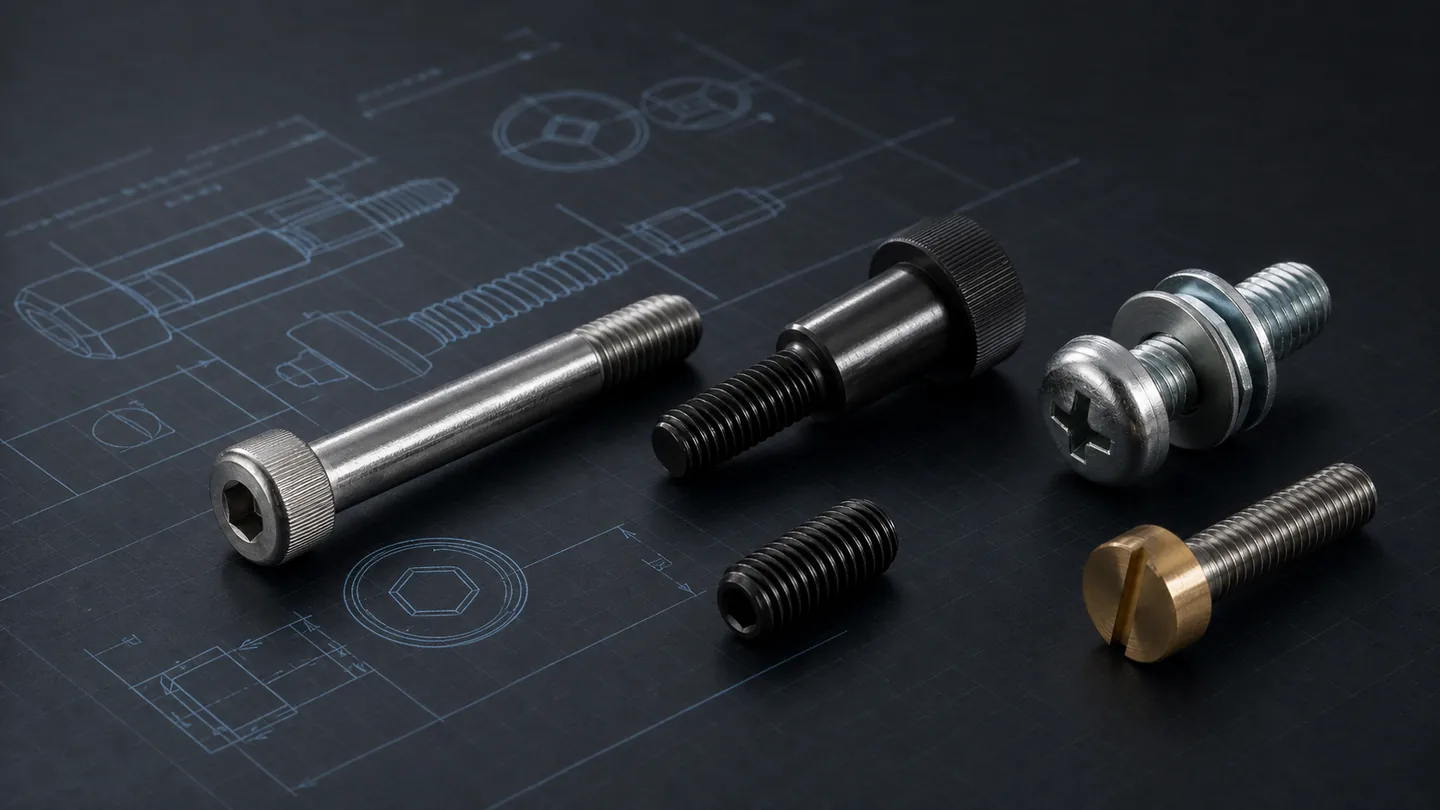
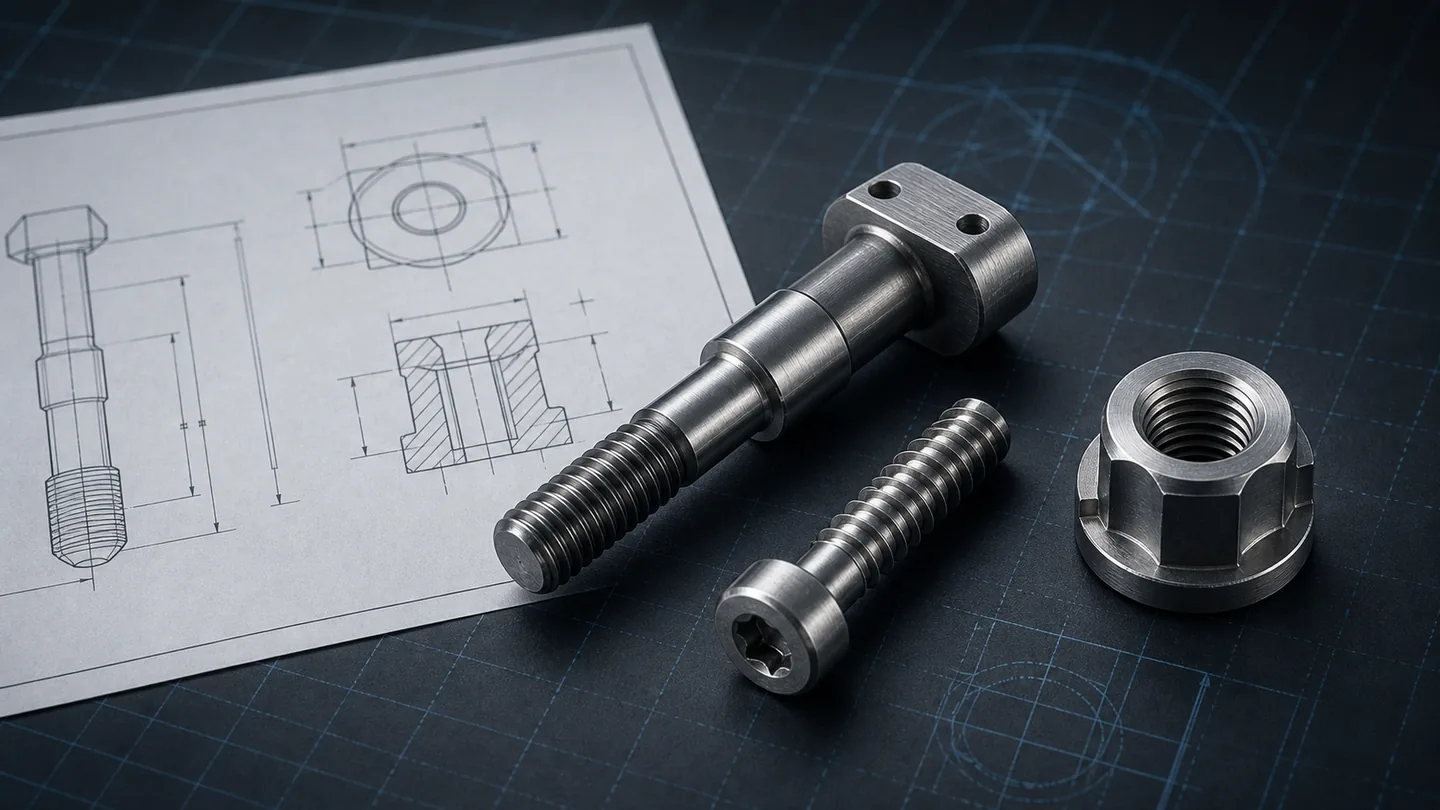
Custom bolt, screw and nut arranged beside a generic engineering drawing for drawing-led RFQ review

Custom fasteners made to drawing through verified Turkish manufacturers

RFQ Qualification

Custom fastener order qualification summary

Confirm these order-specific inputs before quotation.

Fasteners From Turkey Confirmed per RFQ
Custom fastener RFQ qualification fields
Field Order input Confirmation
Product scope Made-to-drawing bolt, screw, nut or other custom fastener for the stated application Part type and application confirmed per RFQ
Standard/drawing Controlled drawing, revision and purchase specification govern acceptance Governing documents confirmed per RFQ
Dimensions/thread Drawing dimensions, thread system, tolerance classes and critical characteristics Dimensional inputs confirmed per RFQ
Material/mechanical Specified material, property class or required mechanical values Order requirement confirmed before quotation
Finish/coating Specified finish, coating, corrosion and friction requirements Finish scope confirmed per RFQ
Documentation Required certificate, inspection, sample, PPAP or TPI scope Availability and deliverables confirmed per order
Commercial Quantity or annual volume, MOQ drivers, tooling, packing, Incoterm and destination Commercial basis confirmed in the quotation
Supplier role FastenersFromTurkey supplies custom fasteners made to drawing in Turkey. Order-specific supply scope confirmed from the RFQ

Values remain order-specific until confirmed in the quotation.

Drawing-led The approved drawing and purchase specification govern acceptance
Confidential Manufacturer identity and buyer files stay commercially confidential
Route-matched Modified standard, formed, forged or machined route per part
Export-coordinated Documents, packaging, Incoterm and destination reviewed in one RFQ
Product scope

Custom Fastener Categories

Classify the requirement before discussing process or price. A bill of materials containing several families can stay within one coordinated RFQ, but each part should retain its own drawing, revision and acceptance criteria.

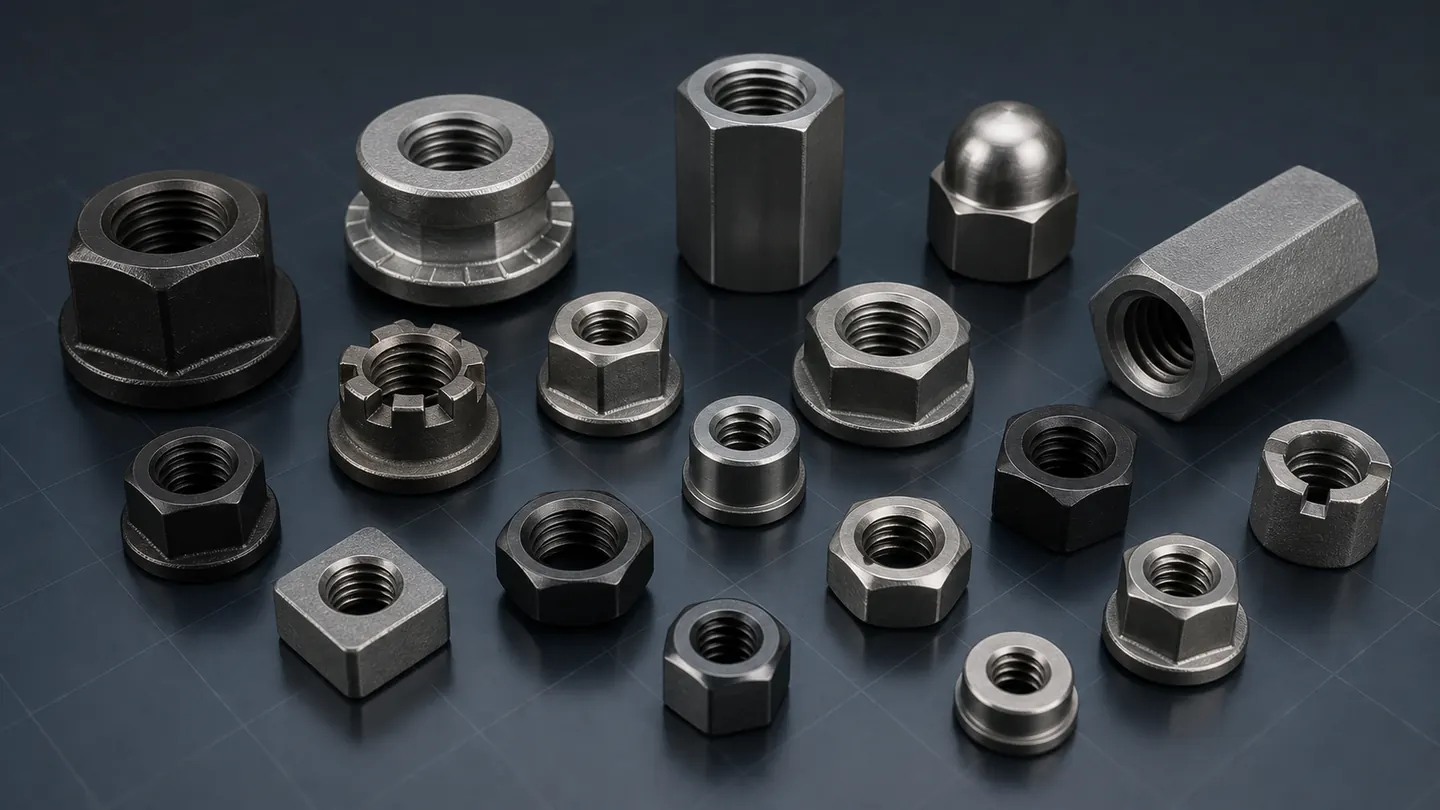
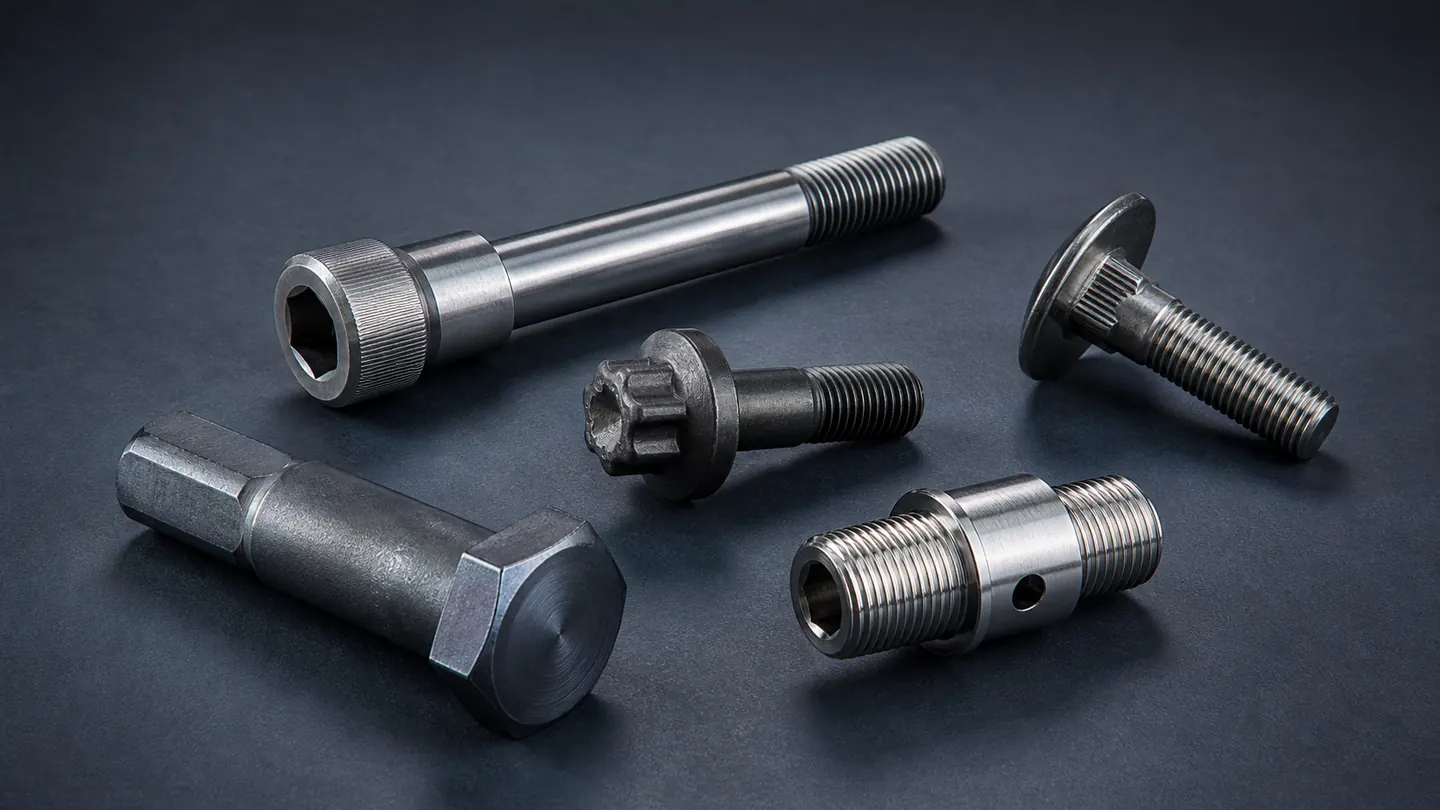
Assorted custom bolts made to drawing through verified Turkish manufacturers for industrial RFQs

Custom Bolts Made to Drawing

Choose the custom bolt category when the part is externally threaded and the head, shank, shoulder, grip length, thread runout, bearing face or load path drives the design. The drawing should identify critical diameters, under-head length, thread system and class, material and mechanical requirements, heat treatment, finish and any safety-critical function. Order-specific review confirms whether a modified standard blank, forming, forging, machining or a combined process is feasible.

View custom bolts made to drawing
Custom screws made to drawing with head, drive, thread and tolerance callouts

Custom Screws Made to Drawing

Choose the custom screw route when head profile, drive or recess, point, thread-forming behavior, shoulder, captive feature or substrate interaction controls the assembly. Custom screw manufacturers need the mating component, installation method and functional acceptance criteria as well as the nominal dimensions. Standard self-tapping and self-drilling applications should remain in their dedicated product families rather than being treated as made-to-print work automatically.

View custom screws made to drawing
Custom nuts made to drawing for industrial RFQ review through verified Turkish manufacturers

Custom Nuts and Internally Threaded Parts

Choose the custom nut route when the internal thread, body geometry, prevailing-torque feature, bearing face, proof requirement, mating part or press-fit relationship controls the program. Include the mating bolt or stud designation, engagement, coating allowance and thread-gauge requirement. Nut class or grade must be compatible with the joint specification; it should never be inferred from a drawing title alone.

View custom nuts made to drawing

Compare custom bolt, screw and nut requirements

How to specify

Review the custom fastener requirement by input area

Classify the requirement, then confirm the workflow, the quotable specification fields and the evidence and export package that let the RFQ be quoted on one basis.

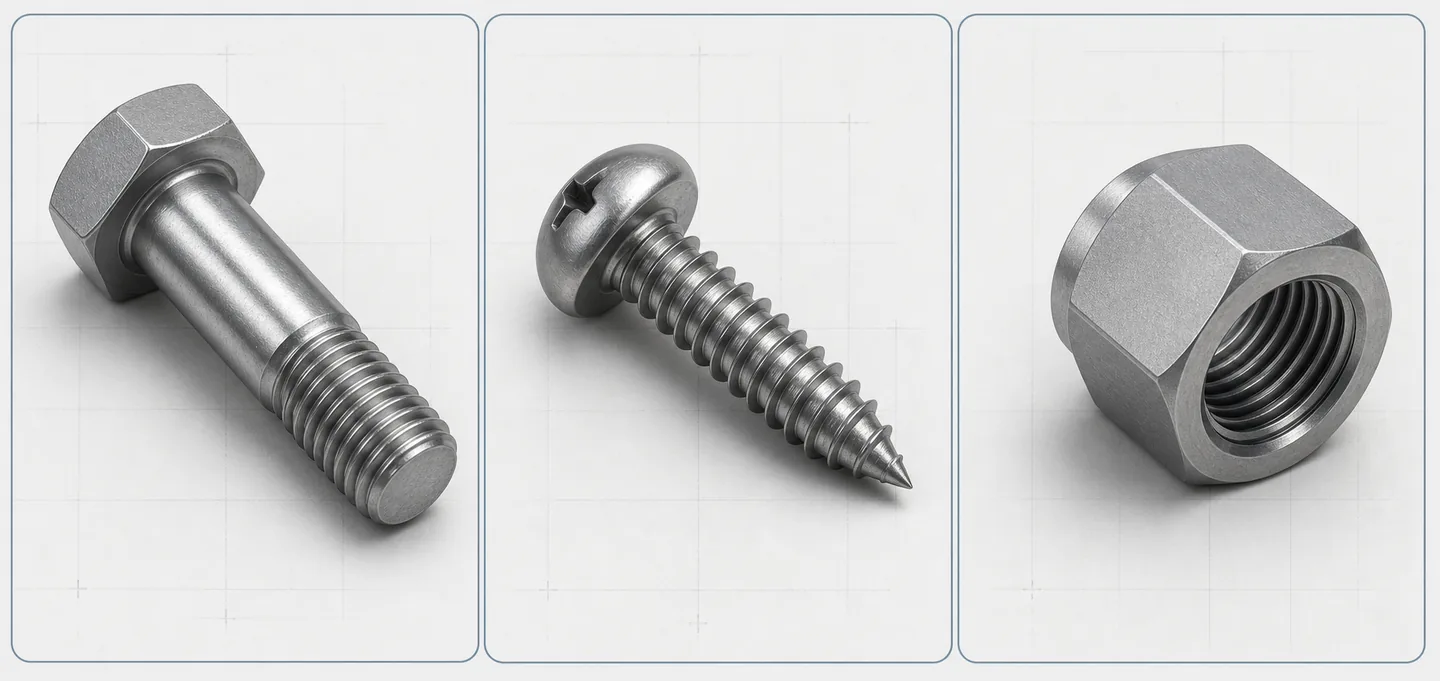
Three-panel custom fastener comparison showing separate bolt, screw and nut requirement paths

Custom bolt, screw and nut categories

Classify the requirement before discussing process or price. A custom bolt is governed by external-thread geometry and load transfer; a custom screw adds drive, point and assembly details; a custom nut is controlled by its internal thread, mating fastener and proof or functional requirement.

Compare custom bolt, screw and nut requirements
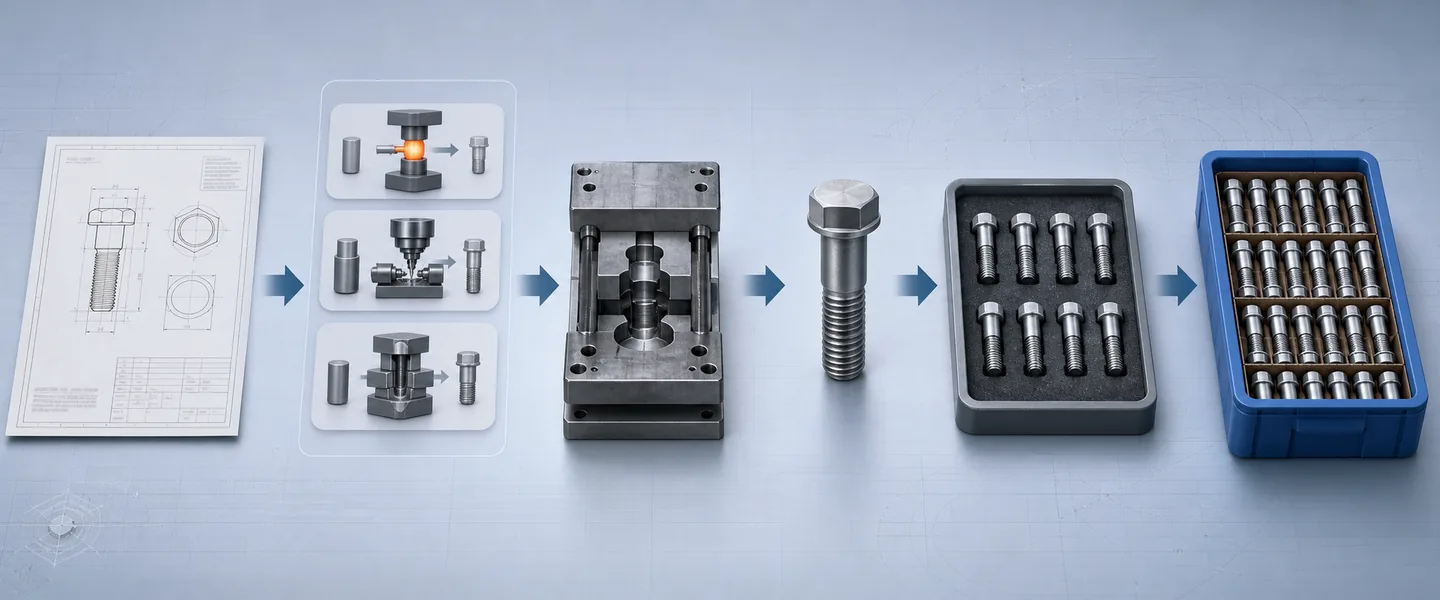
Custom fastener workflow from drawing and process review through tooling, sample approval and serial packing

From drawing review to serial production

Made-to-print custom fasteners move through a controlled sequence: drawing intake, blocking-question review, order-specific process feasibility and tooling review, quotation, sample or first-article approval when required, and serial-order release.

Review the drawing-to-production sequence
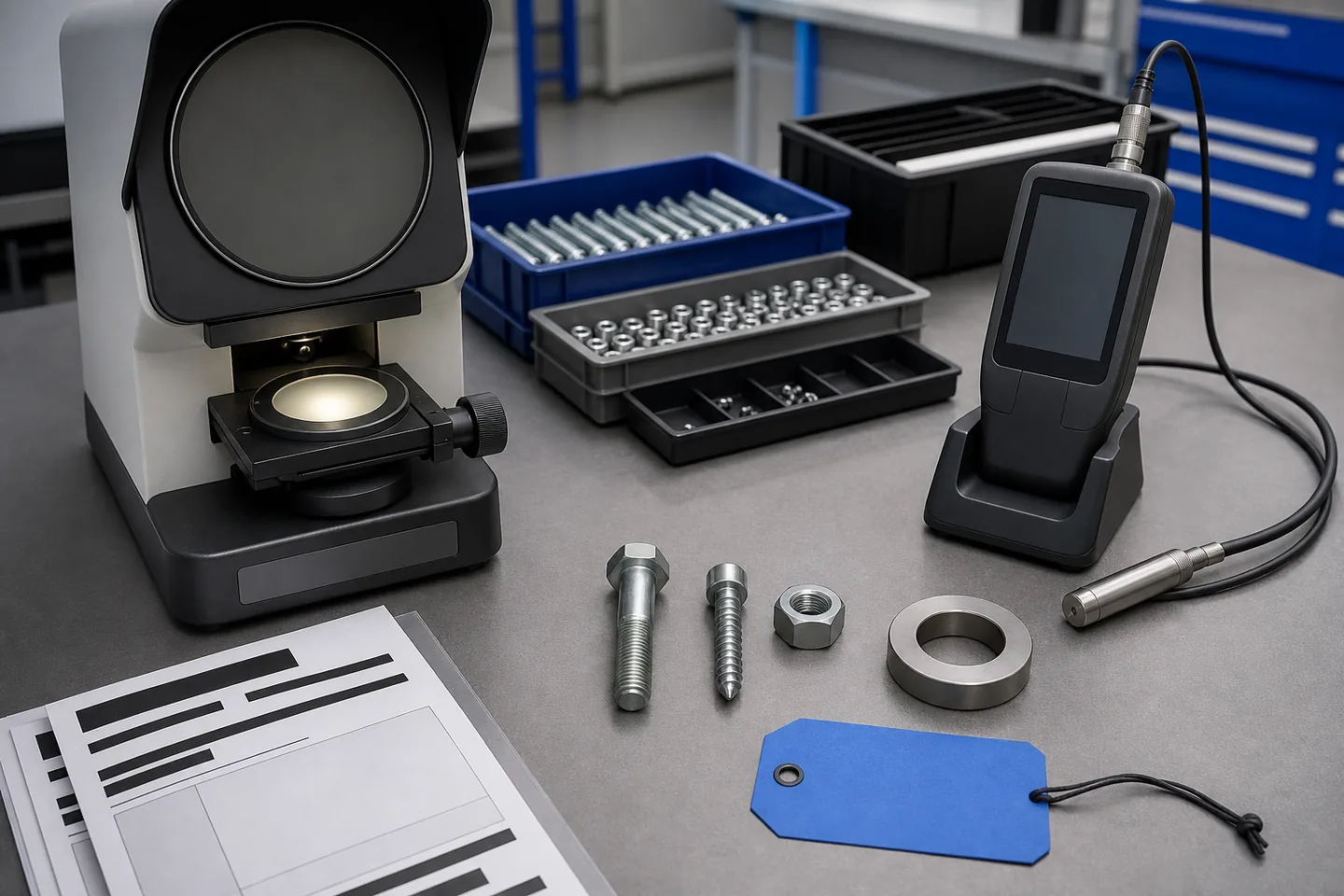
Custom fasteners beside unmarked inspection tools, redacted records and traceability sample trays

Inspection, documentation and traceability

Replace generic quality claims with an order-specific evidence plan. The RFQ should name the required document, issuer, scope, language and submission stage so material, dimensional, coating and approval records are quoted as defined deliverables.

Define the inspection and document package
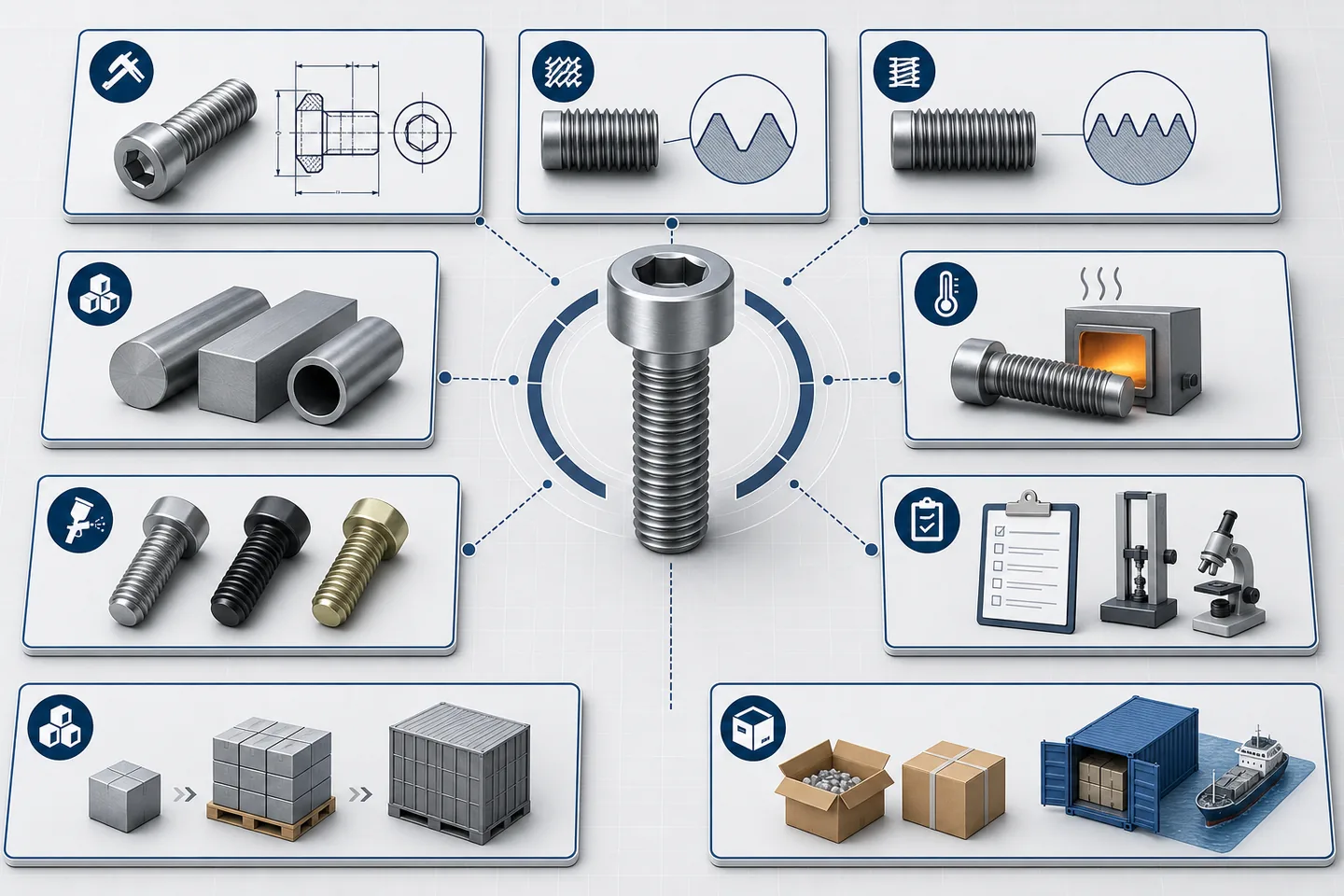
Custom fastener export flow from protective packaging to pallet, container and destination-port review

MOQ, tooling, lead time and export terms

Custom-fastener quotations are project-specific. First-order quantity and annual volume influence whether dedicated tooling, a modified standard part, machining or another route is economical, and packaging, destination and Incoterm affect both price and schedule.

Review commercial and export inputs

Send your drawing for custom fastener RFQ review

How we work

How We Supply Custom Fasteners from Turkey

FastenersFromTurkey receives the RFQ and checks whether the information is sufficient for an order-specific feasibility and supply-scope review. Product family, geometry, material, production process, tooling, annual volume, quality plan, required documents, packaging and destination are assessed before a quotation is issued. Actual manufacturing capability is confirmed for the controlled requirement.

One accountable commercial relationship

FastenersFromTurkey coordinates the technical question list, quotation, approval sequence, documentation scope and export communication. The commercial relationship remains direct and accountable while production responsibility stays with the manufacturer selected for that RFQ.

How we review a custom fastener RFQ

Each RFQ is reviewed against evidence rather than a generic catalogue match. A cold-heading program, a machined prototype, a forged safety-critical part and an internally threaded special component require different process, tooling and inspection profiles. Material formability, deformation limits, secondary operations, local tolerances, heat treatment, coating, tests and forecast volume are assessed together. Open items are returned as blocking questions instead of being converted into silent assumptions.

Manufacturer evidence and commercial confidentiality

Manufacturer identity, machine lists, customer drawings, quotations and non-public certificates remain confidential. Capability or approval claims are published only when their holder, scope and validity are verified and disclosure is approved. Buyer files should carry the correct drawing number, revision and distribution restriction so feasibility, samples, inspection records and serial orders all refer to the same controlled requirement.

Request Custom Fastener Feasibility Review

Workflow

From Drawing Review to Serial Production

Made-to-print custom fasteners move through a controlled sequence: drawing intake, blocking-question review, order-specific process feasibility and tooling review, quotation, sample or first-article approval when required, and serial-order release. Every stage should preserve revision control and clearly identify any approved deviation.

Drawing, revision and critical-characteristic review

Submit the drawing number, revision, units, datums, critical dimensions, tolerances, thread designation, material, mechanical requirements, finish and referenced specifications. Identify features that affect fit, clamp load, sealing, locking, rotation, electrical contact or another function. If the part mates with another component, include the interface, installation method and acceptance criteria. The approved drawing and purchase specification govern custom geometry; a convenient catalogue standard must not be substituted without approval.

Manufacturing route and feasibility review

The route may involve modifying a standard part, cold heading or forging, hot forging, machining, thread rolling, heat treatment, coating or a combination of operations. Geometry, material flow, local tolerances, surface requirements, volume and tooling economics determine the practical route. Process names on a website do not establish feasibility for a specific drawing; confirmation belongs in the manufacturer's documented review and quotation.

Tooling, prototype, first article and PPAP

Dedicated forming, trimming, rolling or checking tools may be required. Tooling ownership, maintenance, life, change control and non-recurring engineering should be separated from unit pricing. Prototype or machined samples can support early geometry and fit checks, while first-article or PPAP submissions may be required for customer approval. State the sample quantity, PPAP level, inspection records and approval sequence in the RFQ so they can be quoted as defined deliverables.

Specification matrix

Specification Matrix for a Quotable Custom Fastener

The matrix below closes the fields most likely to delay feasibility or pricing. Use an exact designation where the drawing already controls the requirement; otherwise identify the field as open for customer engineering review.

RFQ fieldRequired input
Product familyBolt, screw, nut, internally threaded part or other drawing-led fastener
Drawing controlDrawing number, revision, units, datums and governing purchase specification
GeometryCritical dimensions, tolerances, surface finish and functional characteristics
ThreadMetric, UNC or UNF; nominal size; pitch or TPI; class; length; handedness and runout
MaterialExact material designation and any approved alternative route
Mechanical requirementProperty class or grade, hardness, heat treatment and required test method
FinishCoating or finish, thickness limits, friction needs, color and corrosion endpoint
Functional featureLocking, sealing, prevailing torque, captive component or bearing interface
RiskSafety-critical status, fatigue duty, service environment and substitution approval
Quality evidenceInspection plan, material records, dimensional/thread results and applicable tests
ApprovalPrototype, first article, PPAP level, samples and approval sequence
CommercialFirst-order quantity, annual volume, tooling status and target date
ExportPackaging, labels, destination, preferred Incoterm and named place or port
Dimensions and threads

Dimensions, Thread Systems and Tolerances

Define the thread system, not only the nominal size

Nominal size is only one input. Define external or internal thread, metric or Unified inch system, coarse or fine pitch, fit class, thread length, start, runout and coating allowance. Metric and UNC/UNF threads are separate systems and are not interchangeable. Control critical head, shank, shoulder, body, bearing, concentricity or press-fit dimensions individually rather than relying on a broad title-block tolerance for every function.

Material and mechanical

Materials, Mechanical Requirements and Heat Treatment

Specify material, class and heat-treatment condition separately

Material identity, property class or grade and heat-treatment condition are separate requirements. Specify each one when applicable and identify the governing test or customer specification. Carbon, alloy, stainless or non-ferrous options can be assessed only against a defined part and order-specific production capability. Requests for custom titanium fasteners require the exact alloy, geometry, process, mechanical properties, tests, quantity and documents before availability or feasibility can be confirmed.

Coating and corrosion

Coatings, Corrosion Targets and Locking Features

State the finish, corrosion endpoint and locking requirement

State the coating or finish, local thickness limits, corrosion-test method and endpoint, friction or lubricant requirement, and any locking or sealing feature. White- and red-corrosion criteria are different; test exposure is not a field-service-life guarantee. High-hardness or safety-critical parts require a process-specific hydrogen-embrittlement review where cleaning and coating routes create exposure. Any material, class, coating or locking substitution requires customer engineering approval when function or safety can change.

Discuss Your Specification with Our RFQ Team

Evidence plan

Inspection, Documentation and Traceability

Replace generic quality claims with an order-specific evidence plan. Depending on the drawing and purchase specification, the package may include material records, dimensional reports, thread-gauge results, mechanical test records, coating-thickness or corrosion-test evidence, first-article or PPAP documents, lot traceability and third-party inspection.

Name the document, issuer, scope, language and submission stage

The RFQ should name the required document, issuer, scope, language and submission stage. Evidence is checked against the applicable order and manufacturer; it is not represented as FastenersFromTurkey-owned certification.

Keep identity, lot and shipment records connected

Heat or material identity, manufacturing lot, inspection status, packing label and shipment documents should remain connected through the agreed traceability method.

Review fastener quality and documentation support

Commercial and export

MOQ, Tooling, Lead Time and Export Terms

Custom-fastener quotations are project-specific. First-order quantity and annual volume influence whether dedicated tooling, a modified standard part, machining or another route is economical. Material availability, heat treatment, coating, sample approval, tests, documents, packaging and destination also affect price and schedule. Provide these inputs together so tooling/NRE, samples and serial parts can be shown as separate commercial lines where appropriate.

What determines a project-specific quotation

MOQ and lead time are confirmed after order-specific review of geometry, process, tooling, material, finish, quantity and approval requirements. A prototype quantity may differ from the serial MOQ. Changes to the drawing, sample plan, PPAP scope or test plan can change both cost and timing, so the quotation should identify its revision basis, validity and open assumptions.

Packaging, destination and Incoterms

State pieces per pack, inner and outer protection, pallet constraints, corrosion protection, lot separation, barcode or label format and required shipping documents. Preferred terms may include EXW, FOB Turkish port (Istanbul, Izmir/Aliaga, Mersin, Gemlik, Iskenderun or Derince), CFR or CIF destination port. The final Incoterm, named place or port, freight responsibility, cost and delivery schedule are confirmed in the quotation.

RFQ checklist

Send a Complete Custom Fastener RFQ

Send one controlled package for each part:

#Provide in the RFQ
1drawing or specification file, drawing number and revision;
2product family, application and safety-critical status;
3dimensions, tolerances and metric, UNC or UNF thread details;
4material, mechanical requirements and heat treatment;
5coating, corrosion, friction, locking or sealing requirements;
6tests, inspection records, certificates, prototype, first article or PPAP scope;
7first-order quantity, forecast annual volume and tooling status;
8packaging, labels, destination, preferred Incoterm and target date.
RFQ FAQ

Frequently Asked Questions

What information is required for a custom fastener quotation?

Send the drawing and revision, product family, dimensions, thread, tolerances, material, mechanical requirements, coating, corrosion or locking requirements, inspection documents, prototype or PPAP needs, order quantity, annual volume, packaging, destination and preferred Incoterm.

Can custom fasteners be produced from a drawing?

Yes, drawing-led requirements can be reviewed for quotation. The approved drawing and purchase specification govern the part. Geometry, tolerance, material, process, tooling, validation and commercial feasibility must be confirmed by the selected Turkish manufacturer before an offer is issued.

How is a custom fastener RFQ reviewed?

FastenersFromTurkey reviews the product family, geometry, material, production process, tooling, annual volume, quality plan, documentation and destination. Order-specific manufacturing capability and supply scope are then confirmed before quotation.

Which production method is suitable for a custom fastener?

The suitable route may be modification of a standard part, cold heading or forging, hot forging, machining, or a combined route. The decision depends on geometry, tolerance, material, mechanical requirements, quantity, annual volume and tooling economics, so it is confirmed during feasibility review.

Are tooling, prototypes or PPAP required?

Tooling, prototype, first-article and PPAP requirements depend on the selected process, drawing, customer approval plan and annual volume. State the required sample quantity, PPAP level, inspection records and approval sequence in the RFQ so these items can be quoted separately.

Can titanium custom fasteners be supplied?

Titanium requirements can be assessed only after the exact alloy, geometry, process, mechanical properties, testing, quantity and documentation are known. Availability and feasibility must be verified with a suitable Turkish manufacturer; titanium is not assumed as a standard capability.

Which export terms should be included in the RFQ?

State the delivery destination, packaging and labelling requirements, preferred Incoterm and named place or port. Requests may specify options such as FOB Turkish port, CFR or CIF destination port, but the final term, costs and delivery schedule are confirmed in the quotation.
Request a quote

Send Your Drawing for Custom Fastener RFQ Review

FastenersFromTurkey supplies custom bolts, screws and nuts made to drawing in Turkey. Send one controlled package per part with the drawing or specification number and revision, product family and application, dimensions, thread and tolerances, material and mechanical requirements, coating, test and document requirements, tooling status, first-order quantity, annual volume, packing, Incoterm and destination.

Accepted file type and upload-size limits are shown beside the form.
Email: sales@fastenersfromturkey.com
Phone: +90 543 928 19 76

Custom fastener RFQ matrix for geometry, thread, material, finish, testing, quantity and export packaging
Ready to quote

Send drawing, quantity and destination

Send the controlled drawing or specification with its revision, material, thread, tolerances, coating, document needs, quantity, annual volume and destination so order-specific feasibility and supply scope can be confirmed.

Request a Fastener Quote

Thread designation alone does not define a functional custom fastener. The controlled requirement should also identify fit class, mating component, coating allowance, gauge or inspection method and the characteristic that performs the work. These inputs prevent a dimensionally plausible part from failing during assembly or service.

An unhandled error has occurred. Reload 🗙