FastenersFromTurkey — Bursa, Turkey · sales@fastenersfromturkey.com Part of the MetalFromTurkey group · Bursa-based industrial fastener supplier and exporter serving international buyers
Fasteners From Turkey · Specification-Led RFQ Supply

Lock Nuts from Turkey: Nylon Insert, All-Metal and Flange

FastenersFromTurkey supplies nylon insert, all-metal and flange lock nuts from Turkey for OEM, distributor and project RFQs. Locking mechanism, standard or drawing, thread, material or class, finish, temperature, prevailing-torque test, documentation and quantity are confirmed for each order.

  • Specification-led review
  • Confidential RFQ handling
  • Export documentation support
Nylon insert, all-metal and flange lock nuts arranged for industrial sourcing from Turkey

Nylon insert, all-metal and flange lock nuts arranged for industrial sourcing from Turkey

RFQ Qualification

Lock nut order qualification summary

Confirm these order-specific inputs before quotation.

Fasteners From Turkey Confirmed per RFQ
Lock nut RFQ qualification fields
Field Order input Confirmation
Product scope Nylon insert, all-metal or flange lock nut for the stated joint Locking mechanism and application confirmed per RFQ
Standard/drawing Applicable ISO or DIN reference, controlled drawing or customer specification Governing revision confirmed per RFQ
Dimensions/thread Thread system, size, tolerance class, engagement and mating fastener Dimensional inputs confirmed per RFQ
Material/mechanical Material, property class, proof-load and mating-bolt requirements Order requirement confirmed before quotation
Finish/coating Finish, coating, friction, corrosion and service-temperature requirements Finish scope confirmed per RFQ
Documentation Required certificate, prevailing-torque test, inspection report or TPI scope Availability and deliverables confirmed per order
Commercial Quantity, MOQ drivers, packing, Incoterm and destination Commercial basis confirmed in the quotation
Supplier role FastenersFromTurkey supplies lock nuts from Turkey. Order-specific supply scope confirmed from the RFQ

Values remain order-specific until confirmed in the quotation.

Standard-led Applicable standard or drawing governs the RFQ
Mechanism-matched Locking mechanism confirmed against the joint before quotation
Coating & friction Coating build tied to the prevailing-torque and reuse plan
Documentation-ready Document plan matched to the approved order scope
Where to start

Confirm the locking mechanism, then the type and standard

Lock nuts resist loosening through different mechanisms, and the mechanism must match the joint. Start with the locking method, then confirm the type family, the applicable standard and the prevailing-torque or reuse requirement before a configuration is specified.

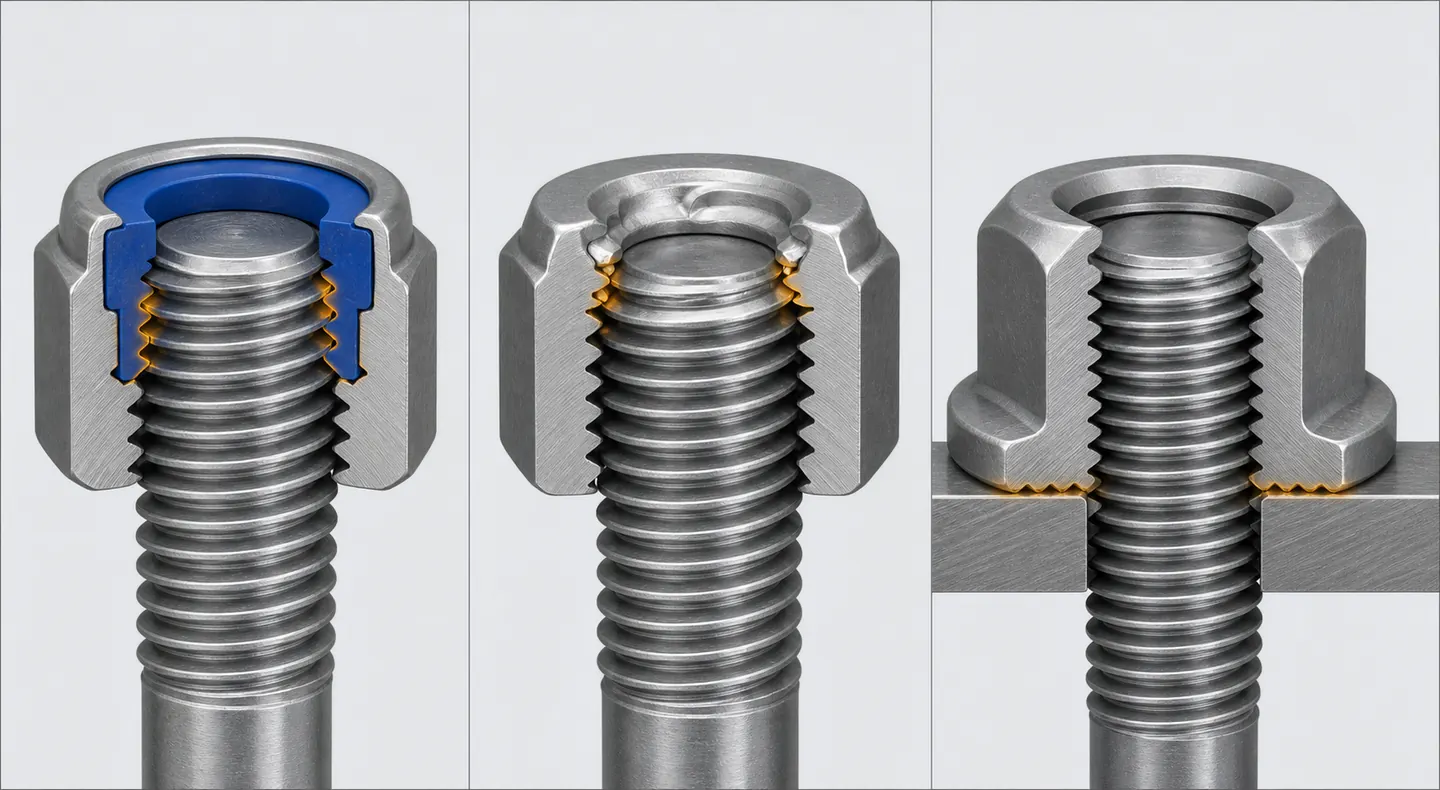
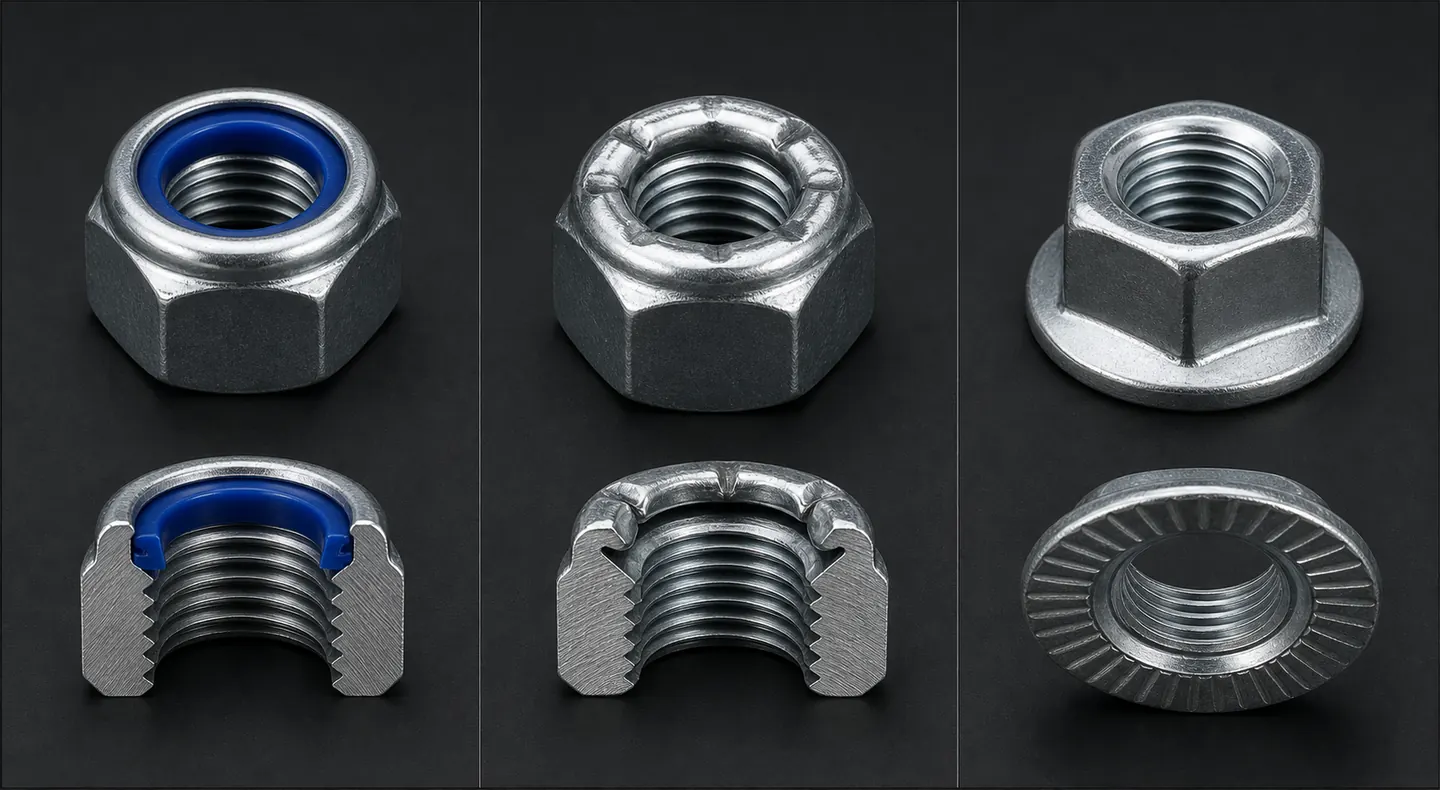
Cutaway comparison of nylon insert, all-metal prevailing torque and flange locking mechanisms

Lock nut types and locking mechanisms

Prevailing-torque and surface-bearing lock nuts create resistance in different ways. A standard free-spinning nut provides neither feature unless the joint uses a separate locking method.

Compare locking mechanisms
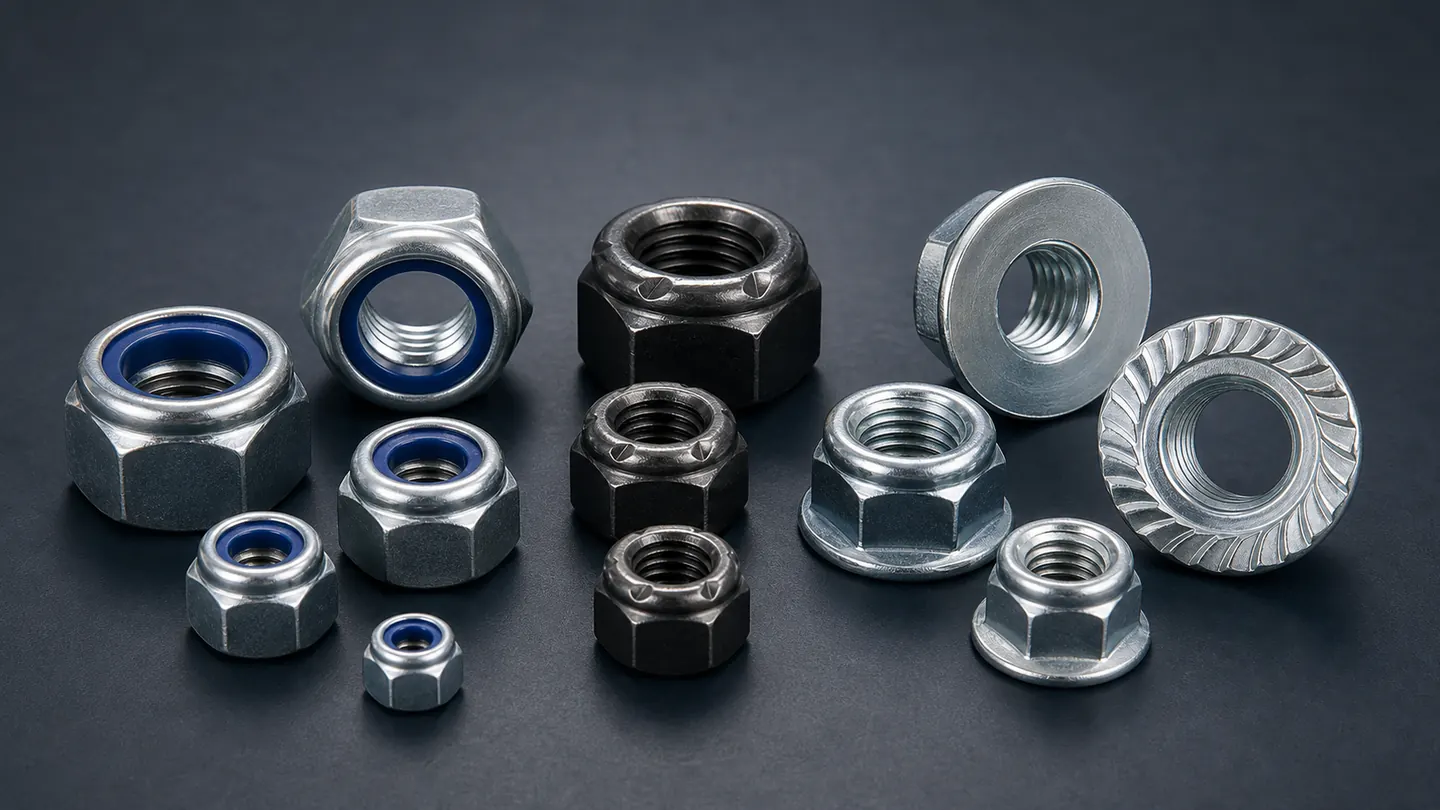
Nylon insert, all-metal and flange lock nut types shown in a technical selection comparison

Nylon insert, all-metal and flange types

Temperature, chemicals, coating, lubrication, joint surface and the required prevailing-torque test can eliminate otherwise similar-looking options between nylon insert, all-metal and flange lock nuts.

Compare lock nut types
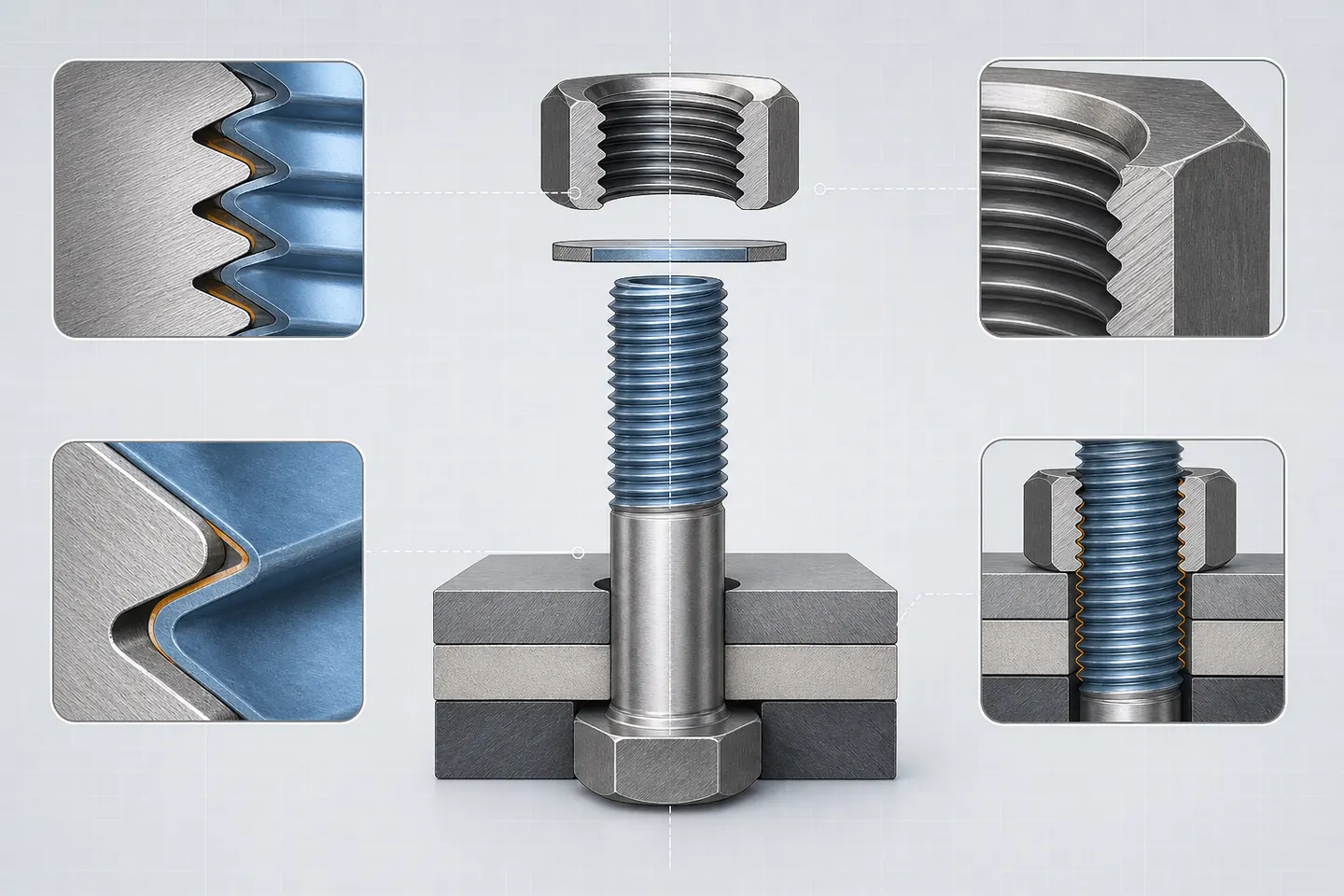
Exploded technical view of lock nut thread, mating bolt class, coating and engagement checks

Standards, threads and mating-bolt checks

A familiar DIN designation does not guarantee equivalence with a current ISO product. Metric and inch thread systems must not be substituted without engineering and customer approval.

Review standards and thread checks
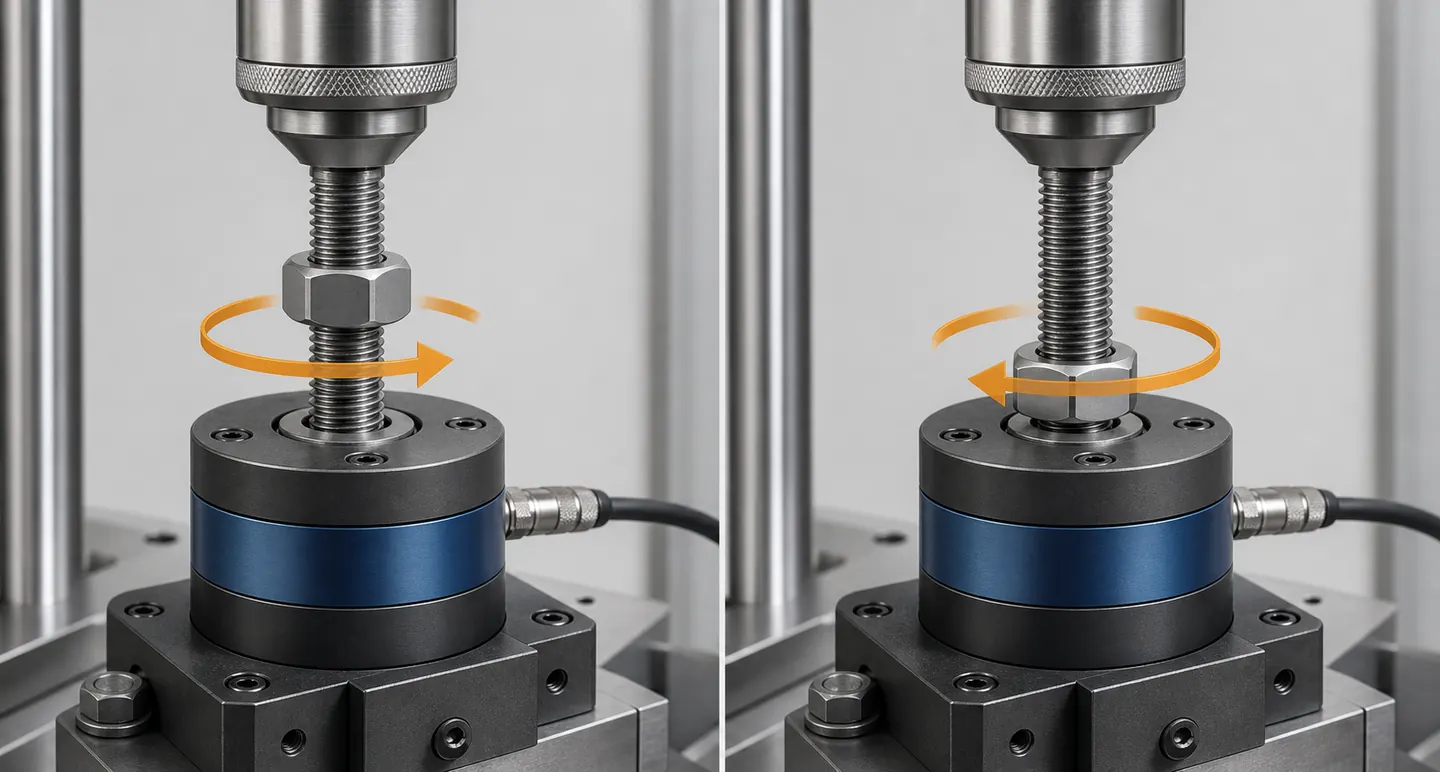
Technical test concept showing prevailing-on and prevailing-off rotation of a lock nut on a bolt

Prevailing torque, testing and reuse

Prevailing torque is the resistance generated by the locking feature during relative rotation. It is distinct from the tightening torque used to create joint preload, and reuse should not be assumed.

Review prevailing-torque testing and reuse

Send your lock nut specification for RFQ review

Locking mechanisms

How each lock nut mechanism produces resistance

Lock nuts resist loosening through different mechanisms, and the mechanism must match the joint. Nylon insert and many all-metal designs create prevailing torque before the nut seats. Other types develop locking action at the bearing surface after seating.

MechanismHow locking is producedBuyer checks
Non-metallic insert prevailing torqueThe insert creates resistance on the mating threadInsert material, temperature and chemical exposure, thread fit, reuse acceptance
All-metal prevailing torqueControlled metal-thread deformation creates resistanceNut style, functional torque, coating, lubrication and mating bolt
Surface-bearing lockingThe locking feature acts when the nut seats on the jointFlange or serration geometry, bearing surface, joint material and direction
Locking methods

Prevailing-torque and surface-bearing lock nuts

This industrial fastener range does not include bearing locknuts, conduit locknuts, wheel-security nuts or furniture cam fittings; those products use different selection and performance criteria.

Prevailing-torque lock nuts

A prevailing-torque locknut creates rotational resistance through an insert or a controlled deformation in the nut thread. This resistance exists independently of final clamp load, so it is measured during installation and removal as well as after defined test cycles. It does not replace a validated tightening specification or prove that the joint has reached the required preload. Nylon insert and all-metal designs can both fall within this family, but they are not interchangeable by name alone. Insert material, thread form, nut style, property class, coating, lubrication and the mating thread influence functional behavior.

Surface-bearing lock nuts

Surface-bearing designs develop their locking action when the nut contacts the joint. A flange can distribute load, while serrations or another seating feature may increase resistance to rotation. Bearing-surface condition, joint material, installation direction and whether the flange is serrated or smooth therefore become part of the specification.

Type selection

Nylon insert vs all-metal vs flange lock nuts

Choose between nylon insert, all-metal and flange lock nuts by starting with the specified mechanism and service conditions. The product standard or controlled drawing governs the final configuration.

Type familyUse whenVerify before RFQ
Nylon insert lock nutsA non-metallic insert is permitted within the verified service rangeInsert material, thread, class, coating, temperature, chemicals and reuse criteria
All-metal lock nutsThe drawing or application requires an all-metal prevailing-torque designStyle, product standard, prevailing torque, class, coating/lubrication and mating bolt
Flange lock nutsThe joint needs an integrated bearing surface or specified flange-locking featureFlange/serration design, bearing surface, direction, joint material and standard/drawing
Type detail

Nylon insert, all-metal and flange lock nuts in detail

Temperature, chemicals, coating, lubrication, joint surface and the required prevailing-torque test can eliminate otherwise similar-looking options.

Nylon insert lock nuts

A nylon insert lock nut uses a non-metallic ring to create resistance on the mating thread. Buyers may also call it a nyloc nut, but the generic product description should remain nylon insert lock nut. Confirm the insert material, thread system, nut style, property class, coating and the application's temperature and chemical exposure before quotation.

All-metal prevailing torque lock nuts

An all-metal lock nut uses controlled deformation in part of the metal thread or nut body. This removes the non-metallic insert from the locking mechanism, but it does not create one universal performance class. Stover nut and top lock nut are common buyer terms for selected styles; the offered geometry, standard, torque behavior and mating-bolt requirements must still be identified.

Flange lock nuts

A flange lock nut combines the nut body with an enlarged bearing surface. Some variants use an all-metal prevailing-torque feature; others rely on serrations or a defined bearing-surface action. Specify whether the flange is smooth or serrated, the required installation direction, joint material and any surface-damage restrictions.

Standards scope

Current ISO and ASME product standards

A lock-nut standard can define product geometry, functional properties or both. State the exact reference and edition because a familiar DIN designation does not guarantee equivalence with a current ISO product.

ReferenceRFQ roleApplication boundary
ISO 2320:2015Functional properties and combined prevailing-torque/torque-clamp testing for qualifying steel nutsApplies only within its stated thread, material and test-condition scope
ISO 7040:2025Regular metric prevailing-torque hexagon nuts with non-metallic insertUse for matching regular-nut configurations, not every nylon insert style
ISO 7719:2025Regular metric all-metal prevailing-torque hexagon nutsUse for matching regular all-metal configurations
ISO 7044:2012All-metal prevailing-torque hexagon flange nuts, style 2Do not apply to every flange or serrated nut
ASME B18.16.6-2017 (R2022)Inch-series nylon insert and all-metal prevailing-torque locknuts within defined stylesConfirm grade, style, size and performance requirements
Thread and mating-bolt checks

DIN references, thread system and mating-bolt compatibility

Metric and inch-series requirements use different thread systems and must not be substituted without engineering and customer approval.

DIN 985 and DIN 982 are legacy references, not automatic equivalents

DIN 985 and DIN 982 remain common purchasing and drawing language. Treat them as legacy references that must be mapped against the required current ISO product, dimensions and purchase specification. “Applicable” does not mean “equivalent in every detail.”

Thread system, property class and mating-bolt checks

Specify metric coarse or fine pitch, or the required inch thread series, together with diameter, pitch or threads per inch and tolerance. Nut property class and mating-bolt class must be reviewed as a combination. Proof load, thread engagement, coating buildup and the condition of the test or production bolt can all affect acceptance. The drawing remains controlling when it adds dimensions, tolerances, material, coating, prevailing-torque limits, proof-load requirements or customer-specific testing beyond the product standard before approval.

Materials and service conditions

Carbon steel, alloy steel and stainless lock nuts

Material and finish should be specified as a functional system. Coating color alone cannot define corrosion performance, friction behavior or compatibility with the mating fastener.

Carbon steel, alloy steel and stainless options

State the required material or property class and whether the mating bolt is already fixed. For stainless requirements, identify the required stainless grade and mechanical class rather than requesting “stainless” as a generic condition. Mixed-material joints also require a corrosion and galling assessment appropriate to the application.

Service environment must come from the specification, not a family claim

Provide the actual service environment. Fixed temperature limits, salt-spray hours, coating thicknesses and reuse allowances should come from the applicable standard, product data and approved purchase specification—not from a generic family claim.

Coating and finish inputs

Coating, corrosion, temperature and lubrication inputs

Carbon steel, alloy steel and stainless lock nuts may be reviewed where the selected manufacturing route supports the required style and standard.

RFQ inputWhy it mattersEvidence to define
Material and property classControls mechanical compatibility and proof-load requirementsStandard/drawing and supplier confirmation
Coating and finishAffects corrosion, friction, dimensions and appearanceCoating specification, thickness where required and test method
Corrosion targetConverts a finish request into a measurable acceptance criterionTest standard, duration, pass/fail condition and post-treatment
Lubrication/friction conditionCan change installation and prevailing-torque behaviorApproved condition or sample/test plan
Temperature and chemicalsCan affect insert material, coating and functional performanceApplication range and customer specification
Hydrogen-embrittlement controlMay be critical for high-strength electroplated partsApproved process, relief treatment and test requirement where applicable
Prevailing torque and reuse

Prevailing torque, testing and reuse

Prevailing torque is the resistance generated by the locking feature during relative rotation. It is distinct from the tightening torque used to create joint preload. Acceptance depends on the product standard, nut size and class, mating thread, coating/lubrication and test conditions; a generic torque chart cannot establish suitability.

Prevailing-on and prevailing-off torque

Prevailing-on torque is measured while the nut advances through the locking feature before final seating. Prevailing-off torque is measured during removal under the defined test sequence. The test method may also evaluate torque-clamp behavior, but values must be taken from the controlling standard, drawing and purchase specification for the exact part.

Proof load, torque retention and conditional reuse

ISO 2320 functional testing includes defined installation and removal cycles for qualifying prevailing-torque steel nuts. Those laboratory cycles must not be converted into a blanket field-reuse promise. Reuse depends on the customer or product specification, installation/removal history, thread and coating condition, and verified remaining prevailing torque. If the drawing prohibits reuse, that requirement controls.

Do not select a lock nut from a generic torque chart alone

Send the standard or drawing, thread, class, coating/lubrication condition and required torque criteria for review. Prevailing torque is a system property involving the nut, mating bolt and thread, coating or lubricant, and the installation cycle. ISO 2320 supplies a test framework only where its scope applies; the customer drawing, assembly specification and agreed acceptance criteria remain controlling.

Selection checklist

Lock nut selection checklist

Use this checklist before requesting a quotation:

#Checklist question
1Is the locking method specified, or should alternatives be compared?
2Is a non-metallic insert permitted by temperature, chemical and customer requirements?
3Does the drawing require an all-metal or flange configuration?
4What thread system, diameter, pitch and tolerance apply?
5What nut property class and mating-bolt class are required?
6What coating, lubrication and corrosion acceptance apply?
7Are prevailing-on/off torque, proof-load or retention tests required?
8Is reuse permitted, restricted or prohibited?
9What documentation, inspection and traceability are required?
Applications

Applications and lock nut selection

Lock nuts can support automotive and transport assemblies, machinery, industrial equipment, structural assemblies and distributor stock programs when the selected product is approved for the joint.

Application labels are not approvals

Application labels are not approvals. The controlled drawing, customer specification and validation plan determine whether a particular design is acceptable for automotive and transport assemblies, machinery, industrial equipment, structural assemblies and distributor stock programs.

How we supply from Turkey

How we supply lock nuts from Turkey

FastenersFromTurkey supplies lock nuts from Turkey after reviewing the specification, documentation, packaging, delivery requirements and order-specific feasibility.

How we review lock-nut RFQs

Order-specific feasibility and supply scope are assessed from the applicable standard or drawing, thread, property class, mating bolt, coating, service conditions and prevailing-torque requirement. Manufacturing capability is confirmed after evidence review; it is not assumed across every lock-nut type.

Confidential order and documentation coordination

Documentation availability is confirmed against the selected manufacturing route and purchase specification. FastenersFromTurkey can coordinate the agreed evidence package without transferring a factory, laboratory or certificate-holder claim to the FastenersFromTurkey brand.

Quality documentation

Quality documentation and inspection support

The RFQ may request EN 10204 inspection documents where applicable, dimensional or mechanical reports, coating records, lot traceability, PPAP/APQP coordination or third-party inspection.

Document type, scope and acceptance criteria are agreed before order

The exact document type, issuing party, inspection scope, witness point and acceptance criteria must be agreed before order. Commercial export documents can also include the certificate of origin, packing list and invoice required for the shipment.

Review quality documentation and inspection support

Packaging and export

Packaging, export and commercial review

Packaging and delivery terms are quoted from the approved product and order profile. State both the initial order quantity and expected annual demand so the manufacturing route, carton quantity, pallet format and freight basis can be compared on consistent terms.

Packaging, labeling and moisture protection

Define inner packs, carton or bulk packing, labels, batch identification, palletization and any moisture-protection requirement.

Export routing and Incoterms from Bursa, Türkiye

FastenersFromTurkey coordinates export enquiries from Bursa, Türkiye, for Europe, the Middle East, North Africa, Central Asia and the USA. EXW, FOB Turkish port (Istanbul, Izmir/Aliaga, Mersin, Gemlik, Iskenderun or Derince), CFR and CIF may be reviewed according to the RFQ.

MOQ, lead time and payment terms follow the selected product

MOQ, lead time, payment terms and price are confirmed for the selected product, quantity, documentation and delivery route. They are not fixed across the complete lock-nut family.

RFQ checklist

What to include in a lock nut RFQ

Send a complete technical and commercial requirement to receive a comparable lock-nut quotation review:

#Provide in the RFQ
1Standard and edition, customer specification or controlled drawing.
2Lock-nut type and locking mechanism.
3Metric or inch thread, diameter, pitch and tolerance.
4Nut property class or material and mating-bolt class.
5Dimensions and drawing revision.
6Coating, lubrication and corrosion requirement.
7Prevailing-on/off torque, proof-load or reuse criteria.
8Inspection documents, traceability and third-party inspection needs.
9Order quantity, annual volume and delivery schedule.
10Packaging, labels, destination country/port and Incoterm.
RFQ FAQ

Frequently asked questions

What is the difference between nylon insert and all-metal lock nuts?

A nylon insert lock nut creates prevailing torque through a non-metallic insert, while an all-metal lock nut uses a controlled metal-thread deformation. Selection depends on the product standard, service temperature and chemicals, thread and property class, coating, mating bolt and required prevailing-torque performance.

Are all lock nuts prevailing torque nuts?

No. Nylon insert and many all-metal lock nuts use a prevailing-torque mechanism. Other lock nuts rely on a flange, serration or another surface-bearing feature that develops its locking action when seated. The specified standard or drawing should identify the required mechanism.

Can a prevailing torque lock nut be reused?

Reuse should not be assumed. It depends on the applicable product and customer specification, the installation and removal history, thread and coating condition, and whether the remaining prevailing torque still meets the required acceptance criteria.

Which standards apply to prevailing torque lock nuts?

The applicable standard depends on the lock-nut type, dimensions and thread system. ISO 2320 covers functional properties for prevailing-torque steel nuts, while current ISO product standards define specific metric nut styles. ASME B18.16.6 covers specified inch-series prevailing-torque locknuts. Confirm the exact edition and drawing requirements for each RFQ.

What information is needed for a lock nut RFQ?

Provide the standard or drawing, lock-nut type, thread diameter and pitch, property class and mating bolt, material, coating and lubrication, torque or proof-load criteria, inspection documents, quantity, packaging, destination and requested delivery terms.

Request a quote

Send your lock nut specification for RFQ review

FastenersFromTurkey supplies nylon-insert, all-metal and flange lock nuts from Turkey. Send the locking mechanism, standard or drawing, thread and tolerance, mating bolt, material or property class, coating and lubrication, temperature, required prevailing-torque or reuse criteria, document scope, quantity, packing, Incoterm and destination.

Email: sales@fastenersfromturkey.com
Phone: +90 543 928 19 76

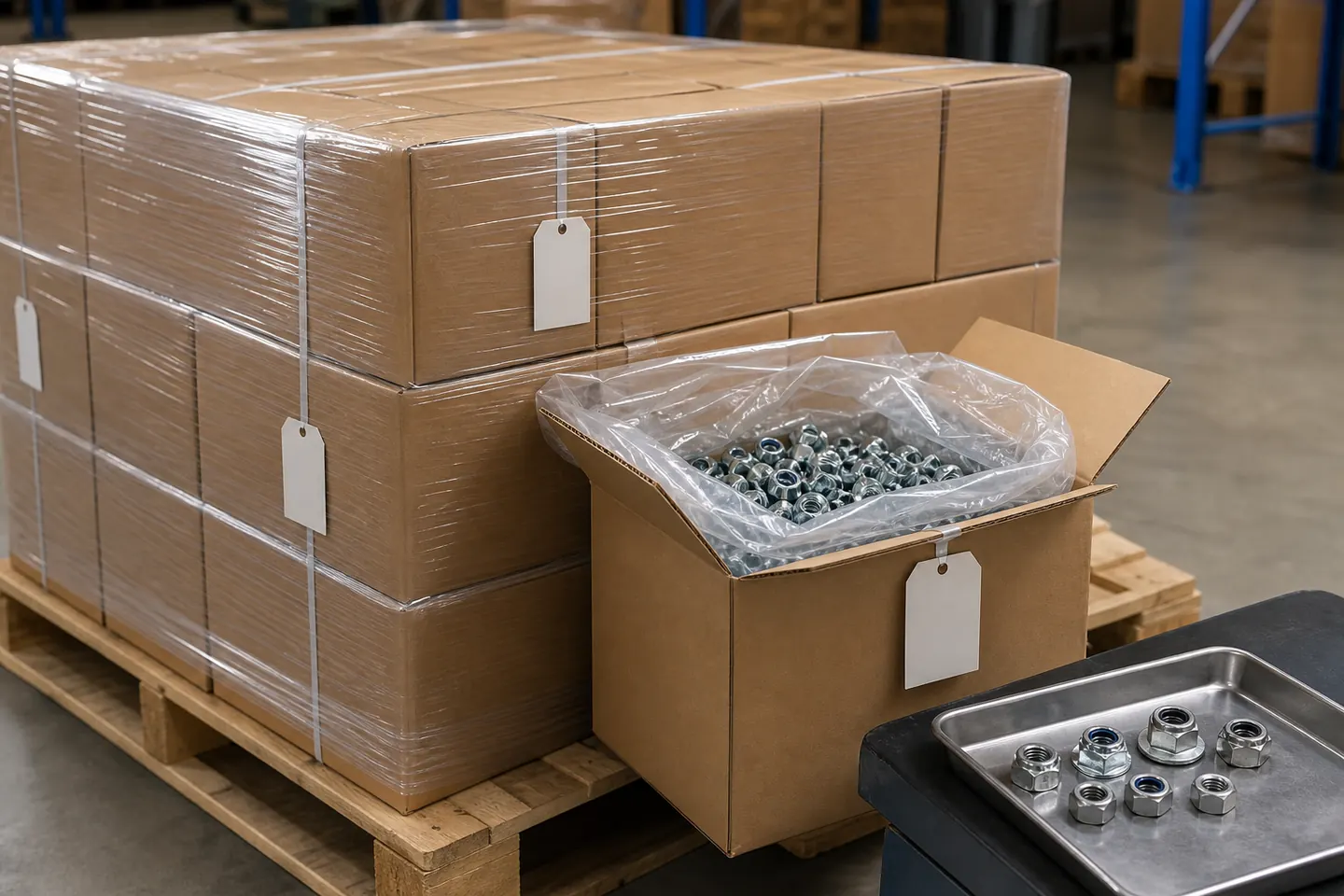
Sealed cartons and labeled pallets of bulk lock nuts prepared for representative export packing
Ready to quote

Discuss lock-nut mechanism, standard and torque requirements

Send the standard or drawing with the locking mechanism, thread, class, coating and prevailing-torque requirements so order-specific feasibility and supply scope can be confirmed.

Discuss Lock Nut Requirements

Prevailing torque is a system property involving the nut, mating bolt and thread, coating or lubricant, and the installation cycle. ISO 2320 supplies a test framework only where its scope applies; the customer drawing, assembly specification and agreed acceptance criteria remain controlling.

An unhandled error has occurred. Reload 🗙