FastenersFromTurkey — Bursa, Turkey · sales@fastenersfromturkey.com Part of the MetalFromTurkey group · Bursa-based industrial fastener supplier and exporter serving international buyers
Fasteners From Turkey · Drawing-Led RFQ Supply

Custom Bolts Made to Drawing from Turkey

FastenersFromTurkey supplies custom bolts made to drawing in Turkey for industrial RFQs. The approved drawing and purchase specification govern head, drive, shoulder, thread, material, mechanical requirements, tolerances, coating, inspection, tooling and order volume.

  • Drawing-led qualification
  • Confidential order review
  • Export-document coordination
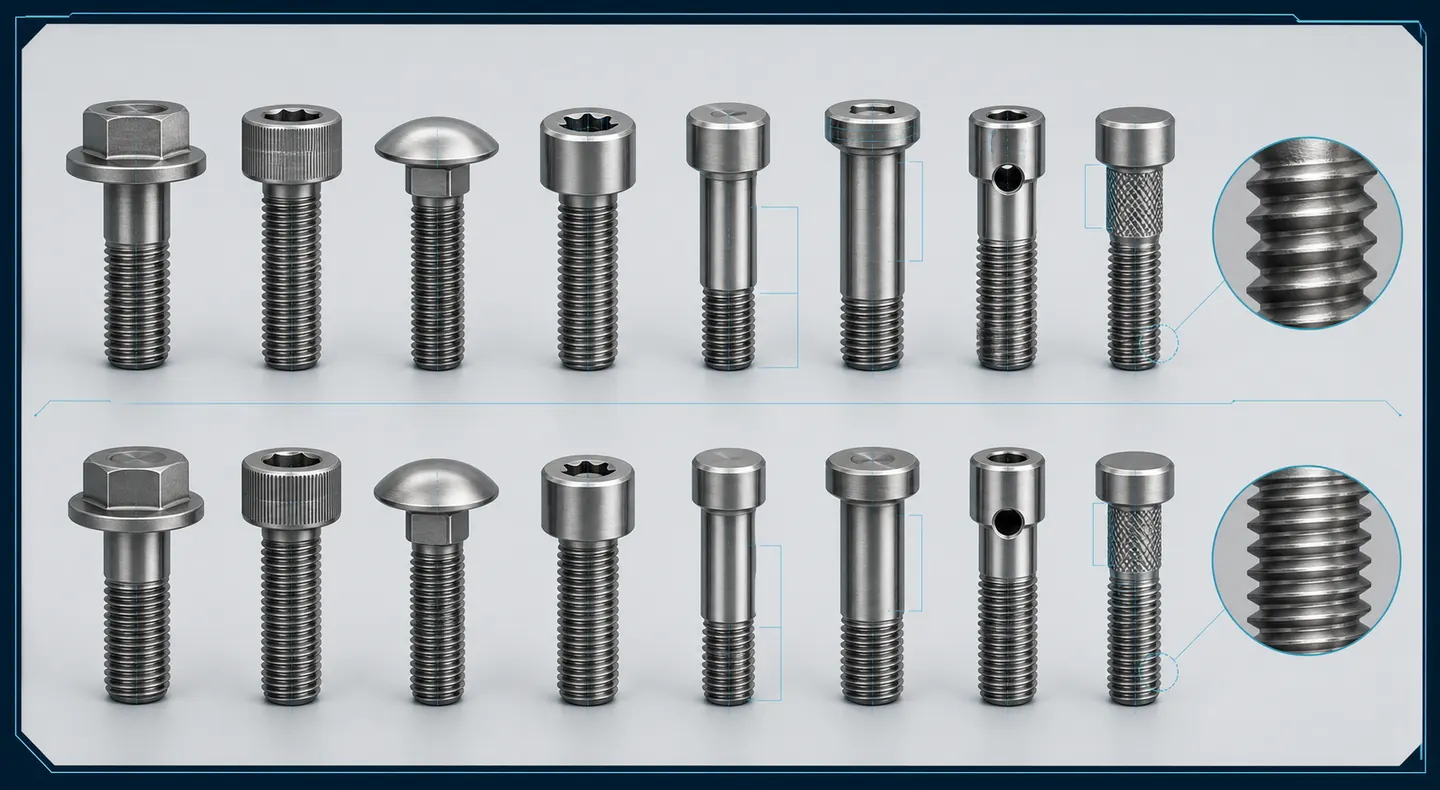
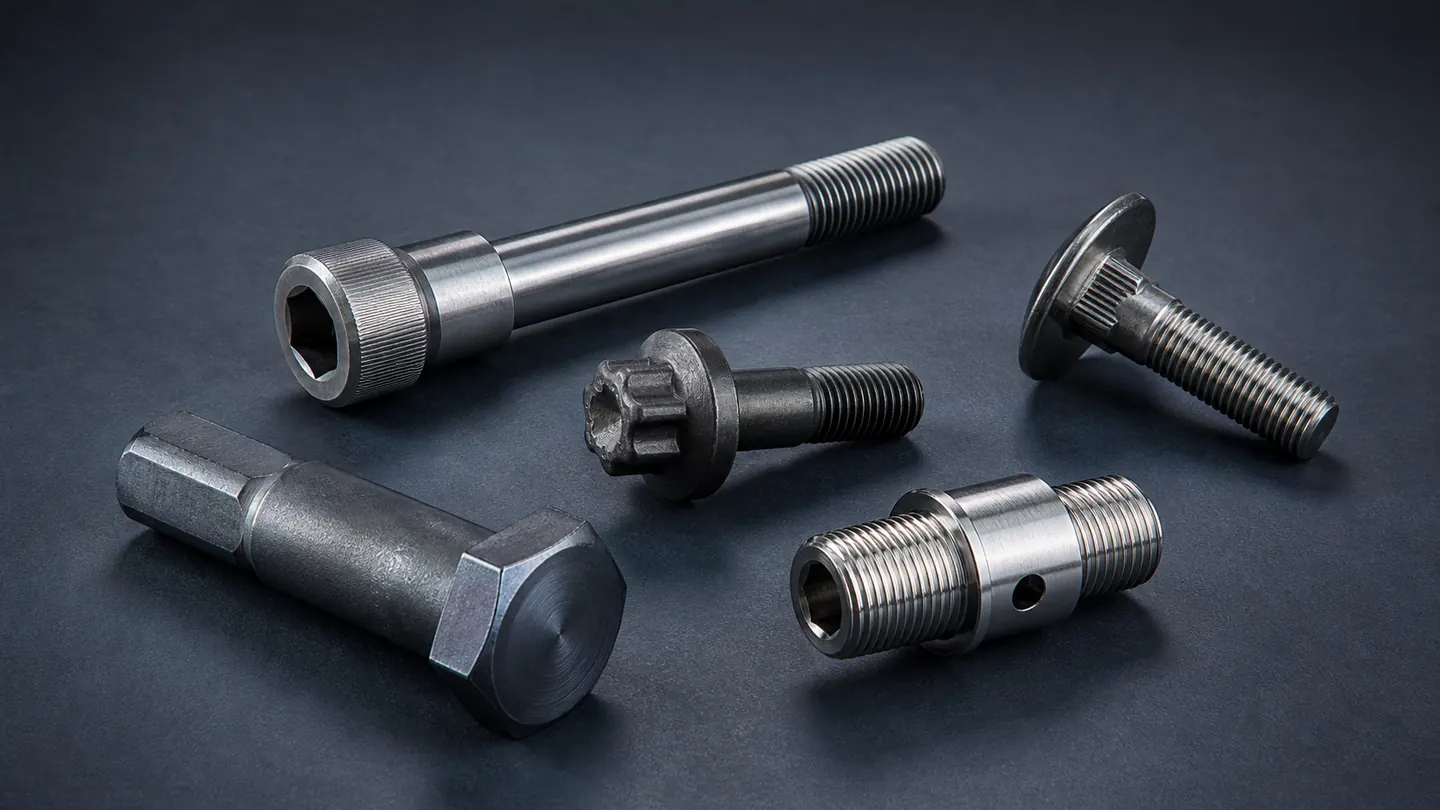
Assorted custom bolts made to drawing through verified Turkish manufacturers for industrial RFQs

Custom bolts made to drawing through verified Turkish manufacturers

RFQ Qualification

Custom bolt order qualification summary

Confirm these order-specific inputs before quotation.

Fasteners From Turkey Confirmed per RFQ
Custom bolt RFQ qualification fields
Field Order input Confirmation
Product scope Made-to-drawing custom bolt for the stated joint and application Part type and application confirmed per RFQ
Standard/drawing Controlled drawing, revision and purchase specification govern acceptance Governing documents confirmed per RFQ
Dimensions/thread Head, drive, shoulder, shank, thread, tolerance classes and critical dimensions Dimensional inputs confirmed per RFQ
Material/mechanical Specified material, property class or required mechanical values Order requirement confirmed before quotation
Finish/coating Specified finish, coating, corrosion and friction requirements Finish scope confirmed per RFQ
Documentation Required certificate, inspection, sample, PPAP or TPI scope Availability and deliverables confirmed per order
Commercial Quantity or annual volume, MOQ drivers, tooling, packing, Incoterm and destination Commercial basis confirmed in the quotation
Supplier role FastenersFromTurkey supplies custom bolts made to drawing from Turkey. Order-specific supply scope confirmed from the RFQ

Values remain order-specific until confirmed in the quotation.

Drawing-led The controlled drawing and revision govern acceptance
Route-matched Cold heading, forging or machining selected per part
Tooling reviewed Tooling and NRE separated from recurring part price
PPAP-capable Prototype, first-article and PPAP routes coordinated
Where to start

Review the custom bolt requirement by input area

A custom bolt cannot be quoted reliably from a product name, photograph or nominal thread alone. Start with the drawing and specification basis, then confirm the geometry and thread system, the manufacturing route and the tooling, sample and PPAP plan that let the RFQ be quoted on one basis.

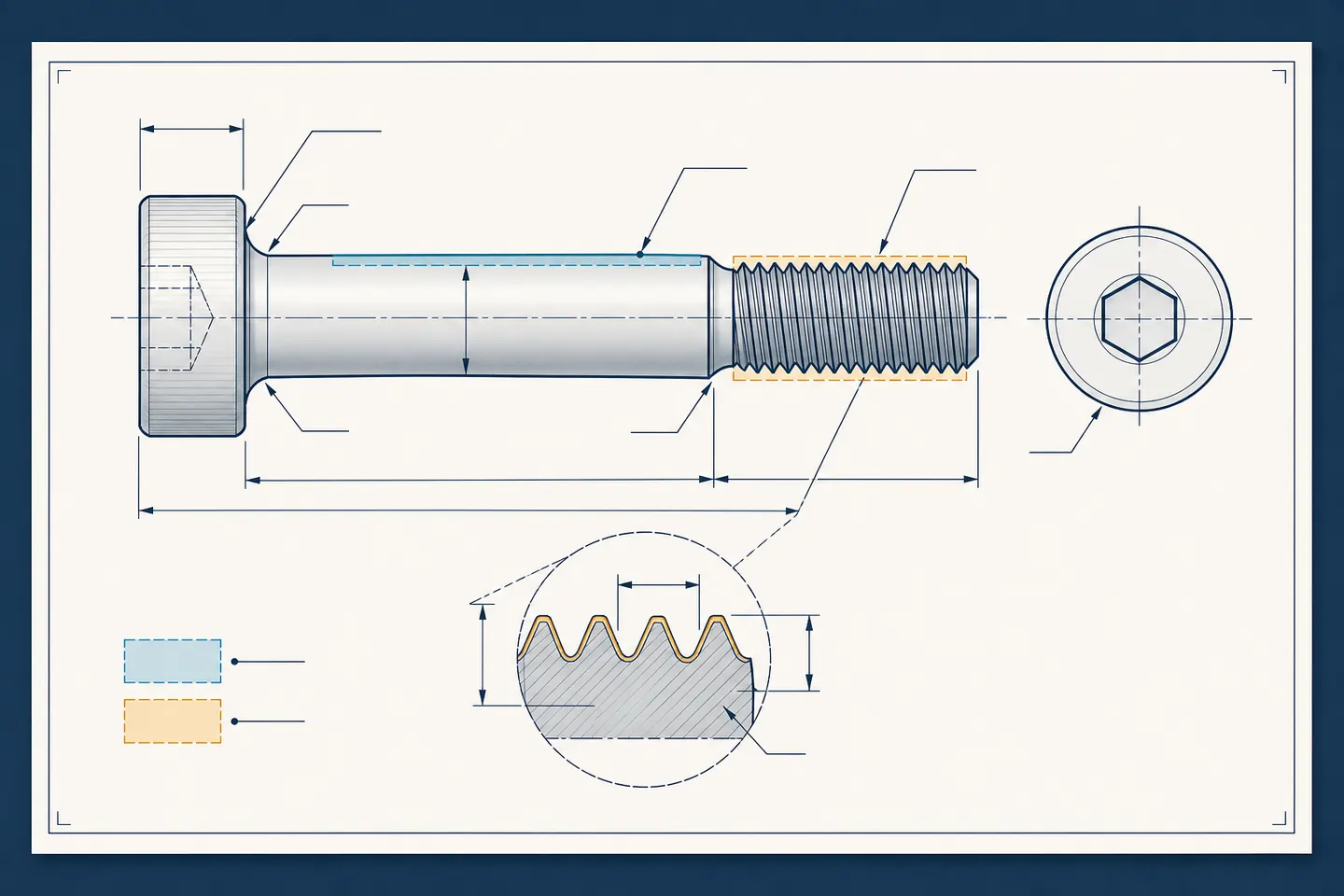
Generic custom bolt drawing with thread, shoulder, tolerance and coating callout zones

Drawing, revision and specification control

The drawing establishes the functional geometry and acceptance criteria; the purchase specification adds material, testing, documentation, packaging and commercial requirements. Both should identify the controlled revision so every quotation, sample and inspection record refers to the same requirement.

Review drawing and specification inputs
Custom bolt head, drive, shank, shoulder and metric or inch thread feature comparison

Types, heads, drives, shoulders and thread systems

Made-to-drawing bolts combine familiar fastener forms with application-specific geometry. Head form and drive affect tooling and load transfer, while shank, shoulder and transition geometry affect location, fit and the available production method. Metric and Unified Inch requirements stay within their own thread systems.

Compare custom bolt configurations
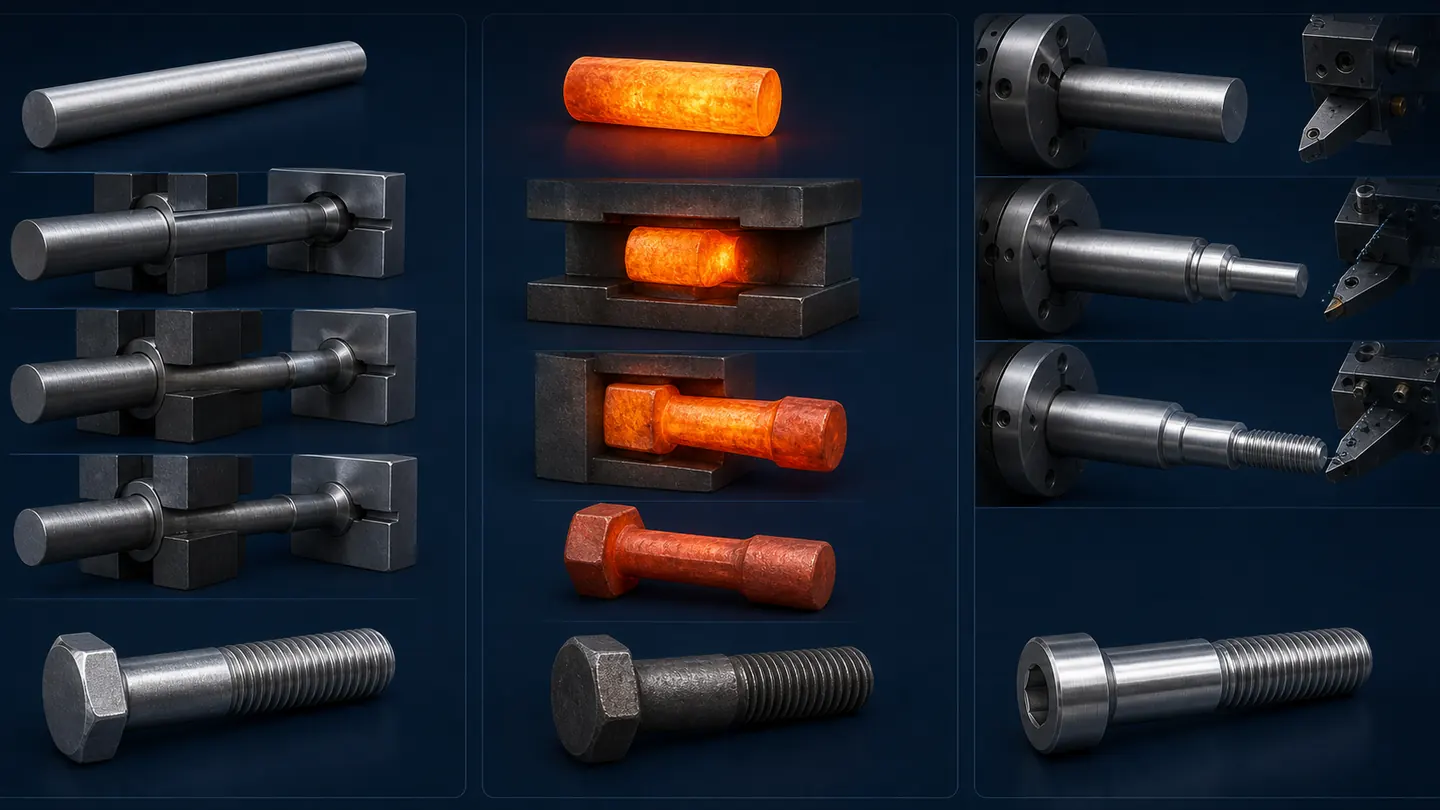
Cold heading, hot forging and CNC machining routes for made-to-drawing custom bolt production

Cold heading, hot forging or machining

The manufacturing route affects tooling, material utilization, achievable geometry, unit economics and inspection planning. Annual volume matters because a process with higher tooling cost can become economical over repeat production, while a flexible machining route may suit prototypes or lower quantities.

Compare production methods
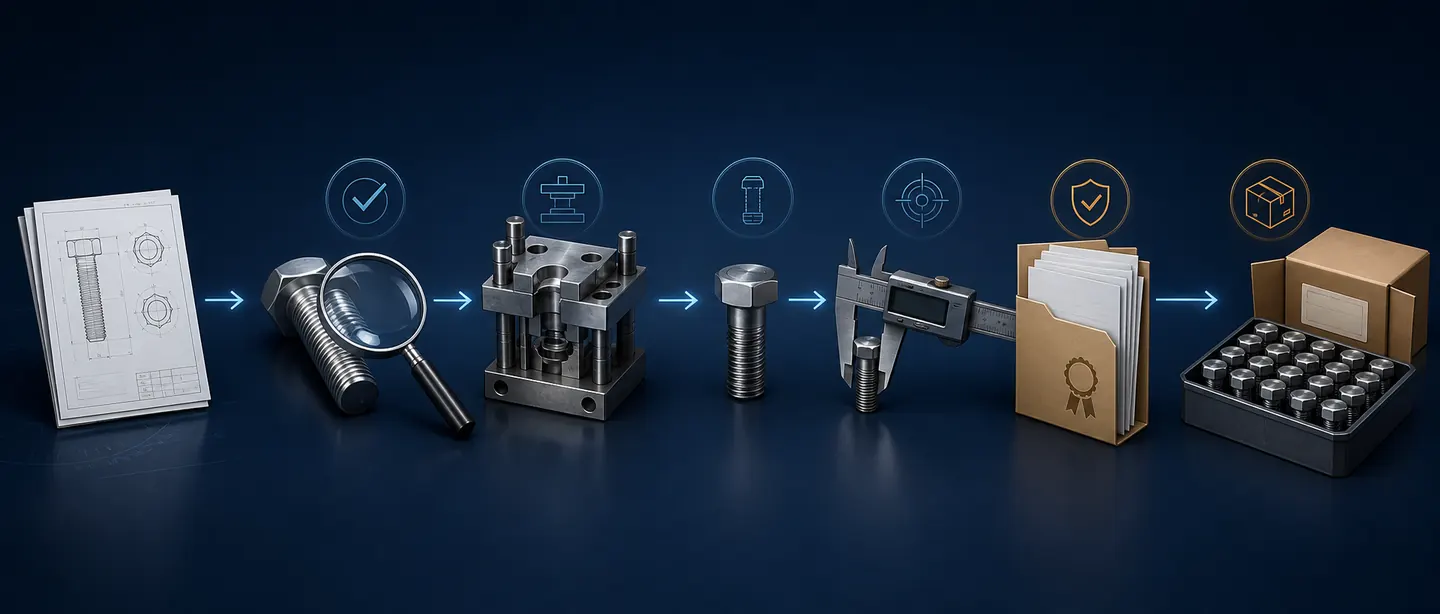
Custom bolt workflow from drawing review and tooling to sample and serial production

Tooling, samples, PPAP and serial production

Custom bolt tooling and non-recurring engineering depend on the process, geometry, material and expected volume. Tool ownership, maintenance, life, change control and storage terms should be agreed before order placement, together with the prototype, first-article and PPAP sequence.

Review tooling and PPAP requirements

Send your drawing for RFQ review

RFQ inputs

Made-to-drawing custom bolt review

A custom bolt cannot be quoted reliably from a product name, photograph or nominal thread alone. The drawing establishes the functional geometry and acceptance criteria; the purchase specification adds material, testing, documentation, packaging and commercial requirements. Both should identify the controlled revision so every quotation, sample and inspection record refers to the same requirement.

Drawing, revision and specification control

Provide the drawing number, revision, units, datum scheme, dimensions, tolerances and critical characteristics. Identify the mating component, load path and application where they affect process selection or inspection. Thread designation, head and drive, shoulder or shank features, under-head transitions, holes, slots, knurls and surface finish should be explicit rather than inferred. Where a customer or industry specification applies, list it separately and define which requirements govern in case of conflict. A sample can support clarification or approved reverse engineering, but it does not replace legal authorization, material information or a controlled acceptance drawing.

When a modified standard part may be more economical

Some requirements can begin with a standard bolt or existing blank and add machining, drilling, slotting, coating or another secondary operation. This method may reduce tooling exposure for lower volumes, but only when the standard part's material, geometry, mechanical properties and traceability remain compatible with the final requirement. Order-specific review confirms whether modification, new tooling or fully made-to-print production is appropriate.

Configurations

Custom bolt types and configurations

Made-to-drawing bolts can combine familiar fastener forms with application-specific geometry. The examples below describe RFQ categories, not a universal stock or capability list. Each part remains subject to drawing, material, process and manufacturer review.

ConfigurationTypical drawing focusQualification note
Shoulder or stripper-style boltShoulder diameter and length, concentricity, bearing surface, transition radius and threadPrecision features may require machining or grinding after forming
Flange or carriage-style boltHead envelope, bearing face, neck geometry, anti-rotation feature and under-head transitionForming feasibility and tooling depend on geometry and annual volume
Special-head or security-drive boltDrive profile, access, torque interface, head strength and key controlDrive tooling and functional validation must be confirmed
Custom stud or headed threaded partThreaded ends, grip length, unthreaded section, installation feature and end formConfirm whether the part belongs in the custom-bolt or stud product family
Modified standard boltBase standard, allowed modification, remaining marking and traceabilityModification must not invalidate the required mechanical or dimensional basis
Geometry detail

Heads, drives, shoulders and thread systems

Feature-level decisions determine which production method can hold the drawing. Define each feature against a functional requirement rather than a visual reference.

Heads, drives, shanks, shoulders and special geometry

Head form and drive affect tooling, installation access and load transfer. Shank, neck, shoulder and transition geometry affect location, fit, stress concentration and the available production method. Features such as flats, cross holes, slots, knurls, captive elements or locking patches should be dimensioned and tied to a functional requirement.

Shoulder bolts and precision features

Custom shoulder bolts often require tighter control of shoulder diameter, length, concentricity, runout or surface finish than an ordinary headed fastener. These characteristics may favor CNC machining, grinding or a formed blank with secondary finishing. No tolerance capability should be assumed from the term shoulder bolt alone.

Metric and inch externally threaded parts

Custom metric bolts and Unified Inch parts should remain within their respective thread systems. Define nominal diameter, pitch or threads per inch, tolerance class, thread length, start and runout, handedness and any gauge requirement. Visual similarity is not a basis for metric-to-inch substitution.

Manufacturing route

Cold heading, hot forging or machining?

The manufacturing route affects tooling, material utilization, achievable geometry, unit economics and inspection planning. Annual volume matters because a process with higher tooling cost can become economical over repeat production, while a flexible machining route may suit prototypes or lower quantities.

RouteBetter fit whenMain RFQ questionsQualification boundary
Cold headingRepeat volume and formable near-net geometryMaterial formability, head/shank ratio, tooling, annual volume and secondary workTight local features or severe forming ratios may require another route
Hot forging or hot headingHeavier sections, larger mass or geometry unsuitable for cold formingMaterial, blank size, machining allowance, heat treatment, tooling and batch sizeAvailable size and lead time are manufacturer-specific
CNC machiningComplex geometry, prototypes, lower volume or tight local tolerancesBar or blank route, datum control, surface finish, thread method and inspectionMachining is not automatically the lowest-cost serial route
Combined routeA formed blank needs drilling, turning, milling, grinding or slottingProcess sequence, heat treatment, coating and final-dimension controlSecondary operations must remain visible in the control plan
Route detail

How each production method is qualified

Order-specific feasibility review considers the complete manufacturing route and its change-control points, not only the first forming operation.

Cold heading

Cold heading can create repeatable near-net shapes with efficient material use when the material and geometry are formable. Tooling design, forming sequence and secondary-operation needs are evaluated against the drawing and annual volume. Cold heading does not guarantee every shoulder, hole, slot or tight-tolerance surface in one operation.

Hot forging

Hot forging can suit heavier geometries or materials and forming ratios that are unsuitable for cold forming. The RFQ should define final dimensions, machining allowance, heat-treatment condition and acceptance criteria. Tooling, batch economics and the available envelope are confirmed for the order.

CNC machining and secondary operations

CNC machining can suit complex features, prototypes and controlled local tolerances. The part may be machined from bar, a standard blank or a formed preform. Thread rolling, cutting or grinding, as well as drilling, milling and surface finishing, must be selected according to the drawing and performance requirements.

Combined production methods

Many custom machined bolts use more than one process: a near-net headed blank may be heat treated and then machined, ground, rolled, coated and inspected. Order-specific feasibility review therefore considers the complete route and its change-control points, not only the first forming operation.

Discuss Manufacturing Route and Tooling

Dimensions and threads

Dimensions, threads and tolerances

State the complete thread designation and purchased specification, then mark the characteristics that will be measured. The drawing remains the acceptance source for the actual part.

Metric, UNC, UNF and drawing-defined threads

Metric fastening threads may use the ISO metric profile and tolerance framework; Unified Inch requirements may use UNC, UNF or another drawing-defined series under the applicable ASME framework. State the complete designation and purchased specification. The current ISO 965 series defines ISO general-purpose metric thread tolerances, while ASME B1.1 defines Unified Inch thread form, series, class, allowance and tolerance. The drawing remains the acceptance source for the actual part.

Critical dimensions and tolerance classes

Identify head height and width, bearing face, overall and grip lengths, shank or shoulder diameter, thread length, under-head radius, runout, straightness and any surface-finish requirement. Mark critical characteristics and define how they will be measured. ISO 4759-1 may support applicable fastener tolerances only where the product and scope fit; it should not be used to fill missing drawing requirements.

Functional characteristics and mating-part information

Provide the mating thread, engagement, clearance, bearing interface and installation method. A coating can change thread fit or bearing behavior, while a shoulder or shank may control location before the thread carries clamp load. Left-hand threads, controlled prevailing torque, locking patches or sealing features require their own acceptance criteria.

Material and mechanical

Material and mechanical requirements

Material, property class or grade, heat treatment and required evidence must be specified together. Approximate cross-system comparisons are useful for orientation but are not drop-in substitutions. Customer engineering approval is required for changes that affect a safety-critical or validated assembly.

Carbon, alloy and stainless steel requirements

For applicable ISO metric carbon- or alloy-steel bolts, screws and studs, ISO 898-1 defines mechanical and physical properties within its material, thread and geometry scope. It does not establish corrosion resistance, fatigue performance or torque/clamp-force behavior. Custom stainless steel bolts may use the ISO 3506 series where its grade, property class, temperature and geometry scope apply. Material availability is confirmed for the selected manufacturing route.

Property class, grade and heat-treatment requirements

State the exact property class, ASTM or SAE grade, hardness or mechanical values, heat-treatment condition and test requirements. ASTM F606/F606M provides mechanical test procedures; the governing product or customer specification establishes which properties and acceptance limits apply. If custom geometry prevents a standard full-size test, the approved test plan should define the specimen and acceptance route.

Why substitutions require approval

Changing material or class can alter hardenability, forming behavior, thread rolling, fatigue response and coating risk. A substitute should be reviewed against the complete drawing, application and validation plan rather than accepted from nominal tensile strength alone.

Coating and corrosion

Coatings, corrosion and functional finishes

The finish is part of the functional specification. Define the coating system, thickness where controlled, corrosion target, color if relevant, topcoat or lubricant, coefficient-of-friction requirement, masking and post-coating dimensional acceptance.

Zinc, zinc flake, hot-dip galvanizing, phosphate and other specified finishes

Electroplated zinc or zinc-alloy systems, non-electrolytic zinc flake, hot-dip galvanizing, phosphate/oil and other finishes use different process and dimensional controls. ISO 4042 covers electroplated coating systems for applicable fasteners and includes hydrogen-embrittlement risk controls. Hot-dip-galvanized threads require a compatible thread allowance and mating-thread plan; generic coating thickness cannot be added after the thread is finalized.

Salt-spray target, friction and hydrogen-embrittlement controls

ISO 9227 defines salt-spray test methods but does not set a universal exposure duration or acceptance result for a custom bolt. State whether white or red corrosion governs, the exposure duration and the acceptance source. High-strength electroplated parts require process controls for hydrogen-embrittlement risk, while torque-sensitive joints require the actual coating, lubricant and mating surfaces to be considered.

Locking, sealing and special head finishes

Pre-applied locking or sealing patches, waxes, lubricants and decorative or anti-tamper finishes should be defined by location, coverage, functional target, shelf-life or assembly test where applicable. Availability and subcontract routes are confirmed for the order.

Tooling and approval

Tooling, samples, PPAP and serial production

Custom bolt tooling and non-recurring engineering depend on the process, geometry, material and expected volume. Cold-headed or forged parts commonly need dedicated tooling; machined prototypes or modified-standard parts may use a different cost structure. Tool ownership, maintenance, life, change control and storage terms should be agreed before order placement.

Tooling and non-recurring engineering review

The quotation should separate recurring part price from tooling or engineering charges where applicable. It should also define what the tooling produces, the approved drawing revision and which changes may trigger modification or new tooling.

Prototype, first-article and sample approval

The sample route may use serial tooling, soft tooling, machining or another approved method. Record any difference between prototype and serial processes. Dimensional, material, mechanical and coating evidence should match the agreed sample plan before serial approval.

PPAP and customer-specific documentation

PPAP, APQP, control plans, FMEA, capability studies or customer forms may be coordinated when required. The submission level, sample quantity, laboratory evidence, approved supplier capability and change-notification process are confirmed for the specific program.

MOQ and annual-volume effects

MOQ, tooling economics and lead time change with the selected route, part complexity and annual demand. Include both first-order quantity and annual volume so the manufacturer can evaluate prototype, pilot and serial-production options without an unsupported fixed MOQ promise.

How we work

How we work with custom bolt manufacturers in Turkey

FastenersFromTurkey supplies custom bolts from Turkey after an order-specific review of forming or machining process, workable material and geometry, tooling, secondary operations, heat treatment, coating, inspection, documentation, volume and export requirements.

Order review by process and requirement

A cold-heading specialist may suit a repeat-volume formable part, while a forging or machining route may suit a heavier or more complex geometry. Some orders require several qualified processes. We coordinate the review so the quotation reflects the complete manufacturing and quality route.

Capability, certificate and document verification

Manufacturer capability, certificates and test availability are checked against the order rather than transferred to FastenersFromTurkey as company claims. Supplier-specific ranges remain confidential. The approved quotation should identify which material, process, inspection and document requirements are included.

Confidential drawing handling and supplier communication

Drawings, customer names, part numbers and project details are shared only through the controlled RFQ process. Public content and schema do not name contracted manufacturers or expose customer information.

Request Custom Bolt Feasibility Review

Evidence plan

Testing, inspection and traceability

Each evidence area needs both a defined requirement and an agreed control point. Reviewing them together prevents a material record from being mistaken for dimensional or functional approval.

Evidence areaPossible requirementControl point
MaterialEN 10204 inspection document or specified material certificateMatch heat, lot, material and order scope
DimensionsFirst article, layout report, thread gauges and critical-dimension resultsUse the approved drawing revision
MechanicalHardness, tensile, proof-load, wedge or customer-defined testsApply only the governing method and acceptance criteria
CoatingThickness, adhesion, salt spray, friction or appearanceTie the report to the actual coating system and lot
TraceabilityHeat or lot identity, batch record and packaging marksKeep certificates, labels and packing plan aligned
Customer programPPAP, control plan, FMEA, capability data or customer formsConfirm submission level and supplier capability
Inspection scope

Third-party inspection and document planning

Evidence requirements are agreed before production so the inspection plan, report format and acceptance authority are not negotiated after the parts are made.

Third-party inspection and acceptance authority

Third-party inspection may be coordinated when ordered and available through the selected route. Inspector, scope, hold points, report format and acceptance authority should be agreed before production. Generic tested or certified language is not a substitute for a defined document plan.

Applications

Applications and buyer selection criteria

Custom bolts can support automotive and transportation programs, machinery and automation, heavy equipment, energy equipment, construction and infrastructure assemblies. The sector label does not approve the part.

Define the joint, not the sector

Buyers should define the load path, mating components, environment, assembly process, inspection level and change-control requirements. Safety-sensitive applications require engineering approval for material, geometry, coating or process substitutions.

OEM, Tier and distributor programs

OEM and Tier programs may add PPAP and customer-specific controls; distributor programs may emphasize repeat-order consistency, packaging and cross-reference control. Both require a controlled technical basis.

Export and commercial

How we supply custom bolts from Turkey

FastenersFromTurkey is a Turkey-based custom bolt supplier and exporter. We receive the RFQ, clarify missing technical fields, review order-specific feasibility and supply scope, issue the quotation and align documentation, inspection, packaging and shipment requirements.

Packaging, labels and lot separation

Packaging should define quantity per pack, corrosion protection, thread and surface protection, labels and lot separation.

Export documentation

Export documentation can include the commercial invoice, packing list and certificate of origin, with inspection or material records added when specified.

Incoterms, ports and delivery timing

EXW, FOB, CFR and CIF terms are reviewed for the destination, shipment profile and selected route. For FOB shipments, identify the applicable Turkish port in the quotation — such as Istanbul, Izmir/Aliaga, Mersin, Gemlik, Iskenderun or Derince — rather than leaving the logistics basis ambiguous. Delivery timing is confirmed after drawing, tooling, production and transport review.

RFQ checklist

What to include in a custom bolt RFQ

A complete custom bolt RFQ should include:

#Provide in the RFQ
1Controlled drawing, number and revision.
2Part name, application and mating-component information.
3Product or customer specification.
4Dimensions, tolerances and critical characteristics.
5Metric or inch thread, pitch/TPI, tolerance and thread length.
6Material, property class or grade and heat treatment.
7Coating, thickness, corrosion and friction target.
8Locking, sealing or special functional features.
9Inspection, test and document requirements.
10Prototype, first-article or PPAP requirement.
11First-order quantity and annual volume.
12Existing tooling or new-tooling requirement.
13Packaging, labelling and traceability.
14Destination, preferred Incoterm and target date.
RFQ FAQ

Frequently asked questions

Can custom bolts be manufactured from my drawing?

A custom bolt RFQ can be reviewed from an approved drawing and revision. The review should include geometry, dimensions, tolerances, thread, material, mechanical requirements, heat treatment, coating, inspection documents, quantity and annual volume before manufacturing feasibility is confirmed.

How is a custom bolt RFQ reviewed?

FastenersFromTurkey reviews the required process, geometry, material, tolerance, tooling, secondary operations, quality documents, volume and export requirements. Final manufacturing capability, supply scope and feasibility are confirmed for the specific drawing.

Which production process is suitable for a custom bolt?

Cold heading can suit repeat-volume and formable geometries, hot forging can suit heavier sections, and CNC machining can suit complex features, prototypes or tighter local tolerances. Some parts require a formed blank followed by machining or another secondary operation. The drawing and annual volume determine the appropriate route.

Is tooling required for custom bolts?

Tooling is often required for cold-headed or forged custom bolts, while some machined or modified-standard parts may use existing tooling. Tooling and non-recurring engineering costs are confirmed after order-specific review of the drawing, process and expected volume.

Can prototypes or PPAP samples be supplied?

Prototype, first-article and PPAP stages may be coordinated when required by the order. The available scope, PPAP level, sample quantity, tooling status, inspection plan and approval sequence must be confirmed before quotation.

Which standards apply to a custom bolt?

There is no single product standard for every custom bolt. The customer drawing and purchase specification govern. Thread, mechanical-property, material, tolerance, coating and test standards should be listed separately and verified for their actual scope.

What information is required for a custom bolt quotation?

Provide the drawing and revision, application, dimensions and tolerances, thread system, material and mechanical grade, heat treatment, coating and corrosion target, inspection and documentation requirements, sample or PPAP needs, order quantity, annual volume, packaging, destination and preferred Incoterm.
Request a quote

Send your drawing or specification for RFQ review

FastenersFromTurkey supplies custom bolts made to drawing in Turkey. Send the controlled drawing and revision, head, drive and shoulder geometry, dimensions, thread and tolerances, material and mechanical requirements, coating, inspection and document requirements, tooling status, sample or PPAP scope, first-order quantity, annual volume, packing, Incoterm and destination.

Email: sales@fastenersfromturkey.com
Phone: +90 543 928 19 76

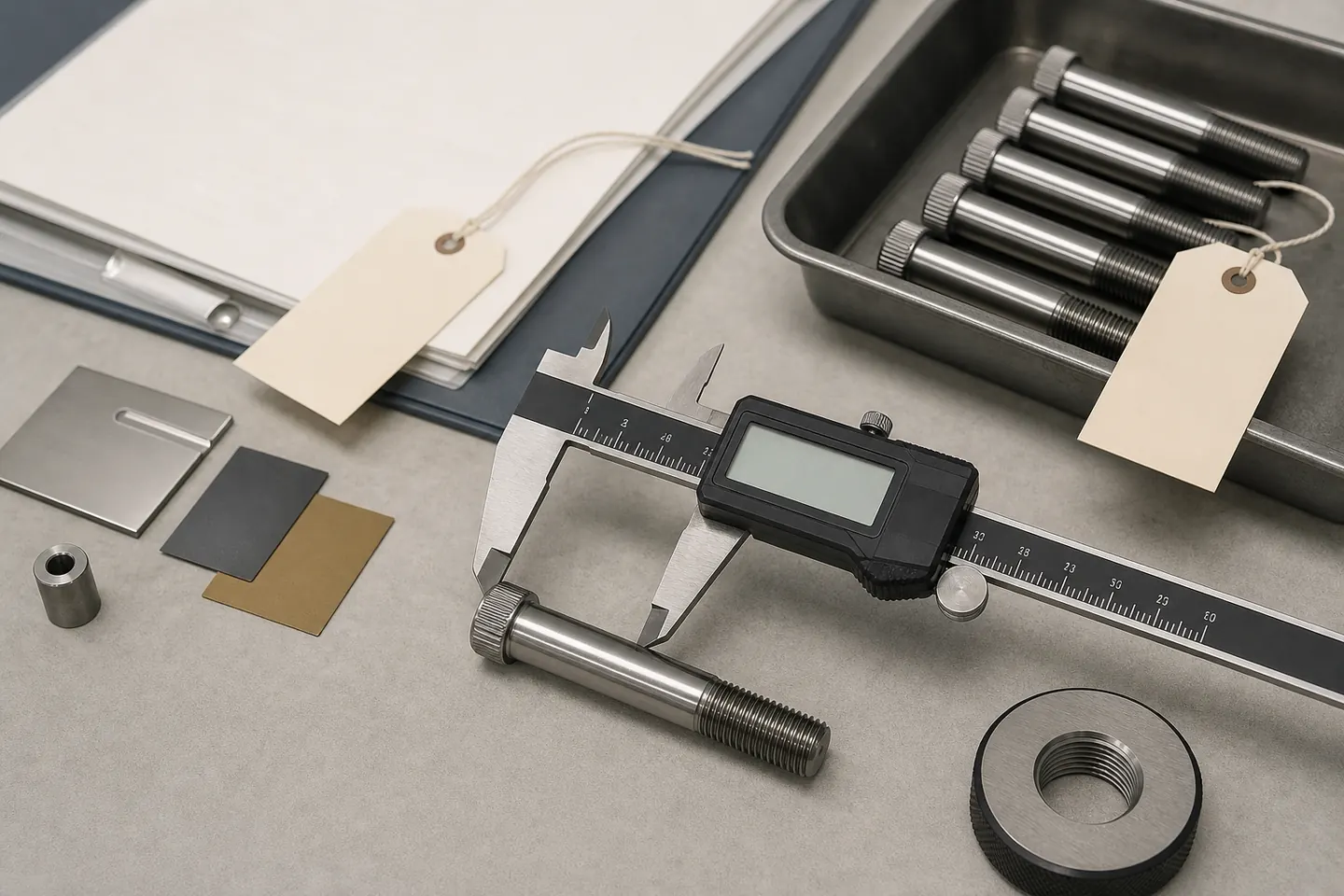
Dimensional inspection, thread gauging and documentation review for custom bolt order qualification
Ready to quote

Send drawing, quantity and destination

Send the controlled drawing and revision with the material, thread, tolerance, coating, inspection and volume requirements so order-specific feasibility and supply scope can be confirmed.

Request a Fastener Quote

ISO 898-1 does not cover every custom geometry or establish fatigue and torque performance for the finished part. Material or property-class similarity is not a drop-in approval; the controlled drawing, customer specification and agreed test plan govern acceptance.

An unhandled error has occurred. Reload 🗙