FastenersFromTurkey — Bursa, Turkey · sales@fastenersfromturkey.com Part of the MetalFromTurkey group · Bursa-based industrial fastener supplier and exporter serving international buyers
Fasteners From Turkey · Trailer, Axle and Suspension Supply

Leaf Spring U-Bolts from Turkey for Trailer and Suspension

FastenersFromTurkey supplies leaf spring U-bolts from Turkey for trailer, axle and suspension applications. The approved drawing or specification, interface, dimensions, thread, material, coating, inspection documents, quantity and delivery scope are confirmed for each RFQ.

  • Specification-led review
  • Confidential drawing handling
  • Export-document coordination
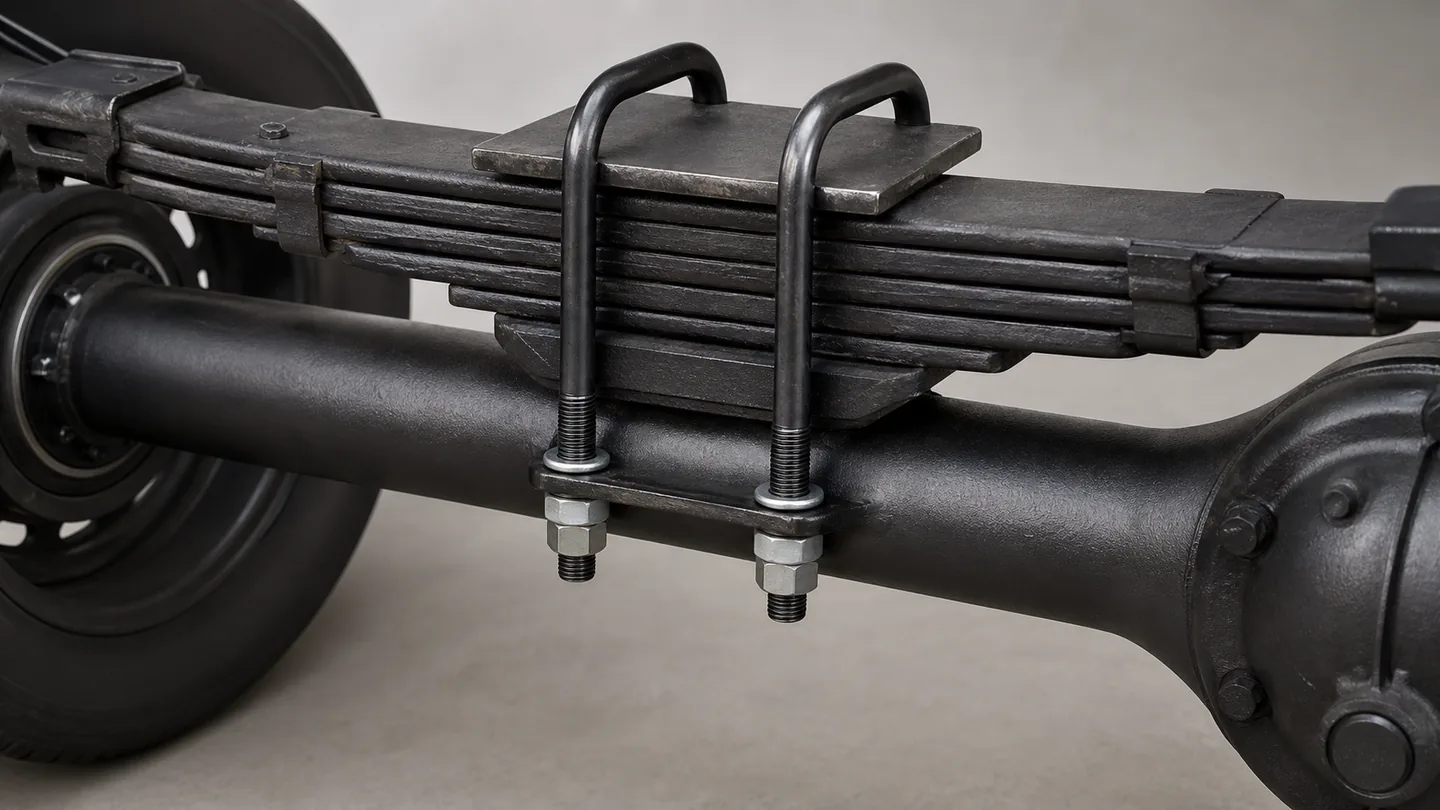
Leaf spring U-bolts securing a trailer axle and suspension assembly in a technical product view

Leaf spring U-bolts clamping a trailer axle and spring pack through the top plate

RFQ Qualification

Leaf-spring U-bolt order qualification summary

Confirm these order-specific inputs before quotation.

Fasteners From Turkey Confirmed per RFQ
Leaf-spring U-bolt RFQ qualification fields
Field Order input Confirmation
Product scope Leaf-spring U-bolt for the stated trailer or axle suspension interface Type and application confirmed per RFQ
Standard/drawing Customer or OEM drawing and applicable SAE/ISO reference within its scope Governing revision confirmed per RFQ
Dimensions/thread Axle interface, rod diameter, inside width, leg length, bend radius, thread and tolerances Dimensional inputs confirmed per RFQ
Material/mechanical Drawing-specified material and required mechanical values Order requirement confirmed before quotation
Finish/coating Coating, corrosion and friction requirements from the drawing or specification Finish scope confirmed per RFQ
Documentation Required certificate, inspection, test, PPAP or traceability scope Availability and deliverables confirmed per order
Commercial Quantity, MOQ drivers, tooling if required, packing, Incoterm and destination Commercial basis confirmed in the quotation
Supplier role FastenersFromTurkey supplies leaf-spring U-bolts from Turkey. Order-specific supply scope confirmed from the RFQ

Values remain order-specific until confirmed in the quotation.

Drawing-led Customer drawing or OEM specification governs geometry and validation
Labeled dimensions Rod diameter, inside width and leg length tied to the actual axle interface
SAE / ISO 898-1 Mechanical reference kept within its stated scope
EXW–CIF Export terms reviewed with destination and quantity
Suspension U-bolt scope

What is reviewed before a suspension U-bolt is quoted

Suspension U-bolts clamp the axle, spring pack, seat or plate into a controlled joint. A suitable part is defined by more than a nominal diameter: bend geometry, rod diameter, inside width, leg length, thread, mating hardware, material or grade, coating and the approved installation procedure all affect the assembly. FastenersFromTurkey handles application-specific and drawing-led RFQs rather than offering a universal vehicle-fitment catalogue.

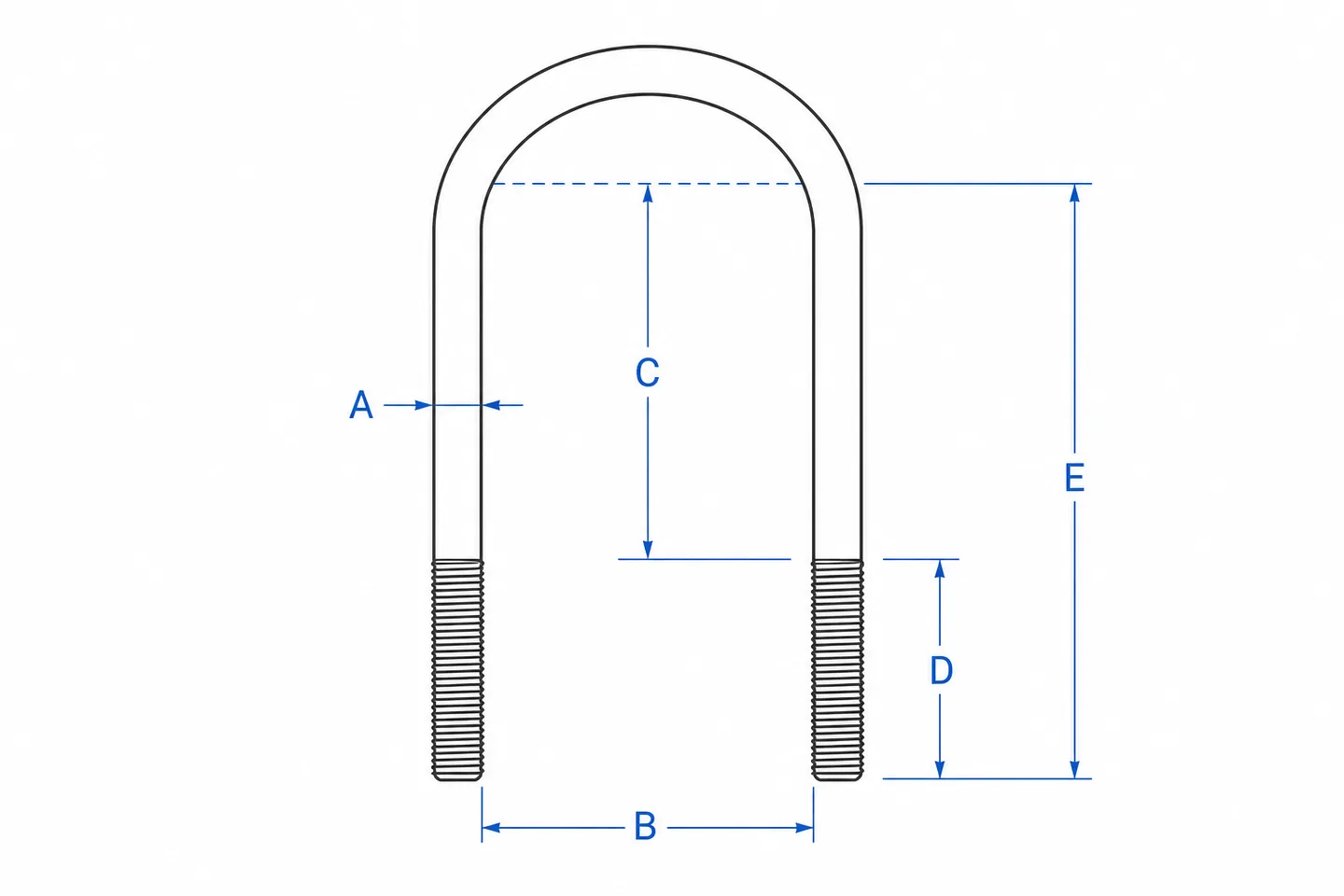
Leaf spring U-bolt dimension diagram showing rod diameter, inside width and leg length

Dimension and axle-interface requirements

The most common quoting error is an unlabeled nominal value. "Three-inch axle U-bolt" may refer to axle diameter, inside width or another catalogue convention. A quote should therefore use labeled dimensions tied to the actual axle, spring pack, plate and nut arrangement. A dimensioned drawing is preferred; if a sample is supplied, state whether it is an approved master, a worn service part or a reference only.

Review dimension requirements
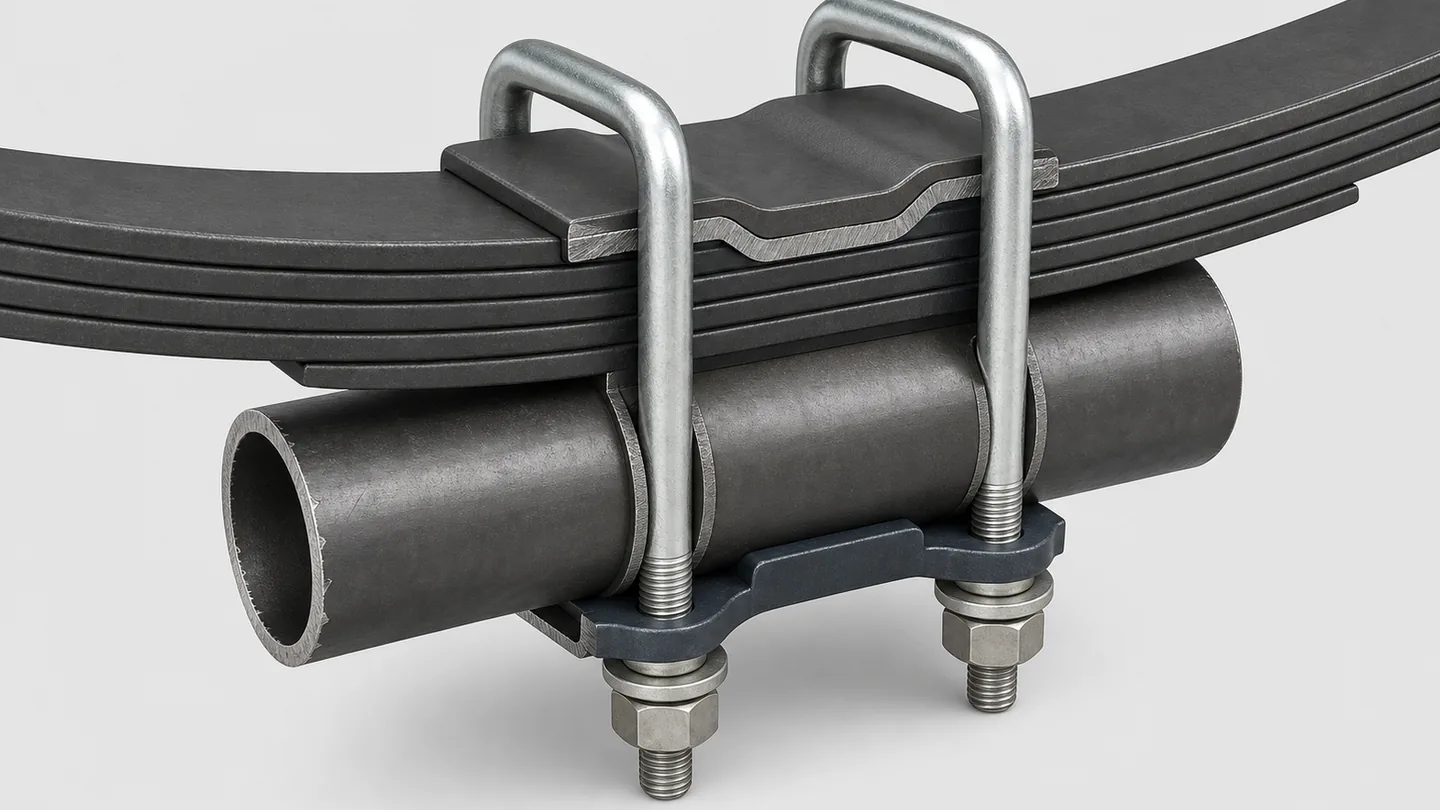
Trailer axle, leaf spring, plate and U-bolt interface used to define a suspension RFQ

Axle, spring pack, plate and thread interface

The RFQ should identify the axle profile or diameter, spring-pack thickness, seat or plate thickness, plate-hole spacing, nut and washer system, required thread engagement and installation access. State whether dimensions apply before or after coating. These interface details prevent a geometrically plausible U-bolt from being paired with the wrong plate or insufficient usable thread.

See the interface inputs
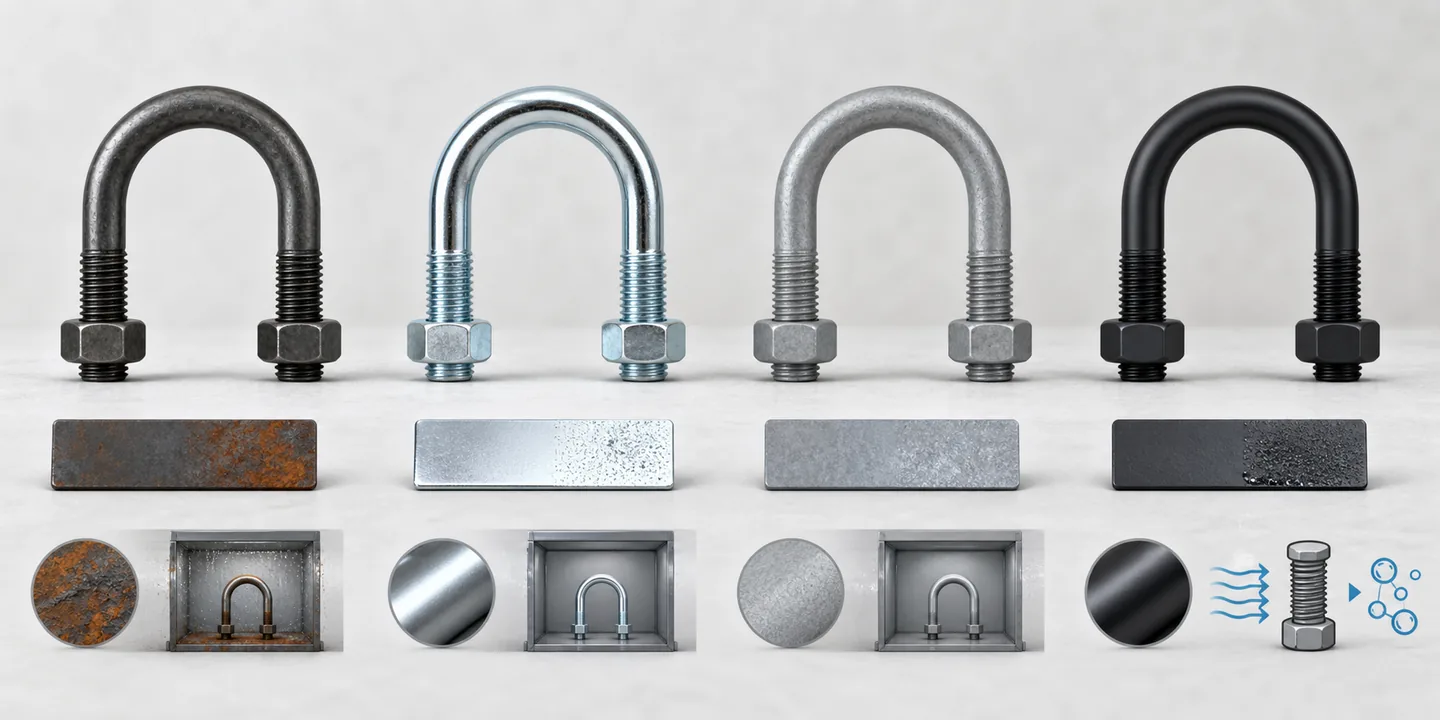
Suspension U-bolt coating selection by corrosion, friction and hydrogen-risk requirements

Coating, corrosion and hydrogen-embrittlement controls

Select the coating from the service environment, corrosion target, fastener strength, thread fit and required friction condition. A finish name or color does not prove coating thickness, salt-spray performance or suitability for a high-strength suspension joint. For susceptible high-strength parts, require documented hydrogen-embrittlement controls and technical approval.

Request Quote
RFQ dimension fields

How to define the required dimensions

Also specify the thread designation and pitch, bend radius, crown profile, thread runout, end details and whether both legs are equal. A dimensioned drawing is preferred.

SymbolRequired dimensionRFQ definition
ARod diameterFinished or pre-coating basis, tolerance and unit system
BInside widthClear width between legs at the drawing-defined location
CInside heightInner crown to the defined stack or leg datum
DThread lengthUsable thread length on each leg
EOverall leg lengthCrown datum to end of each leg
Configuration variables

Leaf spring and suspension U-bolt configuration

The customer drawing or OEM specification remains the governing reference for geometry, load criteria, validation and installation. Do not select a replacement from vehicle make or visual similarity alone.

Bend form — round, semi-round, square or drawing-specific

The bend form should follow the actual axle or seat geometry. A round or semi-round crown may suit a cylindrical interface; a square or drawing-specific form may suit a different seat or plate arrangement. Bend radius and straight-leg transition also need definition where fatigue or fit is critical.

Rod diameter, inside width and leg length

Rod diameter (A) affects thread, section and mechanical review. Inside width (B) must match the axle, seat or plate interface. Leg length (C/E) determines stack-up and available thread engagement. State the finished diameter, tolerance and the measurement location for each value.

Thread and mating parts

Thread (D) must match the nut and installation system: metric or UNC/UNF, pitch and usable length. Nuts, washers and plate details from the assembly drawing control bearing, fit, friction and clamp behavior.

Drawing-led axle U-bolt requirements

Custom axle U-bolts require a controlled drawing with revision status. Include unequal legs, offsets, special end features, thread runout, coating allowances and tolerances where applicable. New tooling, sample approval and validation requirements should be identified before quotation because they can affect the manufacturing route, MOQ and lead time.

Discuss the suspension specification

Clamp load and installation

Clamp load, torque and installation controls

Suspension U-bolts create and retain clamp load across the axle, spring pack and plate interface. Tightening torque is only an indirect input: thread size and pitch, nut and washer design, coating, lubrication, friction, geometry and the joint procedure all affect the torque-to-clamp-load relationship.

The OEM or customer procedure governs tightening

The applicable OEM or customer engineering procedure must define tightening sequence, target, staged tightening, re-torque and reuse. Reuse must follow that instruction; do not assume that a previously tightened U-bolt can be reused without confirming the joint procedure, part condition and governing specification.

No universal torque chart is published

FastenersFromTurkey does not publish a universal torque chart, load rating, re-torque interval or reuse instruction for this product family. Where required, torque-tension or clamp-load evidence should be defined in the RFQ and confirmed for the selected manufacturing route.

Material and mechanical requirement

State a material grade, property class or SAE grade together with heat-treatment, hardness, tensile, proof-load and decarburization requirements where applicable. For a safety-critical suspension part, fatigue criteria and validation belong in the drawing or OEM specification. Any substitution requires customer engineering approval.

Standards scope

Standards, OEM specifications and mechanical requirements

A mechanical-property standard does not approve the complete suspension joint. The buyer must identify the governing drawing, OEM specification and installation or validation procedure alongside any SAE or ISO reference.

ReferenceWhat it coversWhat it does not establish
SAE J429_201405Mechanical and material requirements for specified inch-series steel U-bolts through 1-1/2 inSuspension fit, fatigue, corrosion resistance or complete joint approval
ISO 898-1:2013Mechanical and physical properties for applicable carbon/alloy-steel metric bolts, screws and studsCorrosion, shear, torque/clamp-force performance or fatigue
Customer/OEM specificationApplication geometry, load case, acceptance and installation controlsNothing outside its stated revision and scope
Standards lanes

Which reference governs which requirement

Each reference below controls only what its own scope covers. Buyer evidence — grade, diameter, drawing, application criteria and validation plan — must accompany any standard cited in the RFQ.

Inch-series requirements and SAE J429 scope

SAE J429 can be specified for qualifying inch-series suspension U-bolts within its scope. The RFQ must still name the grade, diameter, UNC or UNF thread, material and required testing. SAE J429 explicitly places fatigue and corrosion suitability outside its scope, so it cannot replace application validation.

Metric mechanical requirements and ISO 898-1 scope

ISO 898-1 applies to defined carbon- and alloy-steel fasteners with ISO metric threads and specified property classes. Class 8.8 and SAE Grade 5, or Class 10.9 and SAE Grade 8, are not automatic substitutions. Thread systems, dimensional rules, diameter ranges and application acceptance remain different.

Customer and OEM specifications govern the joint

The customer or OEM specification covers application geometry, load case, acceptance and installation controls, and establishes nothing outside its stated revision and scope. Provide the current controlled document and any approved deviations with the RFQ.

Review quality and documentation support

Coating and corrosion

Coating, corrosion and hydrogen-embrittlement controls

Specify whether salt-spray acceptance is based on white or red corrosion, the test duration and the relevant test method. Thread fit, nut coating and lubrication must be compatible with the joint procedure.

Electroplated system — ISO 4042:2022 and Amendment 1:2026

Define the coating system, thickness, corrosion criterion, friction or topcoat requirement and appearance. For susceptible high-strength parts, specify the applicable hydrogen-embrittlement prevention, process and verification requirements.

Non-electrolytic zinc-flake system — ISO 10683:2018

Define the layer system, corrosion target, friction or lubrication requirement and mating-hardware compatibility. Zinc-flake systems are commonly considered for high-strength fasteners to reduce internal hydrogen-embrittlement risk; approval remains application-specific.

Customer or OEM coating specification

Where a controlled coating specification applies, state its revision, test method, acceptance criteria and approved applicator evidence. Follow the specification and the part-specific hydrogen-risk assessment rather than a generic finish name.

Testing and documents

Testing, inspection and documentation

Quality evidence should be ordered against measurable acceptance criteria. Depending on the selected manufacturer and approved order, buyers can request material or mechanical certificates, dimensional reports, thread inspection, coating thickness or corrosion-test reports, torque-tension or clamp-load evidence, PPAP/APQP documents, third-party inspection, batch traceability, packing records and origin/export documents.

Material, mechanical and dimensional evidence

For a material or mechanical certificate, define the standard, grade or class, heat or batch and test values. For a dimensional report, define the drawing revision, sample size and critical dimensions. Both are confirmed against the selected manufacturer, the approved order and the agreed inspection plan.

Coating and validation evidence

For coating evidence, define the system, thickness, corrosion and friction requirements against the approved coating route and test scope. For PPAP or validation, define the submission level, samples, capability and test plan against the customer or OEM requirement and supplier confirmation.

Packing and export documents

Define label, batch separation, packing, origin and destination fields for the commercial order and shipping route. Document availability can be requested and is confirmed for the selected manufacturer and order specification.

Review quality and documentation support

From specification to export

How we supply suspension U-bolts from Turkey

  1. 01

    Specification and drawing review

    FastenersFromTurkey is a Bursa-based supplier and exporter. We review the RFQ against the drawing, material, mechanical properties, thread, forming, coating, testing and order-volume requirements.

  2. 02

    Confirm order-specific feasibility

    We review the requirement against the full ordered specification and confirm manufacturing capability and supply scope before quotation.

  3. 03

    Commercial review

    The commercial review should include quantity and annual demand, packaging, destination, target date and preferred EXW, FOB, CFR or CIF basis.

  4. 04

    MOQ, timing, inspection and documents

    MOQ, tooling, production timing, inspection scope and document availability are confirmed for the selected manufacturer and order specification; they are not treated as universal catalogue values.

Discuss the Suspension Specification

Applications

Trailer, axle and suspension applications

Each application defines its own interface and technical controls. Do not claim vehicle compatibility or axle capacity without controlled application evidence.

Trailer and commercial-vehicle leaf-spring assemblies

Define the axle, spring pack, seat, plate and nuts, with drawing, cyclic load, clamp retention and installation procedure. These assemblies can be fatigue-sensitive and safety-critical, so include the axle and spring geometry, load or application class, operating environment, material and mechanical requirement, coating and friction condition, mating parts and required validation. Commercial-vehicle suspension additionally requires the OEM-controlled axle and spring interface, material, fatigue, coating, traceability and customer approval.

Replacement programs

Work from the approved master drawing or OEM part specification, with dimensional verification, change control and installation rules. A service-worn part is not automatically an approved dimensional master; differences from the reference must be recorded and accepted before production approval.

OEM and drawing-led custom assemblies

An OEM or replacement RFQ should identify the current drawing revision, approved material and coating specification, change-control requirements and any PPAP or sample-submission level. Non-standard bends, legs, threads or mating parts are reviewed for manufacturability, tooling, samples and a validation plan.

Leaf spring U-bolt FAQ

Frequently asked questions

What dimensions are needed to quote a leaf spring U-bolt?

Provide the rod diameter, inside width, leg length or inside height, thread length and pitch, bend form and radius, axle profile, spring-pack and plate interface, tolerances and unit system. A dimensioned drawing is preferred.

Does SAE J429 define the complete suspension U-bolt design?

SAE J429 covers mechanical and material requirements for specified inch-series steel U-bolts up to 1-1/2 inches. It does not establish suspension fit, fatigue, corrosion resistance or the complete joint design, so the customer drawing or OEM specification must also be confirmed.

How is tightening torque determined for a suspension U-bolt?

The applicable OEM or customer engineering procedure should define tightening. Thread, nut and washer design, coating, lubrication, friction, geometry and joint requirements all affect the relationship between torque and clamp load.

Can leaf spring U-bolts be reused?

Reuse must follow the applicable OEM or customer engineering instruction. Do not assume that a previously tightened U-bolt can be reused without confirming the joint procedure, part condition and governing specification.

Which coating should be specified for a suspension U-bolt?

Specify the service environment, coating system or standard, corrosion target, white- or red-rust criterion, thickness and any friction requirement. High-strength applications also require appropriate hydrogen-embrittlement controls and technical approval.

What determines MOQ and lead time for leaf spring U-bolts?

MOQ and lead time depend on the drawing or standard, dimensions, material and mechanical requirements, tooling, coating, testing, quantity, packaging and destination. They are confirmed for the selected manufacturing route and RFQ.

Request a quote

Send a quotable leaf spring U-bolt RFQ

Send the controlled drawing or OEM part specification with: application, axle profile and spring/plate interface; rod diameter, inside width, inside height, leg length and bend form; thread system, designation, pitch, usable length and tolerances; material, grade or mechanical-property requirements; coating, thickness, corrosion, friction and hydrogen-risk controls; nuts, washers, plate and packaging requirements; validation, inspection, PPAP, traceability and document scope; quantity, annual volume, destination, preferred Incoterm and target date.

Email: sales@fastenersfromturkey.com
Phone: +90 543 928 19 76

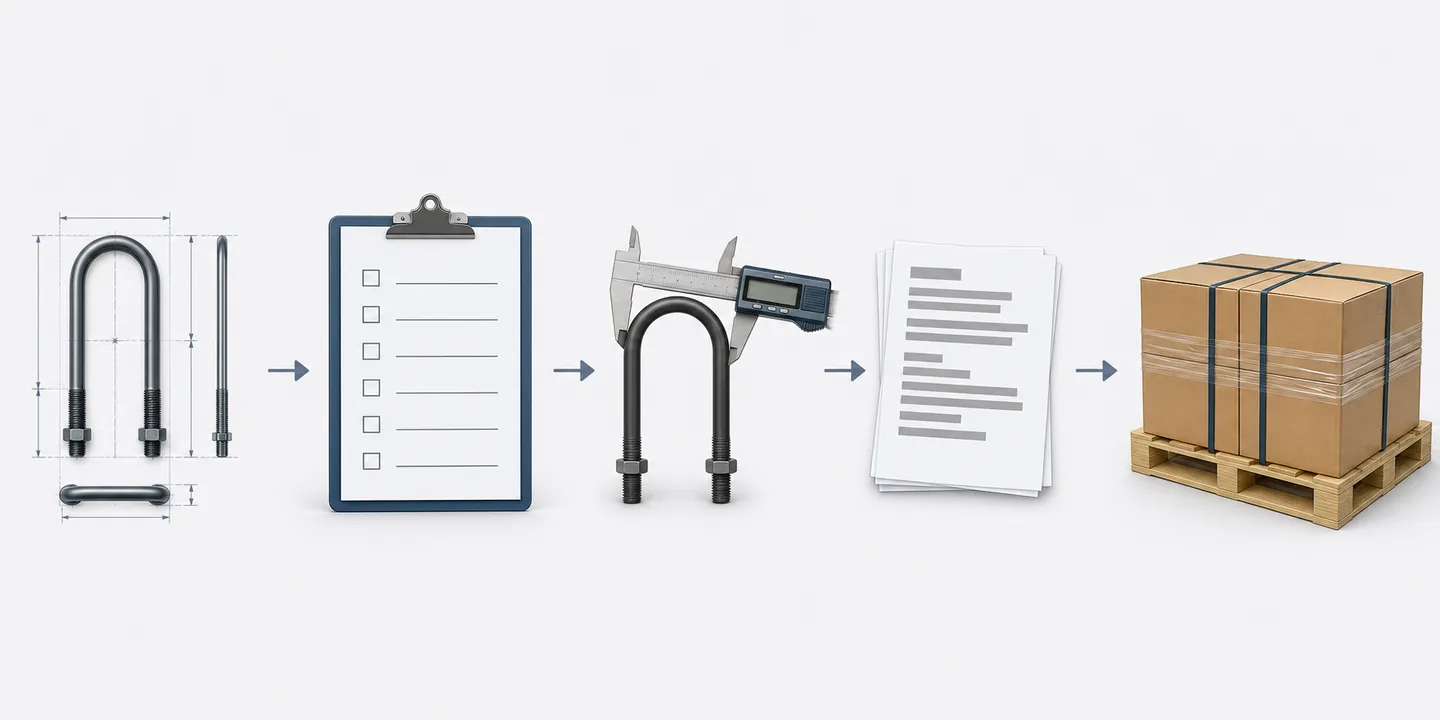
Leaf spring U-bolt RFQ workflow from drawing review to documentation and export packing
Ready to quote

Send your leaf spring U-bolt specification

Send the controlled drawing or OEM part specification with the axle interface, dimensions, thread, material, coating, documentation and commercial requirements so the RFQ can be reviewed for completeness.

Send Your Leaf Spring U-Bolt Specification Contact FastenersFromTurkey

A named mechanical-property standard is only one part of a suspension U-bolt specification. The controlled drawing must still define the axle and spring interface, thread and tolerances, while the OEM or customer procedure governs validation, tightening, re-torque and reuse.

An unhandled error has occurred. Reload 🗙