FastenersFromTurkey — Bursa, Turkey · sales@fastenersfromturkey.com Part of the MetalFromTurkey group · Bursa-based industrial fastener supplier and exporter serving international buyers
Fasteners From Turkey · Specification-Led RFQ Supply

OEM Brake and Caliper Bolts Supplied from Turkey

FastenersFromTurkey supplies OEM brake and caliper bolts from Turkey for drawing- and specification-led requirements. The approved drawing or OEM specification governs the order; any substitution or change requires documented customer engineering approval. Functional location, thread or locking, material, coating, fatigue or torque evidence, PPAP, traceability and volume are confirmed from the RFQ.

  • Confidential drawing handling
  • Specification-led review
  • Export-document coordination
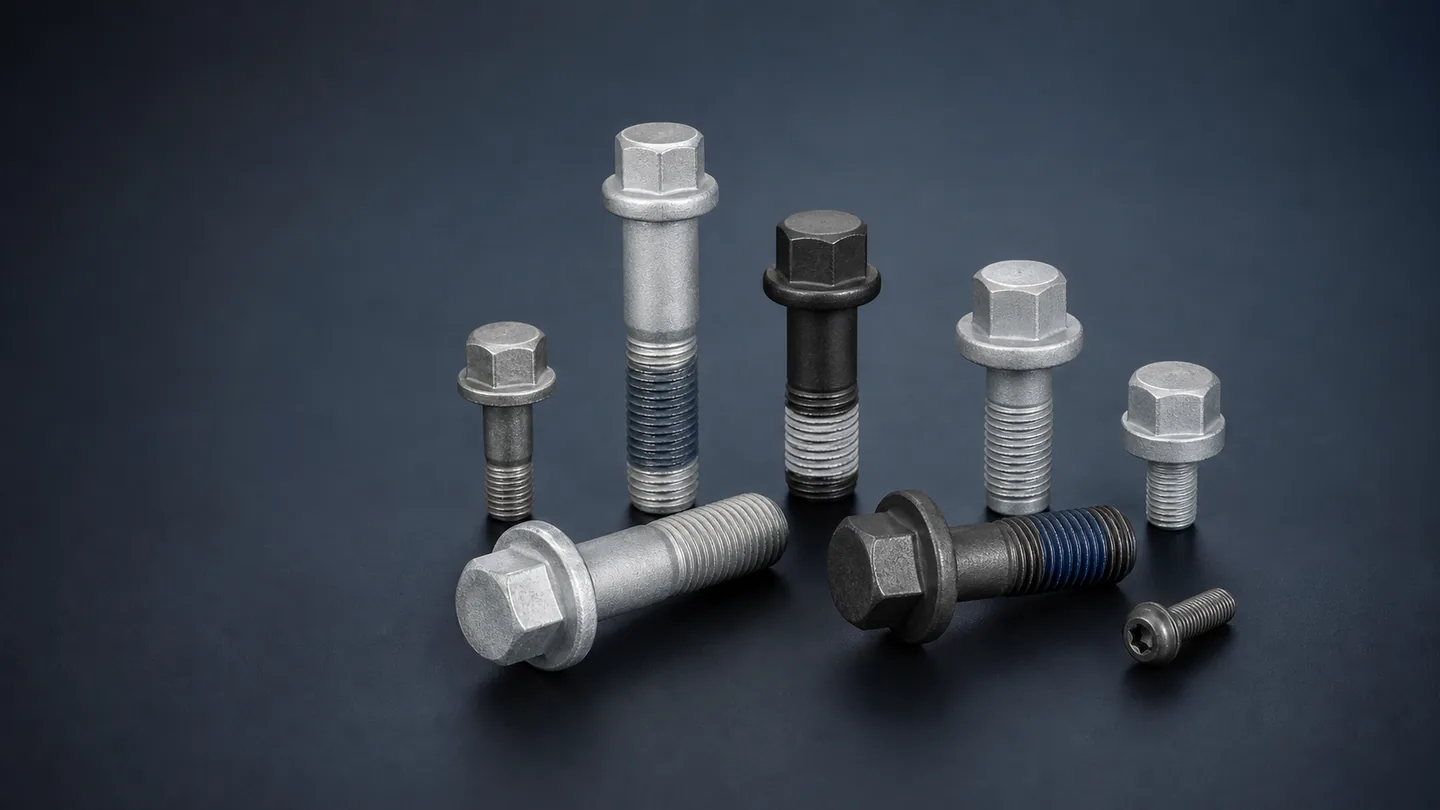
OEM brake and caliper bolts in multiple head, thread and locking-patch configurations

OEM brake and caliper bolts supplied from Turkey for safety-critical export RFQs

RFQ Qualification

Brake and caliper bolt order qualification summary

Confirm these order-specific inputs before quotation.

Fasteners From Turkey Confirmed per RFQ
Brake and caliper bolt RFQ qualification fields
Field Order input Confirmation
Product scope OEM brake or caliper bolt for the stated functional location and joint Type and application confirmed per RFQ
Standard/drawing Approved customer or OEM drawing; customer engineering approval governs any substitution Drawing and revision confirmed per RFQ
Dimensions/thread Thread, locking feature, shank, head, engagement and drawing tolerances Dimensional inputs confirmed per RFQ
Material/mechanical Drawing-specified material and mechanical, fatigue or torque requirements No substitution without documented customer engineering approval
Finish/coating Coating, corrosion and friction requirements tied to the approved joint Finish scope confirmed per RFQ
Documentation Required inspection, traceability, certificate and PPAP scope Availability and deliverables confirmed per order
Commercial Quantity or annual volume, MOQ drivers, tooling, packing, Incoterm and destination Commercial basis confirmed in the quotation
Supplier role FastenersFromTurkey supplies OEM brake and caliper bolts from Turkey. Order-specific supply scope confirmed from the RFQ

Safety-critical requirements remain governed by the approved drawing and customer engineering approval.

Drawing-led Approved drawing and revision govern the RFQ
Safety-critical Substitutions require customer engineering approval
Coating & friction Coating build tied to the torque and clamp-force plan
PPAP-ready Document plan matched to the approved order scope
Where to start

Review the brake-fastener requirement by input area

A safety-critical brake fastener is qualified from the complete requirement, not from a thread size or a vehicle reference. Start with the category and application boundary, then confirm coating and locking, validation and PPAP evidence, and the commercial inputs that let the RFQ be quoted on one basis.

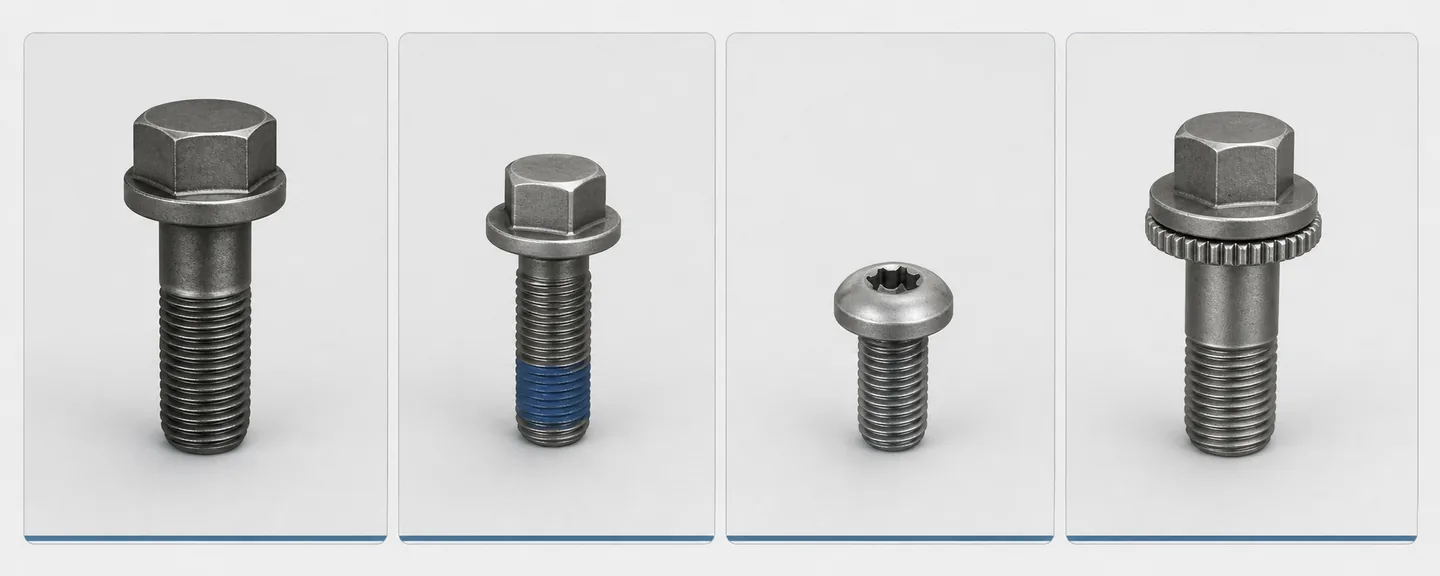
Brake fastener category guide for caliper, rotor and air-brake chamber applications

Brake-fastener categories and application boundaries

The phrase brake bolt can describe several fastener families with different functions and acceptance criteria. Identify the assembly and governing document before specifying a product form. A vehicle reference or nominal thread may help locate a drawing, but it does not establish interchangeability.

Compare brake-fastener categories
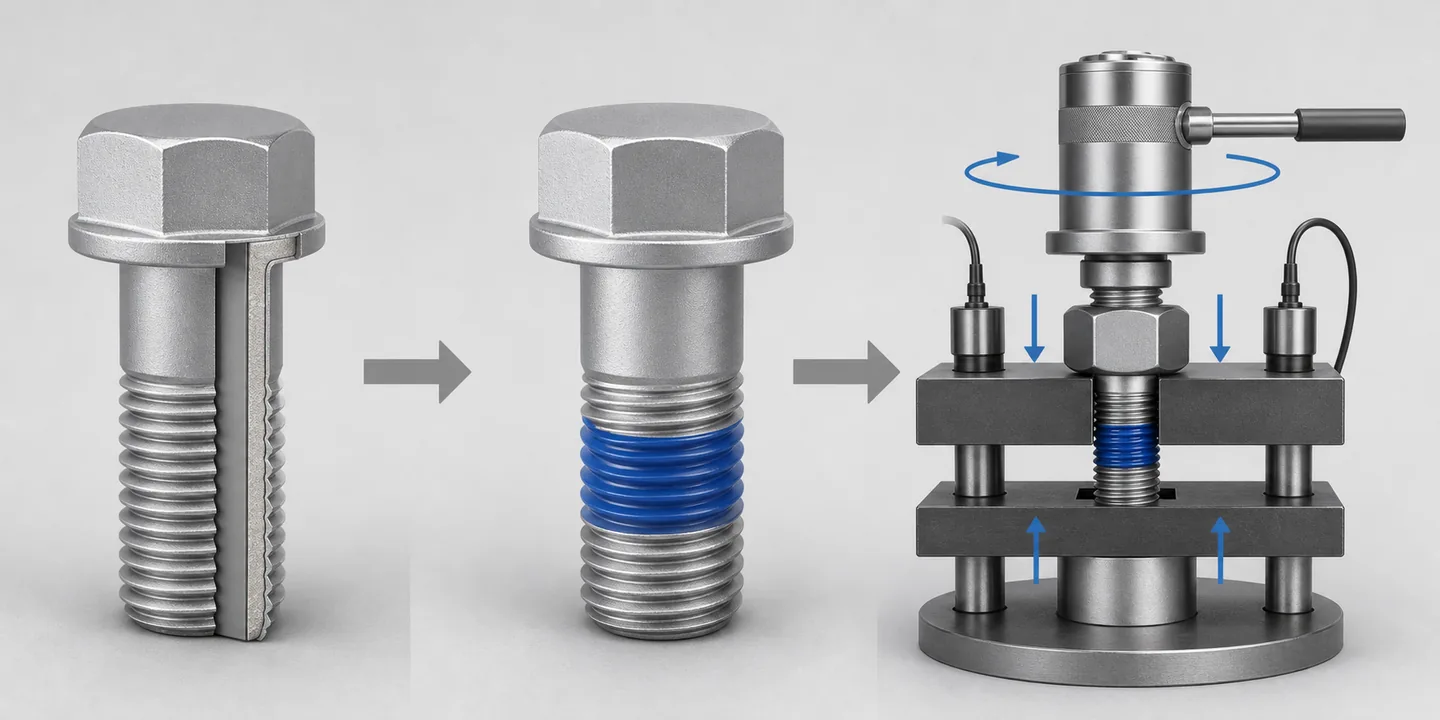
Brake bolt coating, locking patch and friction requirements for specification review

Coating, locking patch and friction requirements

Coating is an engineering input, not a cosmetic finish. The coating system, topcoat or lubricant, corrosion target, locking technology and coefficient-of-friction requirement must agree with the tightening and validation plan before a brake fastener can be approved.

Review coating and locking inputs
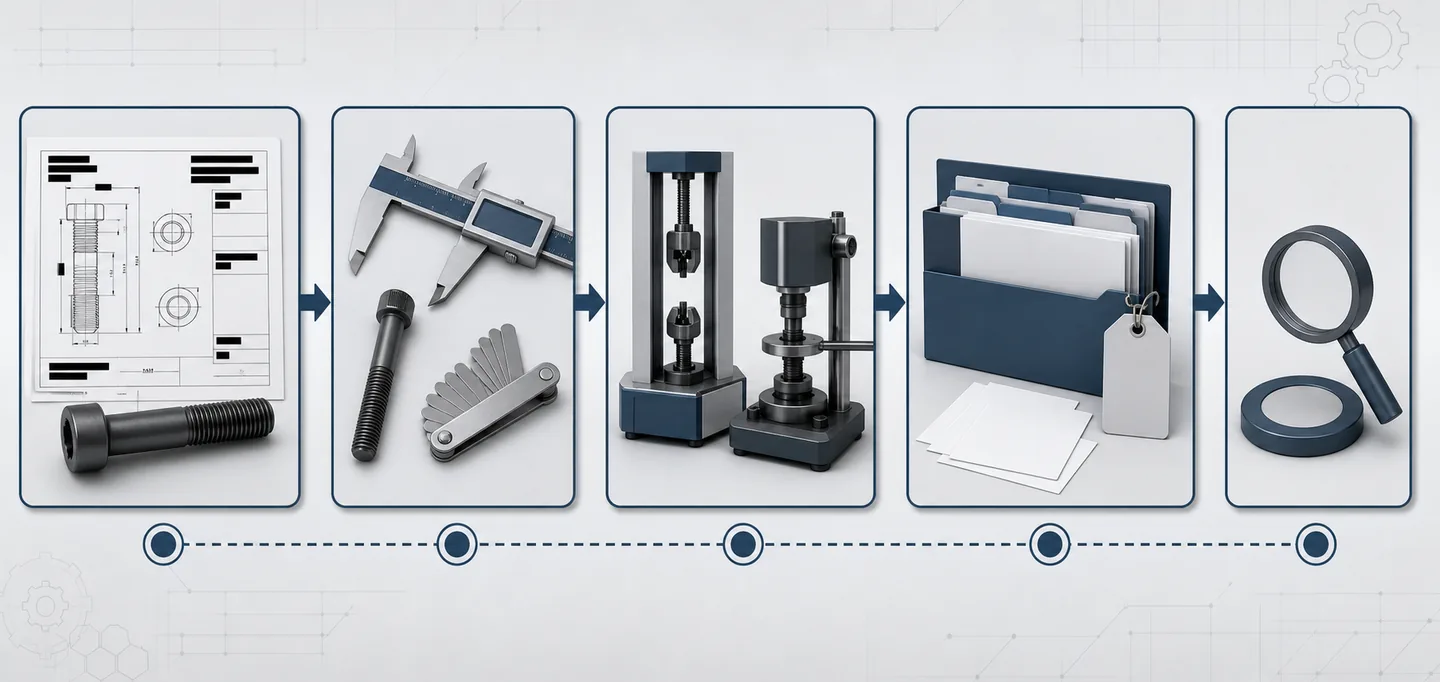
Brake bolt RFQ validation flow covering drawing review, testing, PPAP and approval

Validation, PPAP and approval flow

Mechanical-class compliance is one element of the validation plan. Fatigue, torque/clamp-force, inspection and PPAP evidence are agreed for the actual geometry and joint before quotation, then coordinated with the selected manufacturing route.

Review validation and PPAP evidence
Brake bolt RFQ checklist for drawing, material, coating, locking, quantity and destination

What to include in a brake-bolt RFQ

A technically complete RFQ allows tooling, samples, PPAP, serial volume and logistics to be quoted on the same basis. Use the checklist to confirm the drawing, interface, material, coating, locking, validation, documentation and commercial inputs before sending the requirement.

Open the brake-bolt RFQ checklist

Send your brake-bolt drawing for RFQ review

Category boundaries

Brake-bolt categories and application boundaries

The phrase brake bolt can describe several fastener families with different functions and acceptance criteria. Identify the assembly and governing document before specifying a product form. A vehicle reference or nominal thread may help locate a drawing, but it does not establish interchangeability.

CategoryTypical functionGoverning RFQ inputsQuotation route
OEM brake mounting or special brake-system boltJoins a drawing-defined bracket, housing or brake-system interfaceDrawing revision, interface geometry, thread, material, coating, locking and validationParent brake-bolt family review
Caliper bolt or caliper bracket/carrier fastenerLocates or clamps a caliper-related assemblyCaliper interface, shoulder and engagement, coating/friction, locking and customer approvalCaliper-specific review
Rotor or disc retaining screwRetains the rotor or disc during the defined assembly processHead/drive, countersink or bearing interface, thread, coating and assembly requirementRotor-fastener review
Brake chamber cage boltSupports an approved air-brake chamber caging functionChamber design, controlled drawing, thread, end geometry, material and markingCapability-confirmed RFQ only
Category detail

How each brake-fastener family is qualified

Each family carries its own interface, acceptance criteria and approval route. Confirm which one the requirement belongs to before a product form is specified.

OEM brake mounting and special brake-system bolts

Broad brake-system bolts may include flange-head, hex-head, shoulder, reduced-shank or special-geometry parts. The part drawing must define the load path, bearing interface, transitions, under-head geometry and usable thread. A generic catalogue bolt should not be substituted where the joint depends on application-specific geometry or validation.

Caliper bolts and caliper-mounting fasteners

Search terms such as brake caliper bolt, caliper bolt, caliper bracket bolt, caliper carrier bolt and brake caliper mounting bolt can refer to different interfaces. Confirm whether the part clamps a bracket, locates a carrier, supports sliding movement or performs another controlled function. Caliper-specific requirements are qualified separately so the broad family does not hide interface details.

Rotor and disc retaining fasteners

A rotor screw, brake rotor screw or brake disc retaining screw is normally smaller than a structural mounting bolt and can use a different head, drive, material and coating route. Its assembly function and acceptance criteria still come from the approved drawing and process specification. Retail replacement assumptions are not used for an OEM RFQ.

Air-brake chamber cage bolts

Air brake cage bolts and brake chamber cage bolts belong to the chamber design and service procedure defined by the customer. Product availability is confirmed only after the chamber interface, thread, end form, material, mechanical requirements and required markings pass order-specific feasibility review.

Approval basis

Why brake-system fasteners require application-specific approval

Brake-system fasteners are safety-critical connection parts. Their performance depends on the complete joint, the manufacturing and coating process, the assembly method and the defined validation plan. Qualification therefore goes beyond matching a thread and nominal strength class.

Property class does not define the complete joint

ISO 898-1:2013 specifies mechanical and physical properties for qualifying carbon- and alloy-steel bolts, screws and studs within its material, metric-thread and geometry scope. ISO states that it does not specify corrosion resistance, torque/clamp-force performance or fatigue resistance. Those requirements need their own drawing references, test methods and acceptance criteria.

Substitutions require customer engineering approval

Changes to material, heat treatment, class, geometry, thread, coating, lubricant, locking system or manufacturing route can change fatigue behavior, friction and clamp load. A proposed alternative must be assessed against the controlled specification and approved by the customer or OEM engineering authority before use.

RFQ inputs

Drawing, OEM specification and functional requirements

The controlled drawing and current purchase specification are the primary acceptance sources for an application-specific brake fastener. Include the document number and revision with the RFQ, then identify every customer-specific requirement that sits outside the drawing.

Drawing revision, application and interface geometry

State the vehicle, equipment or brake-system application without exposing confidential program data in public correspondence. Define head and drive, flange or bearing face, under-head fillet, shoulder, shank, transitions, overall and grip lengths, thread start, end form and mating-component geometry. Controlled characteristics and datum references should remain visible in the approved RFQ package.

Thread, tolerance, engagement and mating-component requirements

Specify metric or inch thread system, nominal diameter, pitch or threads per inch, tolerance class, usable engagement, runout and any gauge requirement. Coating allowance and mating-component material also matter. A metric and unified thread that appear close must never be mixed, and engagement should be evaluated in the actual joint rather than inferred from overall bolt length.

Material, heat treatment and mechanical-property requirements

Define material grade, property class or customer mechanical values, heat-treatment condition, hardness limits and any surface/core or decarburization controls. Required evidence may include material identity, heat-treatment records, hardness, tensile or proof-load results and batch traceability. Typical brake-bolt materials or classes are not treated as an offered range until the selected manufacturer confirms feasibility.

Loosening control

Locking patches, adhesives and loosening control

A brake bolt locking patch is a functional part of the assembly specification. It may provide prevailing torque, chemical locking or sealing behavior, depending on the system. The drawing must identify the required technology instead of using a color or brand appearance as the acceptance rule.

Patch type, location, torque criteria and reuse conditions

Define the patch or microencapsulated adhesive type, circumferential coverage, start and end position, thread-free lead, shelf-life controls where relevant, application and cure requirements, prevailing-on/off or breakaway criteria, and permitted installation or removal cycles. Reuse is allowed only when the approved specification says so.

Preload, friction and assembly-process interaction

The locking feature, coating and lubricant all interact with the assembly process. A higher property class does not prevent loosening by itself. The joint design must establish the required preload or retention behavior, the approved tightening method and any verification after assembly.

Coating and friction

Coatings, friction and hydrogen-embrittlement control

Coating is an engineering input, not a cosmetic finish. The RFQ should state the coating system, thickness where controlled, corrosion target and test method, topcoat or lubricant, friction requirement, color if relevant, masking and dimensional allowances. These fields must agree with the tightening and validation plan.

Zinc flake and electroplated coating systems

ISO 10683:2018 covers non-electrolytically applied zinc-flake coating systems for steel fasteners, with or without topcoat or lubricant. ISO notes their particular use for high-strength fasteners at or above 1,000 MPa to avoid internal hydrogen-embrittlement risk. Zinc flake may be suitable for a brake-fastener requirement, but the approved coating build and application criteria still govern. ISO 4042:2022, including its 2026 amendment, covers electroplated coating systems and includes requirements and recommendations to minimize hydrogen-embrittlement risk. The selected route must be reviewed against material hardness, process preparation, coating specification and the customer's risk-control plan.

Corrosion target, lubricant/topcoat and coefficient of friction

Specify the required corrosion test, exposure duration and acceptance condition rather than asking for a generic corrosion-resistant finish. Topcoats and integrated or added lubricants affect friction. Because friction changes the relationship between tightening torque and clamp load, the coefficient-of-friction target and test method should be linked to the approved assembly process.

Hydrogen-embrittlement prevention and detection requirements

High-strength fasteners need explicit control of hydrogen introduction and delayed-fracture risk. Prevention begins with material and process selection; baking or post-treatment does not automatically remove all risk. Where the specification requires a detection method, ISO 15330:1999 is a current preloading-test reference for the parallel-bearing-surface method. The order must define the applicable method, sampling and acceptance criteria.

Validation evidence

Fatigue, torque/clamp force and validation evidence

Mechanical-class compliance is one element of the validation plan. A safety-critical brake-bolt RFQ should identify the dimensional, mechanical and application-specific evidence required for the actual geometry and joint.

Mechanical, dimensional and hardness evidence

Agree the inspection characteristics, sampling, gauges and report format before quotation. Evidence may include material identification, heat-treatment records, dimensional results, thread gauges, hardness and mechanical-property results. Availability and test location are confirmed for the selected manufacturer and order; no laboratory capability is assumed from the FastenersFromTurkey brand.

Fatigue and application-specific performance validation

Brake bolt fatigue testing requires an agreed load case, fixture, cycle definition, sample plan and acceptance criteria. These come from the customer or OEM specification, not from ISO 898-1 alone. Where geometry or loading differs from a standard specimen, the validation plan should explain how the actual part or representative joint will be tested.

Torque/clamp-force, friction and loosening evidence

ISO 16047:2005 specifies conditions for torque/clamp-force tests on applicable threaded fasteners. It does not publish a universal installation torque, and its scope excludes threaded fasteners with additional self-locking features. A locking-patch bolt may therefore need a customer-defined method that separates friction, clamp-load and locking-system behavior.

Requirement matrix

What the buyer specifies and what evidence to request

Each requirement area needs both a buyer input and an agreed evidence route. Reviewing them together prevents a material-compliance record from being mistaken for joint-performance approval.

Requirement areaBuyer must specifyEvidence to requestWhy it matters
Application / drawingAssembly, drawing number and revision, customer specificationApproved drawing and specificationDefines the actual part and acceptance criteria
Geometry / threadDimensions, thread system and pitch, tolerance, engagement and interface featuresDimensional report and agreed gaugesPrevents joint or mating-component mismatch
Material / classMaterial, mechanical requirements and heat treatmentMaterial, heat-treatment and mechanical recordsProperty class alone does not qualify the application
LockingSystem, location, torque criteria and reuse ruleApplication and retention evidenceControls loosening according to the joint design
Coating / frictionCoating build, corrosion target, topcoat or lubricant and friction targetCoating, corrosion and friction recordsCoating changes corrosion behavior and assembly preload
HE controlProcess restrictions and required detection or preload testsSupplier process evidence and test recordsHigh-strength parts need explicit delayed-fracture risk control
ValidationFatigue, torque/clamp force, hardness, mechanical and application testsAgreed inspection and validation reportsSeparates material compliance from joint performance
Quality documentsPPAP level, control plan or FMEA, traceability and change approvalCustomer-approved document packageSupports serial-production approval and change control
Documentation

PPAP, inspection and traceability requirements

Brake bolt PPAP and customer-specific documentation are coordinated only when the selected manufacturing route and order support the required scope. Define the submission level, sample sequence and approval milestones before quotation so tooling, validation and timing can be evaluated together.

PPAP level and customer-specific requirements

State the requested PPAP level and any customer-specific APQP, control-plan, process-flow, PFMEA, MSA, SPC, capability or sample requirements. The AIAG Quality Core Tools provide the automotive framework, while the customer's current manuals and submission rules control the program.

Material, coating, test and inspection documents

List the exact records required with samples and serial orders: material and heat-treatment evidence, dimensional and mechanical reports, coating thickness and corrosion results, friction or torque/clamp-force data, locking-system results, fatigue or application tests, inspection reports, declarations and certificates of origin. Each document remains supplier- and order-specific.

Batch traceability and change control

Define batch identity, production and coating lot links, inspection status, packaging marks, record retention and required approval before a material, process, tool, subcontractor or manufacturing location change. Confidential producer information can remain protected while the buyer receives the agreed traceability evidence.

How we supply from Turkey

How we supply OEM brake bolts from Turkey

FastenersFromTurkey is a Bursa-based brake fastener supplier and exporter. Buyers can submit one controlled RFQ for an order-specific feasibility, documentation and supply-scope review.

How we review brake-fastener RFQs

Order-specific feasibility and supply scope are assessed from the drawing, material, forming and machining needs, heat treatment, coating and locking processes, validation scope, PPAP requirements, volume and destination. Manufacturing capability is confirmed after evidence review; it is not assumed across every brake-fastener category.

Supplier evidence and technical review

Before quotation, the relevant route is checked for part-family capability, process feasibility, applicable quality-system evidence and the requested document or test scope. Available, subcontracted and customer-nominated processes should be distinguished in the offer and approval plan.

Confidential order and documentation coordination

FastenersFromTurkey coordinates the commercial offer, protected technical-file exchange, agreed inspection records and export documents. Manufacturer and customer identities remain confidential. Certificates and test reports are attributed to their actual issuer and applicable order rather than transferred to the FastenersFromTurkey brand.

Commercial review

Export, packaging and commercial review

A technically complete RFQ allows tooling, samples, PPAP, serial volume and logistics to be quoted on the same basis. Commercial terms remain conditional until the approved specification and order-specific supply scope are established.

MOQ, tooling, annual volume and price drivers

Provide prototype or sample quantity, first order quantity, annual volume and forecast profile. Price and MOQ can be affected by raw material, geometry, cold-heading or machining route, tooling, heat treatment, coating and locking application, validation, PPAP, inspection, packaging and lot size. Tooling and approval costs should be separated where relevant.

Packaging, labeling, Incoterms and destination

Define unit and bulk packaging, corrosion protection, thread protection, labels, lot segregation, pallet requirements, destination country and port, required date and preferred Incoterm. EXW, FOB, CFR or CIF can be reviewed according to the shipment. Final delivery timing follows the confirmed production and logistics plan.

RFQ checklist

What to include in a brake-bolt RFQ

A complete brake bolt RFQ should include:

#Provide in the RFQ
1Part name and exact application.
2Approved drawing or OEM/customer specification with revision.
3Head, drive, shank, shoulder, interface and all controlled dimensions.
4Thread system, diameter, pitch, tolerance, engagement and mating component.
5Material, property class or mechanical values, heat treatment and hardness.
6Coating system, thickness, corrosion target, lubricant or topcoat and friction requirement.
7Locking patch or adhesive system, location, torque criteria and reuse rule.
8Dimensional, mechanical, fatigue, torque/clamp-force, corrosion, HE and application-test requirements.
9PPAP level, samples, inspection documents, certificates, traceability and change-control needs.
10Order quantity, annual volume, forecast, tooling status and target delivery date.
11Packaging, labeling, destination, preferred Incoterm and buyer contact.
RFQ FAQ

Frequently asked questions

What information is required to quote OEM brake bolts?

Provide the application, approved drawing and revision or OEM specification, dimensions and thread, material and mechanical requirements, heat treatment, coating and friction, locking feature, validation and PPAP requirements, order quantity, annual volume, packaging, destination and preferred Incoterm.

Can brake bolts be selected by property class alone?

No. Property class addresses defined mechanical properties within the applicable standard scope. A brake-system joint can also depend on geometry, thread engagement, heat treatment, fatigue, coating and friction, locking method, assembly process and application-specific validation.

Which standards apply to brake and caliper bolts?

The customer or OEM drawing and purchase specification govern the application. ISO 898-1 may apply to mechanical properties of qualifying carbon- and alloy-steel metric bolts, while coating, hydrogen-embrittlement and torque/clamp-force requirements use separate standards. Every reference must be checked for its actual scope.

Why must coating and friction requirements be specified together?

The coating system, topcoat and lubricant affect corrosion protection and friction. Friction influences the relationship between tightening torque and clamp load, so coating approval must be tied to the joint and assembly specification rather than selected by appearance alone.

When is a locking patch or microencapsulated adhesive required?

Use a locking patch or adhesive only when the approved joint design, drawing or customer specification requires it. Define the locking system, thread location, torque criteria, shelf-life conditions where relevant and whether reuse is permitted.

Can PPAP and customer-specific validation be coordinated?

PPAP and customer-specific validation can be coordinated when the selected manufacturer and order support them. Define the required PPAP level, samples, control documents, test plan, traceability and approval sequence before quotation.

Can brake bolts be supplied from Turkey for export?

Yes. FastenersFromTurkey supplies brake bolts from Turkey when an order passes specification and feasibility review. The quotation depends on confirmed manufacturing capability, evidence requirements, quantity, annual volume, packaging, destination and Incoterm.

Request a quote

Send your drawing or specification for RFQ review

FastenersFromTurkey supplies brake and caliper bolts from Turkey for drawing- and OEM-specification-led orders. The approved drawing or OEM specification governs this safety-critical brake interface; any substitution or change requires documented customer engineering approval. Send the functional location, thread or locking requirement, material, coating, required fatigue or torque/clamp-force evidence, PPAP, traceability, quantity, packing, Incoterm and destination.

Email: sales@fastenersfromturkey.com
Phone: +90 543 928 19 76

Ready to quote

Discuss coating, locking and PPAP requirements

Send the approved drawing or OEM specification with the coating, locking, validation and documentation scope so order-specific feasibility and supply scope can be confirmed.

Discuss Coating, Locking and PPAP Requirements

A brake-fastener coating decision is incomplete without the friction condition and hydrogen-embrittlement controls. Confirm the base material and hardness, surface preparation, coating build, lubricant or topcoat, corrosion target, torque/clamp-force plan and required detection evidence as one approval package.

An unhandled error has occurred. Reload 🗙