FastenersFromTurkey — Bursa, Turkey · sales@fastenersfromturkey.com Part of the MetalFromTurkey group · Bursa-based industrial fastener supplier and exporter serving international buyers
Fasteners From Turkey · Drawing-Led RFQ Supply

Custom Nuts Made to Drawing from Turkey

FastenersFromTurkey supplies custom nuts made to drawing in Turkey for industrial RFQs. The approved drawing or specification governs profile, internal thread, tolerances, material, property class or proof-load requirements, coating and inspection; samples, PPAP, tooling and annual demand are confirmed for each order.

  • Drawing-led qualification
  • Confidential order review
  • Export-document coordination
Custom nuts made to drawing for industrial RFQ review through verified Turkish manufacturers

Custom nuts made to drawing through verified Turkish manufacturers

RFQ Qualification

Custom nut order qualification summary

Confirm these order-specific inputs before quotation.

Fasteners From Turkey Confirmed per RFQ
Custom nut RFQ qualification fields
Field Order input Confirmation
Product scope Made-to-drawing custom nut for the stated mating fastener and application Part type and application confirmed per RFQ
Standard/drawing Controlled drawing, revision and purchase specification govern acceptance Governing documents confirmed per RFQ
Dimensions/thread Profile, internal thread, engagement, tolerance class and critical dimensions Dimensional inputs confirmed per RFQ
Material/mechanical Specified material, property class, proof-load and mating-fastener requirements Order requirement confirmed before quotation
Finish/coating Specified finish, coating, corrosion and friction requirements Finish scope confirmed per RFQ
Documentation Required certificate, proof-load or inspection report, PPAP or TPI scope Availability and deliverables confirmed per order
Commercial Quantity or annual volume, MOQ drivers, tooling, packing, Incoterm and destination Commercial basis confirmed in the quotation
Supplier role FastenersFromTurkey supplies custom nuts made to drawing from Turkey. Order-specific supply scope confirmed from the RFQ

Values remain order-specific until confirmed in the quotation.

Drawing-led The controlled drawing establishes geometry and acceptance criteria
Route-matched Modified standard, cold forging, machining or a combined route per part
Proof-load reviewed Nut class, proof load and mating bolt or stud checked together
PPAP-capable Prototype, first-article and PPAP requirements coordinated
Where to start

Review the custom nut requirement by input area

A custom nut cannot be qualified from a photograph, nominal thread or product name alone. Start with the drawing and specification basis, then confirm the internal thread and gauging plan, the production method and the tooling, sample and PPAP plan that let the RFQ be quoted on one basis.

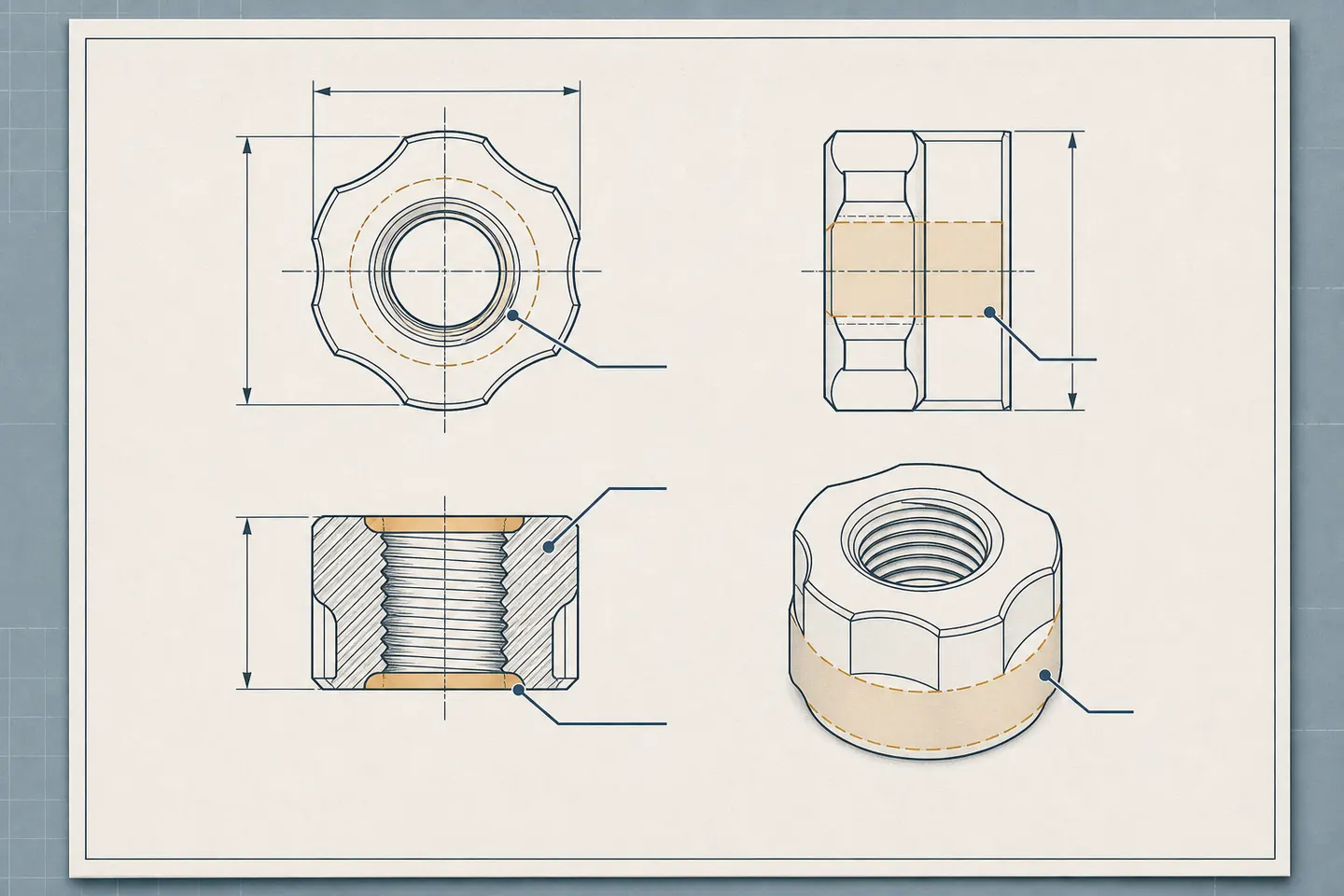
Generic custom nut drawing with thread, height, bearing-face and coating callout zones

Drawing, revision and specification control

The controlled drawing establishes geometry and acceptance criteria; the purchase specification adds material, mechanical, coating, testing, documentation, packaging and commercial requirements. Both should identify the same part number and revision. Where drawing and purchase requirements could conflict, state the order of precedence and obtain written approval for deviations.

Review drawing and specification inputs
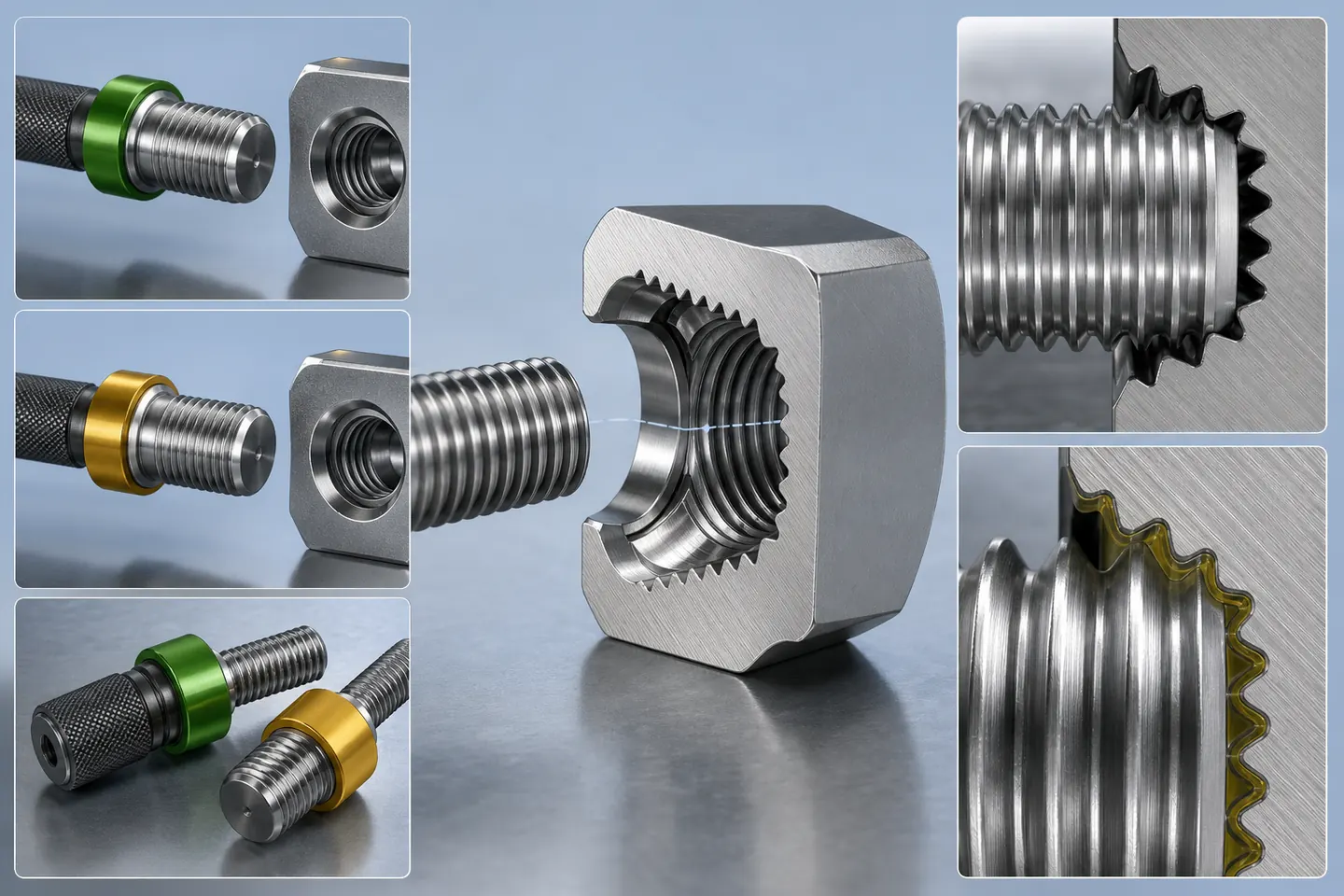
Cutaway custom nut with mating stud, thread engagement and plug-gauge inspection concepts

Internal thread, tolerance and gauging

Custom metric nuts and Unified Inch parts use different thread systems and are not interchangeable. State the nominal diameter, pitch or threads per inch, profile, tolerance class, hand, through or blind condition, thread depth and any coating allowance, then define the gauge system, acceptance method and inspection frequency with the mating bolt or stud.

Review thread and gauging requirements
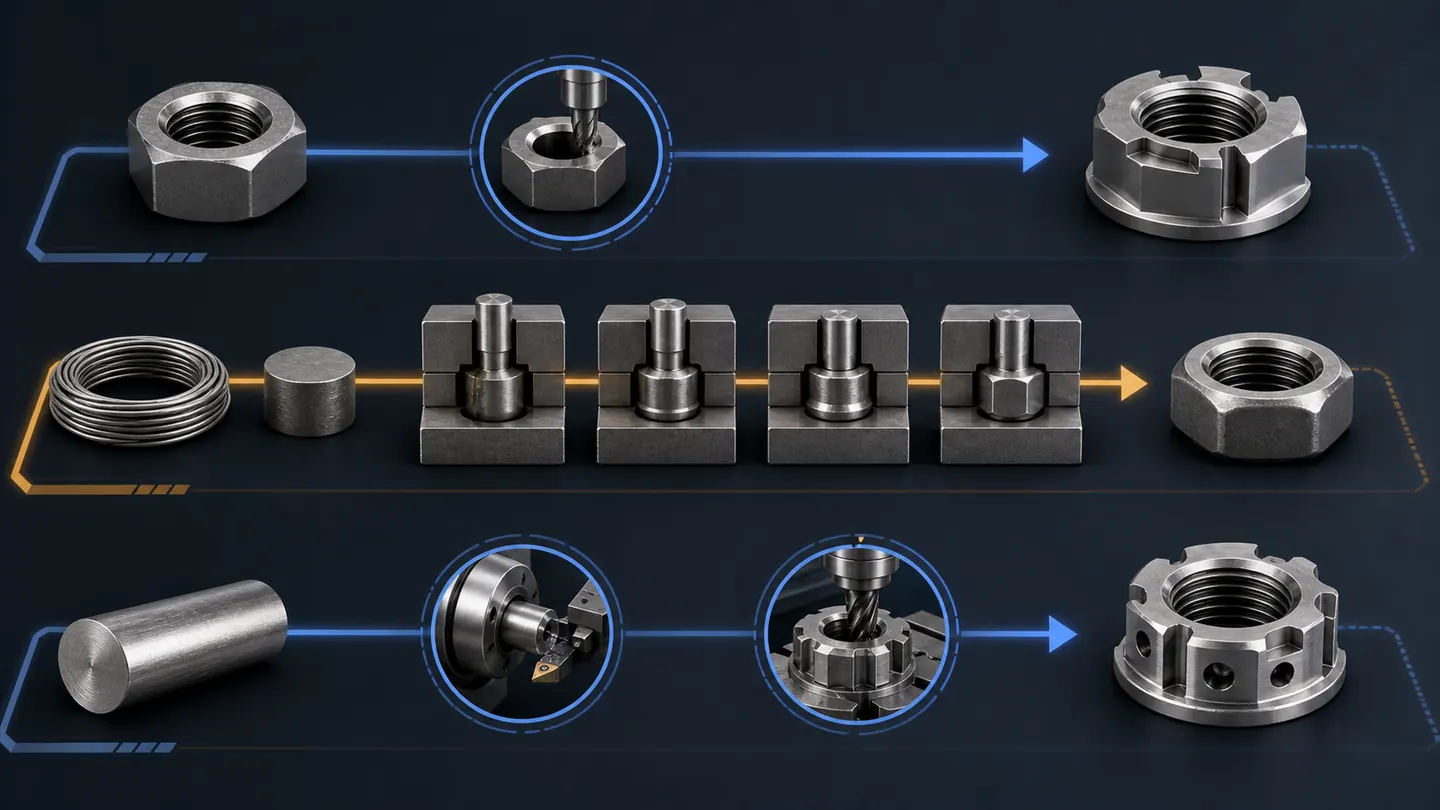
Modified-standard, cold-forging and machining routes for drawing-defined custom nuts

Cold forging, machining or a combined route

Geometry, material, tolerance, first-order quantity and annual volume determine the economical production method. The same part may use different methods for prototype and serial stages, and a modified standard blank can sometimes reduce tooling exposure at lower volumes. The suitable method is confirmed for the order.

Compare production methods
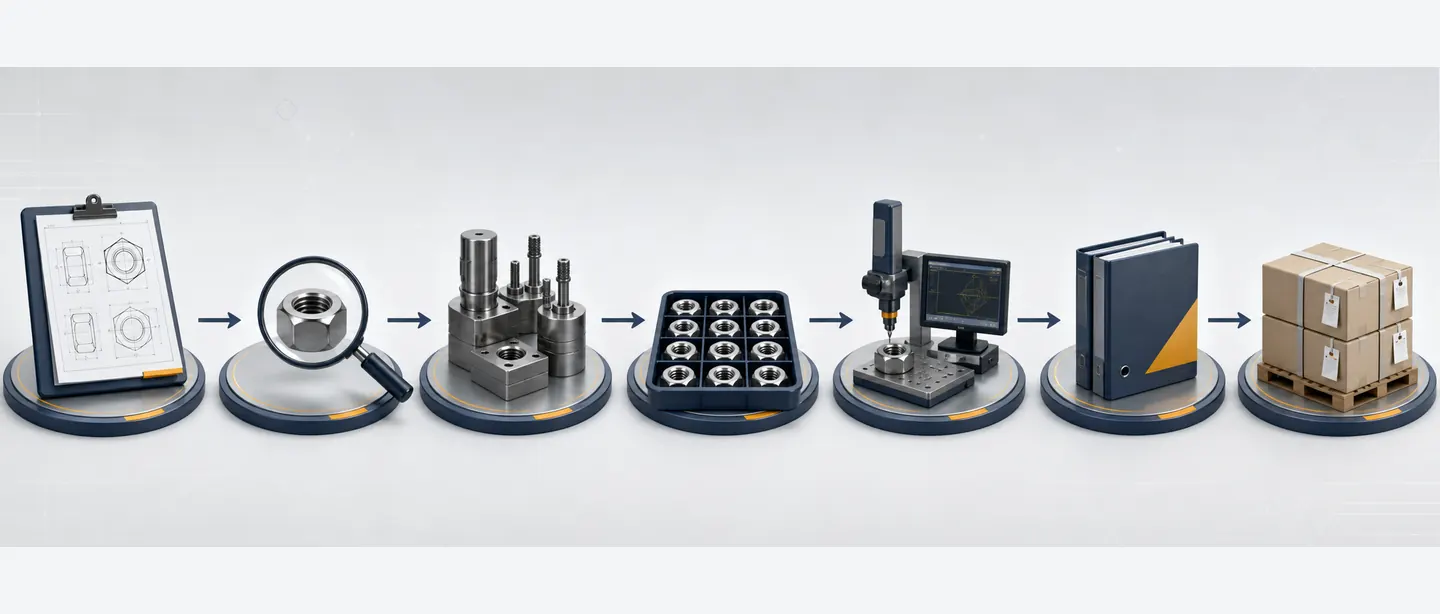
Custom nut drawing review, tooling, sample, inspection, documentation and packing workflow

Tooling, samples, PPAP and serial production

Tooling and non-recurring engineering depend on geometry, process, material and expected volume. The quotation should separate recurring part price from tooling or engineering charges where applicable and identify tooling ownership, drawing revision, storage, maintenance and change-control terms.

Review tooling and PPAP requirements

Send your drawing for RFQ review

RFQ inputs

Made-to-drawing custom nut review

A custom nut cannot be qualified from a photograph, nominal thread or product name alone. The controlled drawing establishes geometry and acceptance criteria; the purchase specification adds material, mechanical, coating, testing, documentation, packaging and commercial requirements. Both should identify the same part number and revision.

Drawing, revision and specification control

Provide the drawing number, revision, units, datums, critical dimensions, tolerances and applicable standards. Define the internal thread, bearing face, outside profile, height, flange or collar, special features and controlled surface finish. Identify the mating bolt or stud when thread engagement, class compatibility, coating or assembly performance matters. Where drawing and purchase requirements could conflict, state the order of precedence and obtain written approval for deviations. An approved sample may support clarification or reverse engineering, but it does not replace authorization, material identity or a controlled acceptance drawing.

When a modified standard nut may be more economical

A standard blank may sometimes be machined, slotted, drilled or coated. This can reduce tooling exposure at lower volumes if the base nut's geometry, material, property class, thread and traceability remain compatible. The suitable production method is confirmed for the order.

Configurations

Custom nut types and configurations

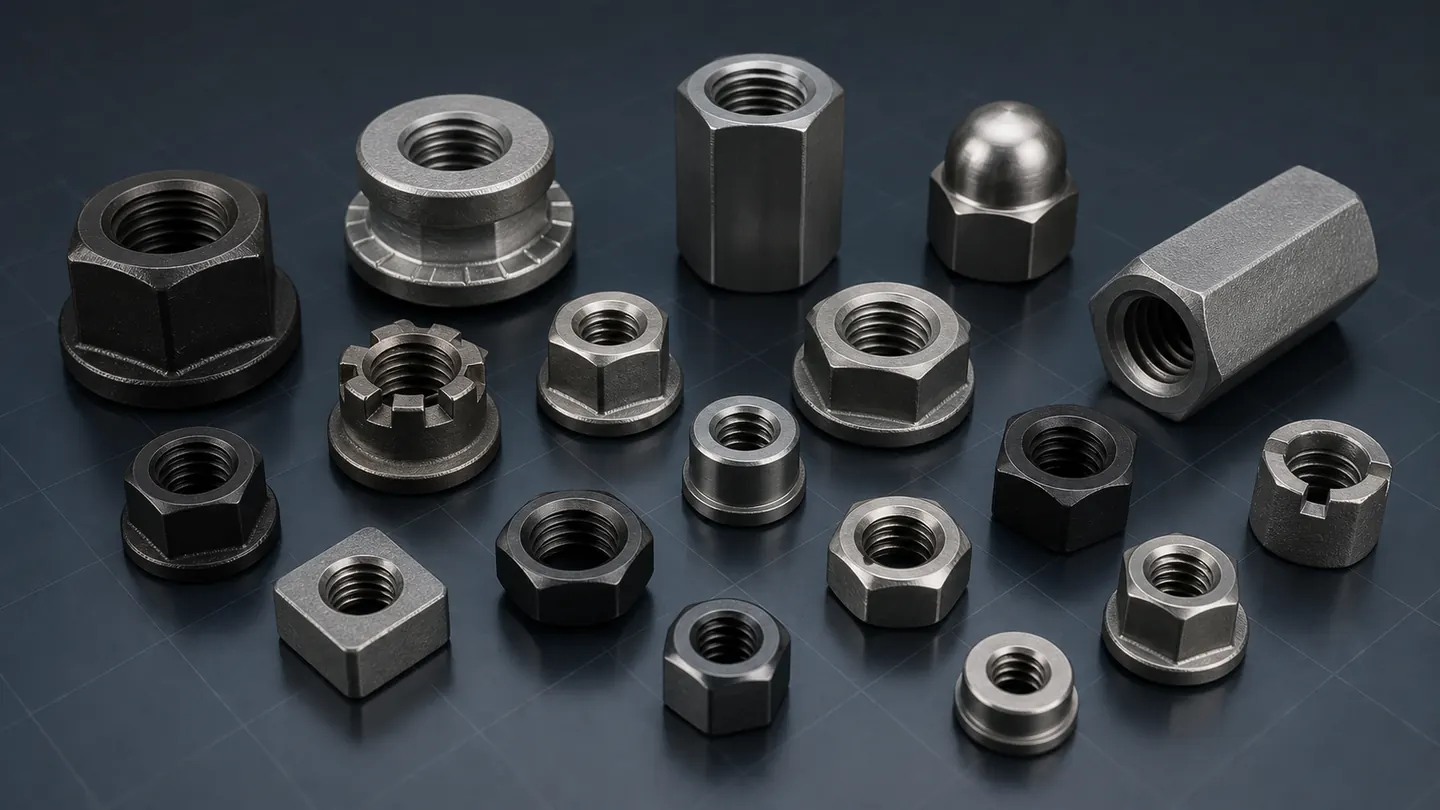
Custom nuts may begin with familiar forms or use a fully drawing-defined profile. The examples below are RFQ categories, not a stock list or universal capability claim.

ConfigurationDrawing focusQualification boundary
Hex, high or thin nutAcross flats, height, chamfers, bearing face and threadConfirm whether an ISO or inch-series reference applies
Flange, collar or serrated nutFlange diameter, bearing geometry, serration and friction behaviorMating surface and assembly method must be defined
Square, round, cap or slotted formOutside profile, drive or retention feature, envelope and accessTooling and secondary operations depend on geometry and volume
Coupling nut or threaded bushingEngagement length, outside diameter, concentricity and end formPress fit, welding or structural use needs its own acceptance plan
Weld, captive, sealing or locking featureFunctional location, torque or retention target and validationRoute locking-family intent to the applicable specification and owner page
Modified-standard or special-profile nutBase part, permitted modification, controlled features and traceabilityModification must not invalidate mechanical or dimensional requirements
Configuration detail

Hex, flange, square, round, cap and special-profile nuts

Nut form affects tooling, bearing behavior, installation and inspection. Define the function, not only the appearance.

Hex, flange, square, round, cap and special-profile nuts

Nut form affects tooling, bearing behavior, installation and inspection. Serrations can change friction and damage a coated mating surface; a closed end changes thread engagement. Define the function, not only the appearance.

Internally threaded bushings and nut-like parts

Nut-like parts may function as threaded bushings, collars or captive inserts. Outside diameter, press fit, concentricity and mating material can be as important as the thread. The drawing determines the production method.

Custom locking, sealing and captive features

Locking, sealing, weld and captive features need measurable acceptance criteria. State the applicable torque, retention, weld, leakage or installation test rather than requesting a generic "locking nut." Standard families remain available through lock nuts and prevailing-torque nuts.

View lock nuts and prevailing-torque nuts

Production method

Cold forging, machining or a combined route?

Geometry, material, tolerance, first-order quantity and annual volume determine the economical production method. The same part may use different methods for prototype and serial stages.

RouteBetter fit whenMain RFQ questionsConstraint
Modified standardA compliant base nut can retain its required properties after limited secondary workBase standard, modification, marking and traceabilityNot every change preserves the original conformity basis
Cold forgingRepeat demand and formable near-net geometry justify dedicated toolingMaterial formability, tooling, volume, secondary work and thread routeSevere geometry or tight local features may need another process
MachiningPrototypes, lower volume, complex geometry or controlled local features dominateBar or blank route, datums, finish, thread method and inspectionMachining is not automatically the lowest-cost serial route
Combined routeA formed blank needs turning, milling, drilling, broaching, threading or grindingComplete sequence, heat treatment, coating and final-dimension controlEach handoff must be covered by the control plan
Route detail

How each production method is qualified

Order-specific feasibility review considers the complete route and its change-control points, not only the first forming operation.

Cold forging for formable repeat-volume parts

Custom cold forged nuts can suit repeat demand when the alloy and geometry are formable. Tool design, forming sequence, threading and secondary operations are assessed against the drawing and annual volume.

Machining for complex geometry and tighter local features

Custom machined nuts may suit prototypes, lower quantities or tight local features. They can start from bar, a standard blank or a forged preform. Thread production, datums and inspection should be agreed before approval.

Forged or formed blanks with secondary operations

A combined-route quotation should identify which features are formed, machined, threaded, heat treated, coated and finally inspected.

Dimensions and threads

Dimensions, internal threads and tolerances

State the complete thread designation and purchased specification, then mark the characteristics that will be measured. The drawing should identify the governing thread standard or customer specification.

Metric, UNC, UNF and drawing-defined internal threads

Custom metric nuts and Unified Inch parts use different thread systems and are not interchangeable. State the nominal diameter, pitch or threads per inch, profile, tolerance class, right- or left-hand direction, through or blind condition, thread depth and any coating allowance. The drawing should identify the governing thread standard or customer specification.

Thread tolerance, gauging and mating-fastener requirements

Define the gauge system, acceptance method and inspection frequency. Internal-thread fit must be reviewed with the mating bolt or stud, engagement length, external-thread class and both coatings. A nut that gauges before coating may not assemble correctly after coating unless the allowance strategy is controlled.

Bearing face, across-flats, height and critical geometry

Outside profile, height, bearing face, flange, concentricity, runout and surface finish can influence wrenching, seating and load transfer. Mark critical characteristics and specify how they are measured.

Discuss Thread, Material and Proof-Load Requirements

Material and mechanical

Material, property class and proof load

Material identity and mechanical performance are separate requirements. State the exact material specification, nut property class or grade, proof-load requirement, hardness or heat-treatment condition, mating fastener and operating environment.

Carbon, alloy and stainless material requirements

Carbon and alloy steel can support specified nut property classes when the applicable standard, size, thread and geometry scope are met. Custom stainless steel nuts require the stainless grade and property class to be stated separately; a material group such as A2 or A4 is not itself a complete mechanical specification. Feasibility and evidence remain specific to the order and production method.

Nut property class, hardness, proof load and bolt compatibility

ISO 898-2:2022 defines mechanical and physical properties, including specified property classes and proof load, for qualifying carbon- and alloy-steel nuts within its scope. It does not cover every custom geometry, material or service condition. The mating bolt or stud class, thread engagement and assembly requirements must be checked with the nut requirement.

Why substitutions require engineering approval

Changing material, class, height, thread, heat treatment or coating can alter loadability, stripping behavior, corrosion performance and assembly fit. A similarity in nominal strength is not a drop-in approval. Safety-relevant and previously validated assemblies require customer engineering approval for substitutions.

Standards

Standards and drawing precedence

Standard references apply only where their product, material, size, thread and geometry scope fits the requirement. ISO 4032:2023 covers regular hex nuts, ISO 4033:2023 covers high hex nuts and ISO 4035:2023 covers thin hex nuts within their published scopes. ISO 4035 also warns that thin nuts have reduced loadability compared with regular or high nuts. Inch-series parts may reference ASME B18.2.2, ASTM A563/A563M or another purchase specification when applicable. State the required edition in the order and do not treat ISO, ASTM, SAE or ASME designations as automatic equivalents.

Requirement sourceRole in the RFQControl rule
Approved customer drawingCustom geometry, tolerances and critical characteristicsPrimary acceptance source for drawing-defined features
Purchase or OEM specificationMaterial, mechanical, coating, test, document and approval requirementsResolve conflicts before quotation approval
Dimensional nut standardStandard form and dimensional characteristics where applicableDo not extend the scope to custom geometry automatically
Mechanical-property standardProperty class, proof load and related requirements within scopeCheck material, thread, size and nut style
Coating or assembly standardFinish, thread allowance, friction, corrosion and acceptanceCoordinate with the mating fastener and service requirement
Coating and corrosion

Coatings, corrosion and functional finishes

Finish requirements should be measurable. Define the coating system and specification, thickness where controlled, color if relevant, corrosion target, white- or red-rust criterion, friction requirement, lubricant or topcoat, masking, post-treatment and final thread acceptance.

Zinc, zinc flake, hot-dip galvanizing and specified finishes

Electroplated zinc or zinc alloy, non-electrolytic zinc flake, hot-dip galvanizing, phosphate/oil and stainless passivation use different process and dimensional controls. Availability is confirmed for the selected route. A finish request should identify the governing specification rather than rely on a color description.

Corrosion target, friction and hydrogen-embrittlement controls

Salt-spray exposure is not a universal service-life guarantee. State the test method, duration, corrosion criterion and acceptance source. Coating and lubricant also influence assembly friction. Electroplated high-hardness parts require the applicable hydrogen-embrittlement prevention and verification requirements; no single treatment should be assumed for every part.

Post-coating thread fit and overtapping requirements

Hot-dip galvanized nut and bolt threads need a coordinated allowance or overtapping strategy under the governing assembly specification. The coating location, mating thread and final gauging method must be defined together. Applying a generic oversize rule without the mating system can create an unfit or noncompliant assembly.

Tooling and approval

Tooling, samples, PPAP and serial production

Tooling and non-recurring engineering depend on geometry, process, material and expected volume. The quotation should separate recurring part price from tooling or engineering charges where applicable and identify tooling ownership, drawing revision, storage, maintenance and change-control terms.

Tooling and non-recurring engineering review

A modified or machined prototype may need a different tooling route from a cold-forged serial part. Include prototype quantity, first order and annual demand.

Prototype, first-article and sample approval

Define whether samples use serial tooling, soft tooling, machining or another approved route. Record differences from serial processing and agree the required dimensional, material, mechanical and coating evidence.

PPAP and customer-specific documentation

PPAP, APQP, control plans, FMEA, capability studies and customer forms may be coordinated when specified in the RFQ. State the submission level, sample quantity, laboratory evidence, approval sequence and change-notification requirements.

MOQ and annual-volume effects

MOQ, tooling economics and lead time are confirmed after feasibility review. Part complexity, process route, material batch, subcontract operations, inspection and packaging all influence the commercial result.

Review Tooling and Sample Requirements

How we work

How we work with custom nut manufacturers in Turkey

FastenersFromTurkey reviews each custom nut RFQ against geometry, process, material, thread, tolerances, annual volume, quality requirements and destination.

Order review by process and requirement

FastenersFromTurkey reviews each custom nut RFQ against geometry, process, material, thread, tolerances, annual volume, quality requirements and destination. We then confirm order-specific manufacturing capability and supply scope through one communication path.

Capability, certificate and document verification

Manufacturer-specific process, material, tooling, coating, inspection and document capability is checked against the RFQ. Certificates and test reports remain attributable to the applicable manufacturer, laboratory or inspection body; they are not transferred to the FastenersFromTurkey entity.

Confidential drawing handling and supplier communication

Drawings, quotations and manufacturer identities are handled as confidential commercial information. Share only the controlled files needed for feasibility and quotation, and identify any NDA, data-security or customer-approval requirement at RFQ stage.

Request Custom Nut Feasibility Review

Evidence plan

Testing, inspection and traceability

The inspection plan converts drawing and purchase requirements into measurable checks: dimensions, thread gauges, visual condition, hardness, proof load, material, coating, traceability and packaging as specified.

Evidence areaPossible requirementControl point
Dimensional, thread-gauge and visual inspectionCritical characteristics, gauge type, sampling and acceptance criteriaA thread gauge does not replace drawing checks for custom outside geometry
Proof-load, hardness, material and coating evidenceMaterial, proof-load, hardness, coating or third-party inspection recordsSpecify the governing test method and acceptance source; coordinate when contractually required and supported
Lot traceability and documentation planLot identification, labels, retained records and certificate linksDefine before serial supply and align PPAP, change notification and traceability with the customer specification
Inspection scope

Inspection and document planning

Evidence requirements are agreed before production so the inspection plan, report format and acceptance authority are not negotiated after the parts are made.

Inspection plan and documentation scope

The inspection plan converts drawing and purchase requirements into measurable checks: dimensions, thread gauges, visual condition, hardness, proof load, material, coating, traceability and packaging as specified. Define lot identification, labels, retained records and certificate links before serial supply, and align PPAP, change notification and traceability with the customer specification.

View Quality & Documentation Support

Applications

Applications and buyer selection criteria

Custom nuts can be reviewed for automotive and transportation assemblies, machinery, industrial equipment, construction, energy and OEM systems. Application names do not prove approval or suitability.

Reviewed application areas

Custom nuts can be reviewed for automotive and transportation assemblies, machinery, industrial equipment, construction, energy and OEM systems. Application names do not prove approval or suitability. Define load, vibration, temperature, corrosion, mating materials, installation method, regulatory obligations and safety relevance.

Safety relevance and engineering approval

For safety-relevant assemblies, fatigue, thread stripping, coating friction and hydrogen-embrittlement risk can become critical. Any change to an approved material, class, geometry, coating or process requires the customer's engineering and quality approval.

Export and commercial

How we supply custom nuts from Turkey

We consolidate drawing, technical, quality and commercial inputs, resolve open questions and request a manufacturer-specific feasibility and quotation review.

RFQ review and quotation route

We consolidate drawing, technical, quality and commercial inputs, resolve open questions and request a manufacturer-specific feasibility and quotation review. The offer identifies the agreed scope, tooling where applicable, documents, packaging, Incoterm and delivery basis.

Packaging, labelling and export documentation

State pack quantity, inner and outer packaging, corrosion protection, pallet rules, lot labels, barcode needs and destination requirements. Export documentation can include the commercial invoice, packing list, certificate of origin and agreed technical records.

EXW, FOB, CFR and CIF review

Available terms include EXW, FOB Turkish port (Istanbul, Izmir/Aliaga, Mersin, Gemlik, Iskenderun or Derince), CFR and CIF, subject to the quotation and route. Provide the destination port or delivery point so logistics, packaging and document requirements can be assessed.

RFQ checklist

What to include in a custom nut RFQ

A complete custom nut RFQ should include:

RFQ fieldRequired detail
Part identificationPart number, description, drawing number and revision
Standard and drawingGoverning dimensional, mechanical, coating and customer specifications
GeometryNut form, across flats, height, bearing face, flange, special features and tolerances
Internal threadMetric/UNC/UNF, nominal size, pitch/TPI, class, hand, depth and gauging
Mating partBolt or stud size, class or grade, thread and coating
MaterialExact grade/specification and restricted-substance requirements
Mechanical requirementNut class or grade, proof load, hardness and heat treatment
FinishCoating specification, thickness, color, corrosion and friction target
Functional featureLocking, sealing, weld, captive, serration or other drawing-defined need
QualityInspection plan, MTC, FAI, PPAP level, traceability and special tests
CommercialPrototype quantity, order quantity, annual volume, target date and tooling ownership
ExportPackaging, labeling, destination, Incoterm, origin and documentation
RFQ FAQ

Frequently asked questions

Can custom nuts be supplied from my drawing?

Yes. Submit the controlled drawing or specification with its revision, internal thread, critical dimensions, tolerances, material, mechanical requirements, coating, quantity and documentation needs. Manufacturing feasibility and the suitable production method are confirmed during RFQ review.

How is a custom nut RFQ reviewed?

The RFQ is reviewed against geometry, production process, material, thread, tolerances, order and annual volume, quality documents, application requirements and export destination. Order-specific manufacturing capability evidence and supply scope are confirmed before quotation.

Which production process is suitable for a custom nut?

The route may use a modified standard part, cold forging, machining or formed blanks with secondary operations. Geometry, material, tolerances, quantity, annual volume, tooling economics and approval requirements determine the route; feasibility must be confirmed for the drawing.

Is tooling required for custom nuts?

It depends on the selected route. A modified standard or machined part may use different tooling economics from a cold-forged serial part. Tooling scope, ownership, non-recurring cost, sample plan and expected annual volume should be agreed before quotation approval.

How are nut property class and proof load specified?

Use the governing standard or customer drawing and identify the mating bolt or stud. Material, nut property class or grade, proof-load requirement, hardness, thread and service conditions must be reviewed together; substitutions require engineering approval.

Can prototypes or PPAP samples be coordinated?

Prototype, first-article and PPAP requirements can be reviewed as part of the RFQ. State the required sample quantity, PPAP level, control plan, inspection records, material and coating documents, approval sequence and serial-production volume.

Which standards apply to a custom nut?

The approved drawing and purchase specification govern. Standard nut forms may reference applicable dimensional and mechanical standards, but a custom geometry can fall outside their scope. List each required standard and resolve conflicts in the RFQ before production.

Do hot-dip galvanized nuts require thread allowance or overtapping?

Hot-dip galvanized nut and bolt threads require a coordinated thread-fit strategy to accommodate coating. The governing assembly standard and purchase specification must define the allowance, coating location and acceptance method; do not apply a generic overtapping rule without the mating system requirements.

What information is required for a custom nut quotation?

Send the drawing and revision, standards, geometry, internal thread, tolerances, mating part, material, class or grade, proof-load requirement, coating, quality documents, prototype and order quantities, annual volume, packaging, destination and preferred Incoterm.
Request a quote

Send your drawing or specification for RFQ review

FastenersFromTurkey supplies custom nuts made to drawing in Turkey. Send the controlled drawing and revision, profile, internal thread and tolerance, mating fastener, material and property class or proof-load requirement, coating, inspection and document requirements, tooling status, sample or PPAP scope, first-order quantity, annual volume, packing, Incoterm and destination.

Email: sales@fastenersfromturkey.com
Phone: +90 543 928 19 76

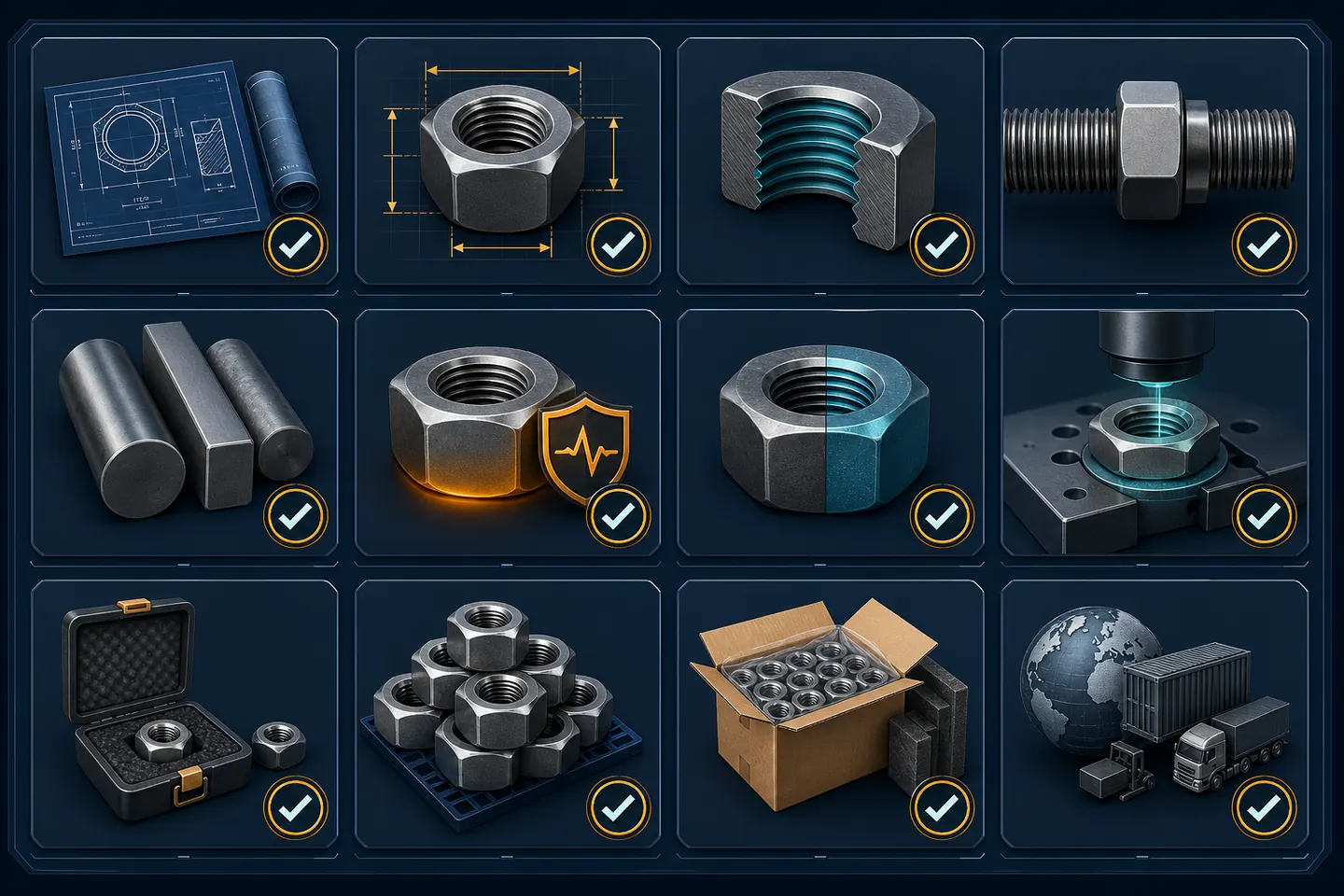
Custom nut RFQ checklist for drawing, thread, material, proof load, coating and export
Ready to quote

Send drawing, quantity and destination

Send the controlled drawing, material and mechanical requirements, internal thread, mating fastener, coating, quantities, annual demand, quality documents and delivery destination so order-specific feasibility and supply scope can be confirmed.

Send a Custom Nut RFQ

A custom nut cannot be qualified from thread size alone. Confirm the mating bolt or stud, internal-thread tolerance, nut property class, proof-load requirement and post-coating thread fit before approving a substitution.

An unhandled error has occurred. Reload 🗙